







Summary
The scrying mechanic has undergone a significant transformation in Patch 3.29. Gone are the days of hunting for the Nameless Seer—introducing the Scrying Orb, a new currency item that lets you directly overwrite a map's divination card drops with those from another map. Unlike traditional POE currency such as Chaos or Divine Orbs, this orb cannot be exchanged through the Currency Market and must be traded player-to-player or farmed directly, with its value tied entirely to the map it remembers. This guide cuts through the noise to tell you exactly how this new system works, what to farm, and the single best strategic choice for Trade League players.
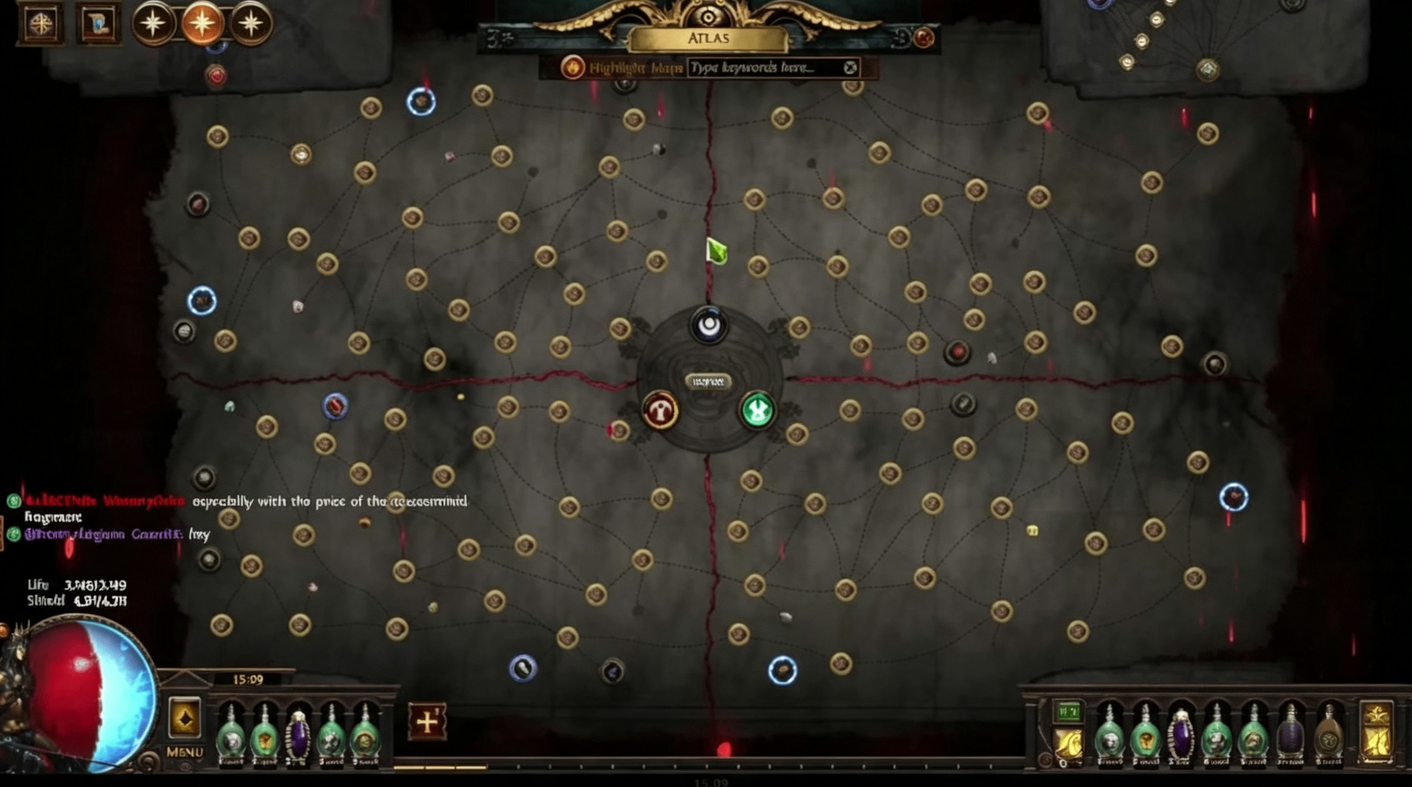
How Scrying Orbs Work in 3.29
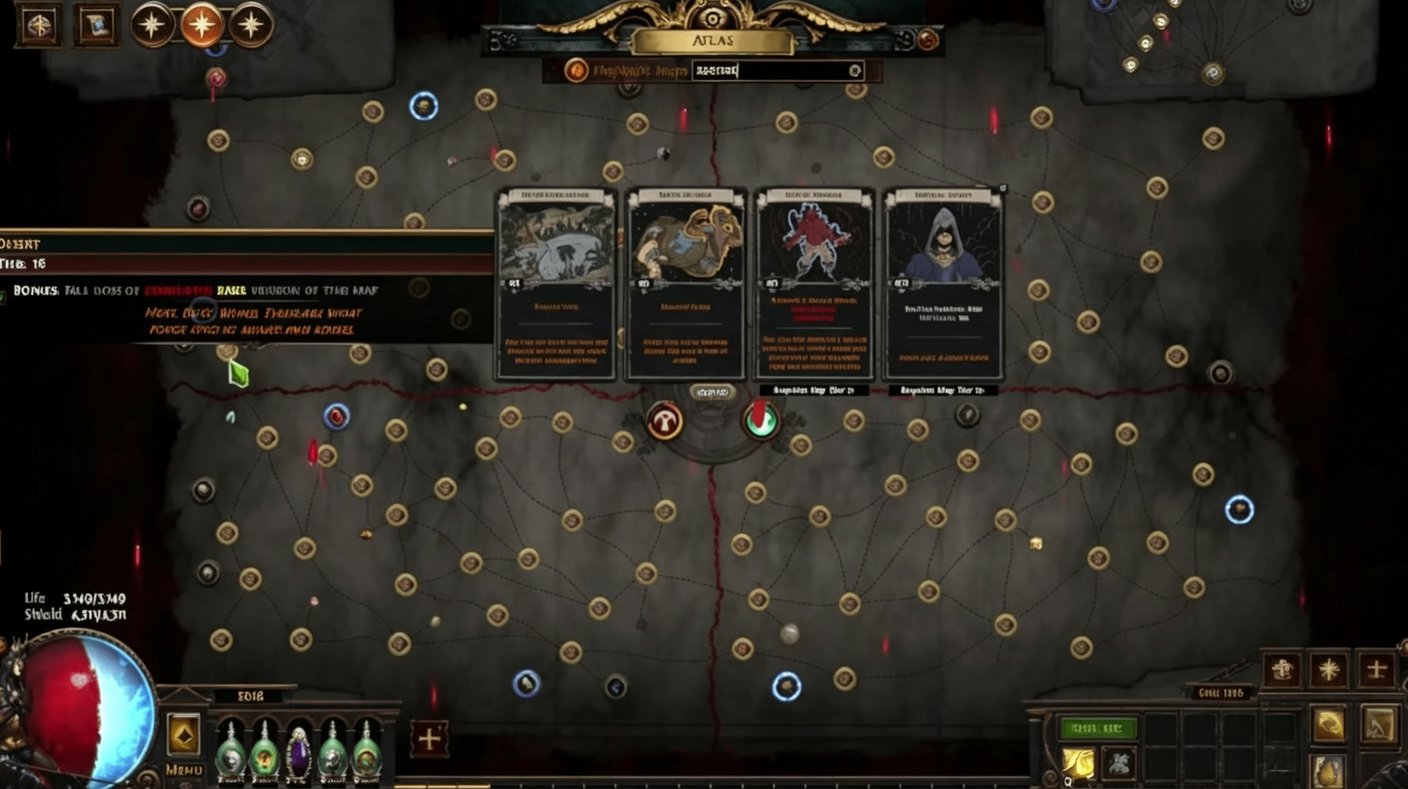
In Patch 3.29, the Scrying Orb is a tangible currency item that remembers the name of the map it dropped in. To use it, simply right-click the orb, then left-click on a magic or rare map on your Atlas. This action replaces that map's natural divination card drops with the divination card pool from the map the orb originated from.
Here's what you need to know about the mechanics:
One-Way Street: The scrying effect is one-way. It only changes the recipient map's drops; the donor map's drops remain untouched.
Exclusive Pairing: A map can only be part of one scrying pair at a time. It cannot act as a donor for two different maps or be the recipient of two different donors.
Removing the Effect: You can clear a scrying pair by using an Orb of Scouring on the Atlas.
Acquiring Scrying Orbs
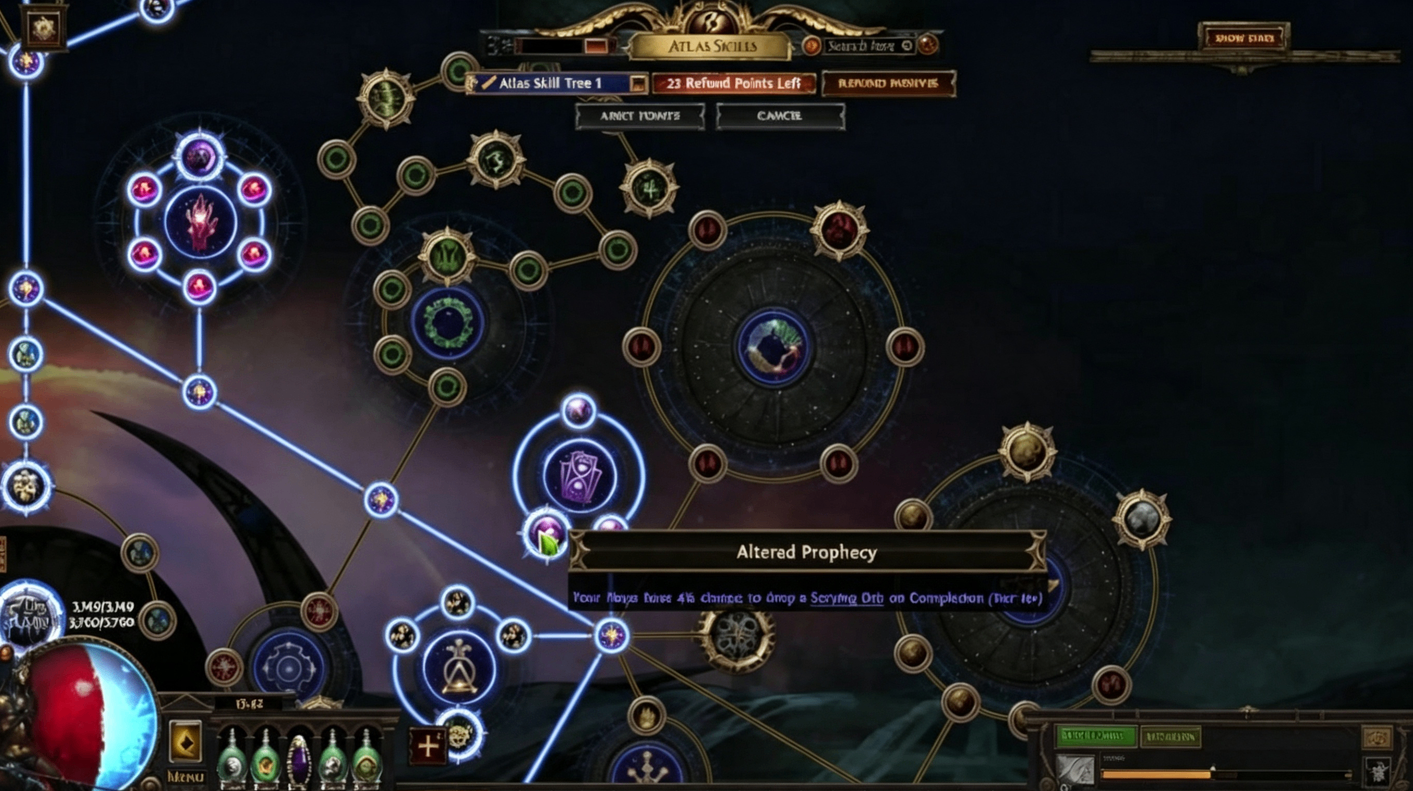
The primary method to farm Scrying Orbs is through the Atlas Passive Tree. You must allocate the "Altered Prophecy" notable cluster. This notable grants your Tier 14+ maps a 4% chance to drop a Scrying Orb on completion. To maximize your orb drops, run fast, boss-rushing strategies that let you complete maps quickly. Pair this with mechanics like Shrines for speed, and consider pursuing Searing Exarch or Eater of Worlds influence for additional invitation farming.
Trading for Scrying Orbs
If you'd rather trade for them, the search function is counter-intuitive. Do not search for "Scrying Orb." Instead, search for the name of the donor map. For instance, to buy a Graveyard scrying orb, search for "graveyard" in the trade interface. This will return items like "Scrying Orb Graveyard." Alternatively, searching for "cage" will show Scrying Orb Cage, though be aware of false positives.
The Single Best Scrying Option for Trade League
While players in the past weighed options like farming The Apothecary (Mageblood card) on Cage or The Fortunate (Divine Orb card) on Dunes, the 3.29 meta has one overwhelmingly dominant choice: The Graveyard Map.
The reason is simple: the Damnation divination card, which drops in the Graveyard, is worth a staggering amount of currency. A full set of Damnation can be exchanged for The Original Scripture, a highly coveted relic item. At the time of this writing, buyers are placing instant-purchase orders for a single Damnation card at upwards of 730 Divine Orbs.
Even if the Damnation card is significantly rarer than The Apothecary, its astronomical value makes it far superior from an expected value perspective. Let's put this in perspective. The Apothecary sells for around 80-90 Divine Orbs. Damnation sells for 730 Divine Orbs—more than eight times the value. Even if Damnation is ten times rarer, the expected value still heavily favors Graveyard farming. For Trade League players looking to maximize their currency per hour, scrying Graveyard onto your preferred farming map is the clear winner.
Alternative Options (And Why They Fall Short)
You might consider farming other valuable cards:
The Sephirot (Palace Map) – rewards Divine Orbs
The Fortunate (Dunes or Fields) – consistent Divine Orb income
Brother's Gift (Cemetery) – also shares a map with Brother's Stash
While all of these have substantially higher drop rates than Damnation, Divine Orbs are worth roughly 200-250 Chaos each. Damnation's value is so disproportionately high that even with a much lower drop rate, it remains the superior choice for Trade League.
Choosing a Recipient Map
Once you've secured a Graveyard scrying orb, decide which map to use it on. The best choice depends on your build and playstyle:
Fast Boss Rushers: Consider linear or open maps with quick boss access, such as Atoll, Strand, Dunes, Mesa, or City Square.
High-Density Farmers: If you prefer to juice and clear dense maps, layouts like Burial Chambers or Jungle Valley are excellent alternatives.
Atlas Considerations: Your recipient map's location on the Atlas matters. Since Patch 3.28, the quadrant determines what Atlas anomalies can spawn and what Astrolabe rewards are available in that quadrant. Factor this into your decision.
What to Scry in Solo Self-Found (SSF)
The strategy for SSF players is fundamentally different. Since you cannot trade for valuable cards like Damnation, your focus should be on farmable, useful rewards you can complete yourself.
Priority Order for SSF
Build-Defining Uniques (Tiers 2-3): Look for divination cards that reward specific uniques your build needs. The PoE Wiki has a community-sourced list of unique item tiers to help you decide. If a unique is Tier 4 or 5 (like Ahn's Heritage), you'll likely find it naturally without targeted farming. Tiers 2 and 3 make divination card farming feel reasonable.
The Fortunate Card: Farming The Fortunate on a map like Dunes is an excellent general-purpose strategy for SSF. The consistent Divine Orb supply is invaluable for crafting and paying for metamods in virtually any quantity you can obtain.
Avoid Extremely Rare Cards: Steer clear of targeting cards for Tier 0 uniques (like Mageblood). Divination card farms for tier zero items are for the obsessed only. This includes not just popular uniques but also items players aren't excited about that happen to be extremely rare. For instance, Bino's Kitchen Knife is considered Tier 0 by Grinding Gear Games for rarity purposes, even though players don't value it as highly as Mageblood. Self-farming a set would be an arduous process.
A Critical Warning About Corrupted Cards
When evaluating divination card farms, always check if the reward is corrupted. This is one of the most important considerations for SSF players.
Cards that reward a corrupted unique are approximately four times rarer than their non-corrupted counterparts. Double-corrupted cards are roughly 16 times rarer. Consider Gift of Asenath (Desert Map) as an example. It rewards Asenath's Gentle Touch, a Tier 3 unique that many builds want. However, because it specifies two implicit corruptions, it's effectively 16 times rarer than a standard card. This makes it harder to compile than even a Tier 1 unique card.
Similarly, Squandered Prosperity rewards The Light of Meaning (a valuable jewel from King in the Mists), but because it comes corrupted, the card's drop rate is significantly impacted.
What About Damnation in SSF?
In solo self-found, you are absolutely never compiling a full set of Damnation. It's essentially not loot to pursue. Even if you managed to collect a set through extreme luck, you'd need a build capable of completing the Sanctum hitless to benefit from The Original Scripture—a stressful proposition in SSF.
Final Verdict
For Trade League in Path of Exile 3.29, the answer is definitive: farm Scrying Orbs via the Altered Prophecy notable, turn your sights on Graveyard, and chase the most valuable divination card in the game. The expected value gap between Damnation and every other card is so vast that any other choice is suboptimal. If you find yourself short on starting capital to purchase your initial Scrying Orbs or map rolling materials, many players choose to buy POE currency from reputable platforms like MMOEXP to jumpstart their farming strategy, though farming them yourself remains the most cost-effective approach in the long run.