










Summary
Gambling in Path of Exile isn't just a pastime—it's a lifestyle. Whether you're rolling divination cards, identifying rare items, or taking chances with Inscribed Ultimatums, the thrill is woven into Wraeclast's fabric. For many, demand for orbs and crafting mats makes POE currency buy tempting, especially when gambles run cold and they need to reload. This guide breaks down popular high-stakes methods, their costs, and whether they're worth it.
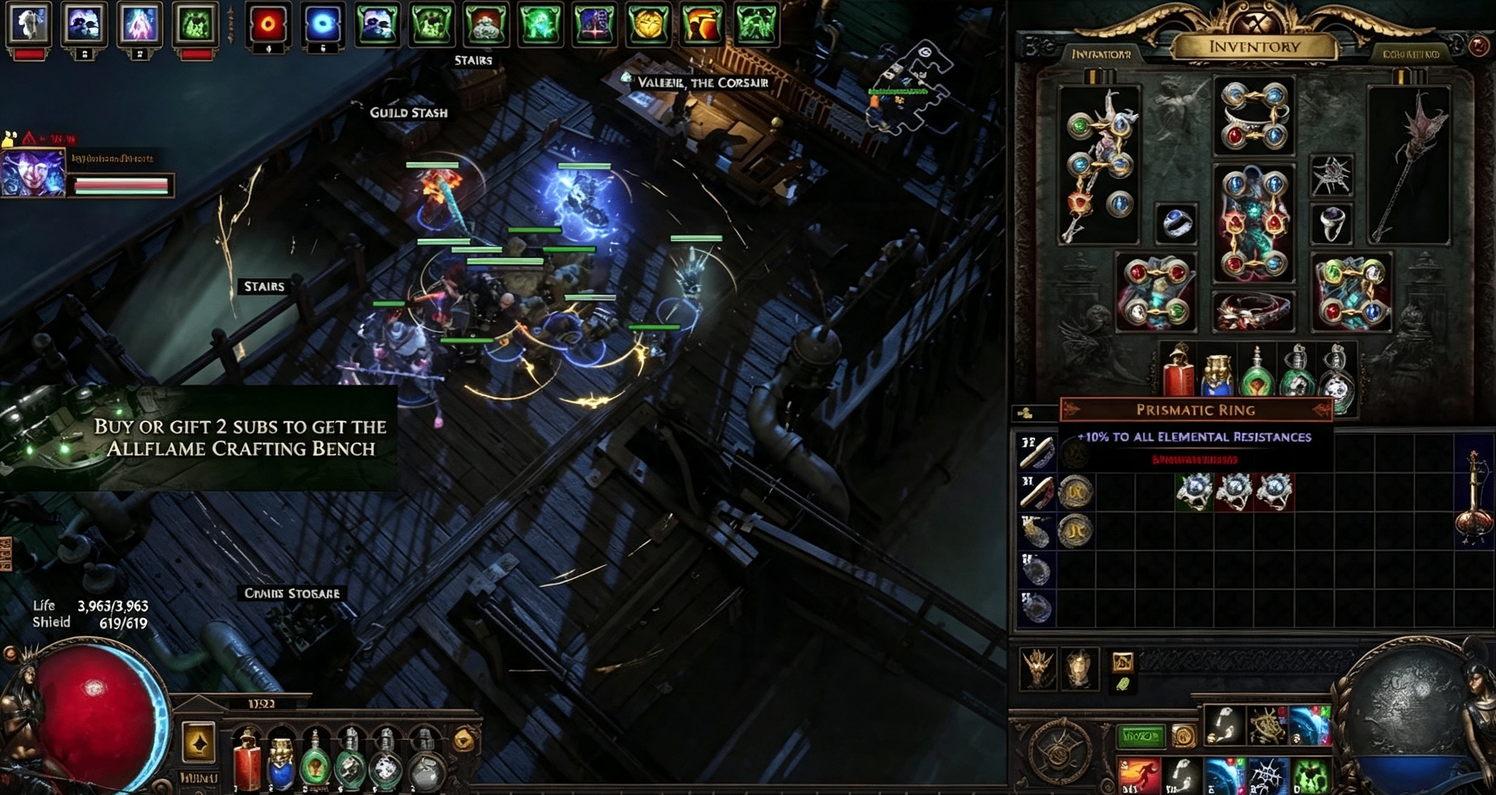
Understanding the Gambler's Mindset
Before diving in, it's crucial to understand one fundamental truth: the house always wins. In the long run, every gambling mechanic in Path of Exile is designed with negative expected value. The streamers and content creators who make it look easy are showing you their wins, not their losses. As one player aptly put it, "Div card gambling has negative value and will therefore always end in the player losing, unless they do it only a couple of times get insanely lucky (it's called variance) and stop there" .
That said, there are strategies, bankroll requirements, and moments where calculated risks can pay off.
Method 1: Divination Card Harvest Gambling
How It Works
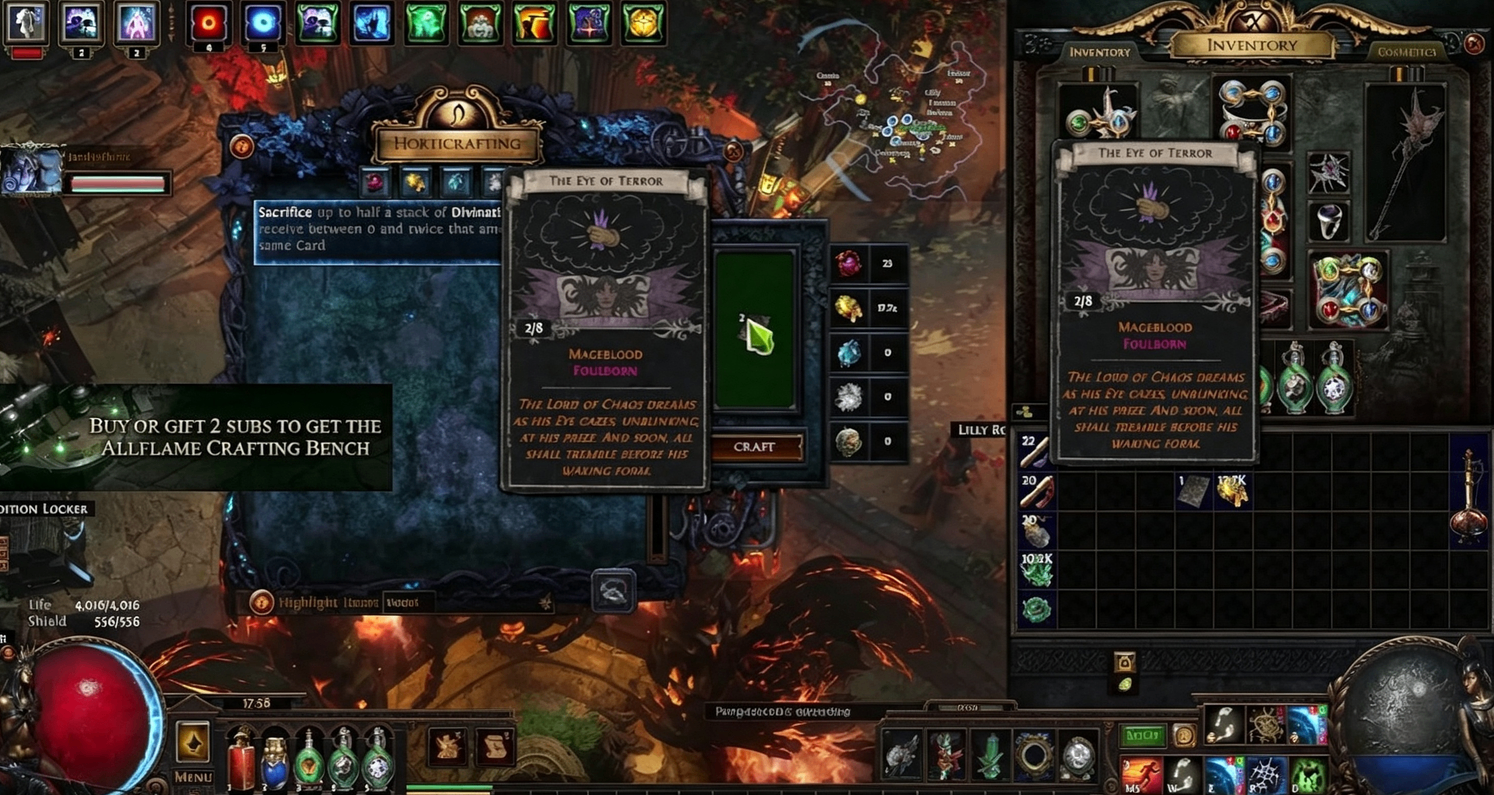
Using the Harvest crafting bench, you can "sacrifice up to half a stack of Cards to receive between 0 and twice that amount of the same Card" . This is a pure roulette—you either gain, lose, or break even on your card count. The mechanic is described as a "fair" distribution of outcomes, but you're paying for the function with your Harvest lifeforce, so you're going negative unless you get lucky .
Cost Considerations
Requires Vivid Crystallised Lifeforce, which has a significant cost
The lifeforce cost is the "green zero" that guarantees the house edge
Each gamble costs currency regardless of outcome
Strategy Tips
Bankroll is everything: To survive variance, you need enough capital to weather losing streaks
Stack size matters for psychology: Some players find that gambling with larger stacks (2-4 cards) helps them stay in the game longer than gambling one card at a time
Set a limit: Know when to walk away. The gambler's ruin theorem applies here—a symmetric random walk will eventually bankrupt the player with less capital
The Reality
One player described a guildmate who "makes multiple mirrors in return" from House of Mirror card gambling with a juice counter at almost 750m yellow juice spent over multiple leagues . But for every success story like this, there are countless players who've lost everything. The key differentiator? Massive bankrolls that can survive the inevitable losing streaks.
Method 2: Stacked Decks
How It Works
Stacked Decks are gamble boxes that yield random divination cards. You buy them in bulk (typically 40c each, fluctuating with the market) and open them en masse, hoping for valuable cards like The Doctor, The Apothecary, or The Fiend.
Cost Breakdown
Based on a real gambling session referenced in our source:
36 stacked decks were opened (one full tab)
Cost: ~44c each at time of recording
Total investment: ~1,584c (roughly 9-10 divine)
Returns: ~9 divine in value [citation:original]
Expected Value Analysis
From the sample session: "It looks like from this very small sample size that you're very slowly bleeding money until you get the broken mirror shard, I guess, or the lock or something like that" [citation:original]. This suggests that consistent stacked deck opening is a slow bleed, punctuated by rare massive hits.
Strategy Tips
Buy in bulk to get better prices
Set a stop-loss: if you're down a certain amount, stop
Consider selling your stacked decks instead of opening them—the guaranteed profit is often the smarter play
Method 3: Inscribed Ultimatums
How It Works
Inscribed Ultimatums are items that allow access to the Trial of Chaos. The highest-tier versions (Area Level 75-80) can be corrupted to have affixes with high-stakes gamble outcomes. For example, you might sacrifice currency to receive double on completion, but the area modifiers make the trial far more dangerous .
The Math Problem
A forum post highlights the inherent flaw: "Specifically for the divine orb wager keys. Nobody is going to buy your key for minimum of 4 div, to wager 3 to trial, just to win 6. that's a NET LOSS OF ONE DIVINE ORB" . The community has identified that many Inscribed Ultimatums are priced inefficiently—the cost to buy the key often exceeds the expected value of the gamble.
Cost Example from the Source
In the described session, the player invested 180 divine orbs in Inscribed Ultimatums (roughly 3 div each for 60 items). After five-to-one combining and opening them, the only significant return was Nemesis cards worth about 40 div [citation:original]. Total loss: approximately 135 divine.
Strategy Tips
Do the math before buying: If the key costs more than half the potential reward, it's a losing proposition
Focus on T0 outcomes: The "mirroring item" or "multiple divs" outcomes are what make this gamble potentially profitable [citation:original]
Consider selling the keys instead: If you don't have a build that can reliably clear the Trials, selling is almost always more profitable
Method 4: Voices (Unique Cluster Jewel Gambling)
How It Works
Identifying unidentified Voices cluster jewels is a pure gamble. Each Voices has a random number of passive skill sockets (the "voices" count), ranging from 3 to 7. The 3-socket version is extraordinarily valuable (hundreds of divines), while 5 and 7-socket versions are largely worthless.
The Numbers
From the source:
Cost per unidentified Voices: 580c (approximately 3.2 div at the time)
60 voices opened: ~202 divine investment
Outcome: "7 7 5 7 7 5 5 7 5 5 7 7 7 7 5 7 5 7 7 7 5 7 7 7 5 7"
Result: "Minus 200 divines" [citation:original]
Expected Value
The Voices gamble is notoriously brutal. Most are 7-socket, which sell for very little. The 5-socket version has some value, but the 3-socket version is the only real payout. Based on community experience, "Voices are common and they are 77775777"—a string that represents the socket counts most players see [citation:original].
Strategy Tips
Expect to lose: This is one of the highest-variance gambles in the game
Only gamble if the 3-socket value justifies the cost
Consider buying a 3-socket outright—it's almost always cheaper than gambling for one
Method 5: The Adorned Diamond Crafting
How It Works
The Adorned is a unique jewel that requires an "on ID set" (unidentified Adorned jewels) to be identified. The value comes from the corruption-implicit effect roll, which ranges from 1% to 100%+.
Cost and Return Analysis
From the source, the player paid 15 div per set and opened 10 sets (150 div total). Results:
87% roll: "pays for everything so far" [citation:original]
75% roll: "break evenish"
Lower rolls (13%, 19%, 29%, 11%, 3%, 66%): various degrees of loss
Overall: "Minus like 100 divines or something"
Strategy Tips
The high roll is the prize: Only rolls above 70% are truly profitable
Diversify risk: Opening more sets increases your chance of hitting a high roll
Know your break-even point: Calculate what roll value covers your investment
Method 6: Amulet Gambling (Vaal Chaos or Harvest Reforge)
How It Works
This method involves spamming currency on amulets to get specific mod combinations—typically chaos damage, chaos damage per mana, and reduced mana cost. The goal is to roll outside the standard range ("flat rolls from 10 to 25" according to the source [citation:original]).
The Session
From the source:
Total investment: ~31 divine
Goal: "chaos damage to go up, chaos damage per mana to go up, and reduced mana go down"
Outcome: Mostly "poofs" (bad rolls), with one decent roll worth ~9-10 div [citation:original]
Expected Value
The player discovered that "one good one pays for like a third of them," meaning that even a good roll only covered a fraction of the total investment. "I guess it has to roll way higher" [citation:original].
Method 7: Gem Leveling Gamba
How It Works
Leveling exceptional gems like Enlighten, Empower, or Enhance from level 1 to 3, then double-corrupting them at the Temple of Atzoatl or using a Vaal Orb. A successful corruption can yield a level 4 gem, which is significantly more valuable .
The Cost
Time investment: Leveling gems takes significant playtime
Double-corruption risk: Gems can brick, stay the same, or hit the jackpot
Strategy
This is often paired with XP farming strategies. One player described leveling "2 sets of enlighten gems from levels 1 to 3" while running mapping content . The gem gamble is a bonus on top of regular farming, not a standalone strategy.
General Gambling Principles
Bankroll Management
The single most important factor in gambling success is having enough capital to survive variance. For high-stakes crafts like the Adorned or Voices, you need multiple sets worth of currency to feel confident. As one guide put it, "To be roughly 95% safe from ruin on a single session, keep at least 90 Divine Orbs on hand" .
The "Big Hit" Mentality
Most of these gambles rely on hitting the jackpot. Voices needs a 3-socket. Stacked Decks need The Apothecary. The Adorned needs a 90%+ roll. Without the big hit, you're bleeding money.
Know When to Walk Away
The gambler's fallacy is real. Just because you've lost ten times in a row doesn't mean a win is "due." Each gamble is independent. Set a stop-loss and stick to it.
Selling vs. Gambling
In many cases, the smart play is to sell your gamble items. Unidentified Voices sell for a premium because of the potential. Stacked Decks sell for a stable price. The guaranteed profit is often better than the slim chance of a jackpot.
Final Verdict
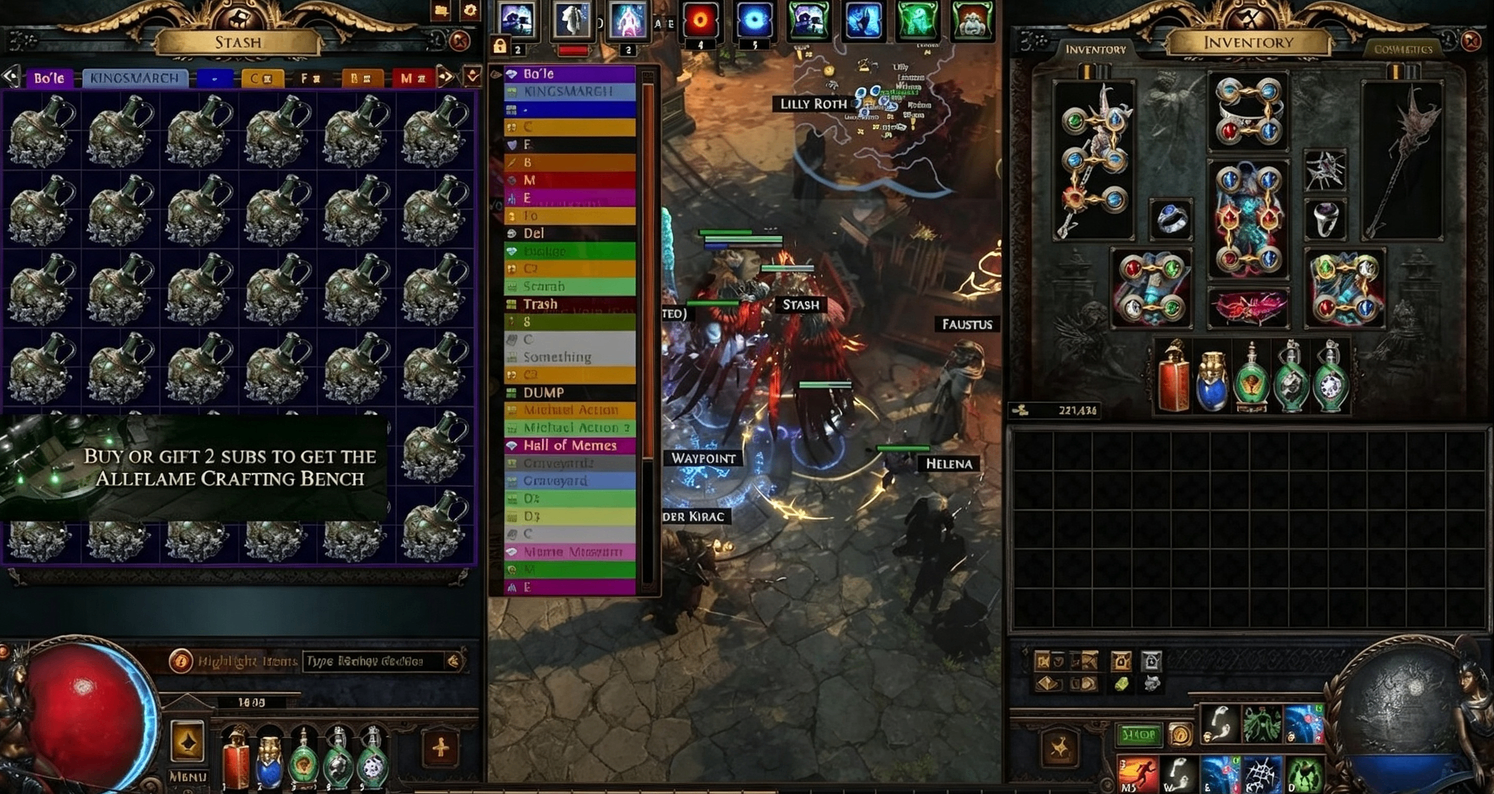
Are these gambles worth it? Financially, no—expected value is negative across the board, but the rush keeps players coming back, as one admitted: "as a gambling addict, i play poe just to gamble so i dont spent irl money, it can be anything from stacked decks and valdos boxes, to house of mirror gambling." Even when burning POE currency on high-variance crafts, the thrill is the real draw. If you gamble, only use currency you can afford to lose, treat it as entertainment not investment, and if you get lucky, take profits and walk away—the house always wins long-term. When your stash runs dry, MMOEXP offers a trusted way to restock quickly.