Weekend Drop -













Summary
Path of Exile players are testing a powerful Ignite Elementalist league starter built around Penance Brand Ignite. Starting with Rolling Magma and Firestorm, the build transitions into Penance Brand at level 31, offering excellent clear speed, strong scaling Path of exile currency, and a smooth SSF progression path toward Exarch and endgame mapping.
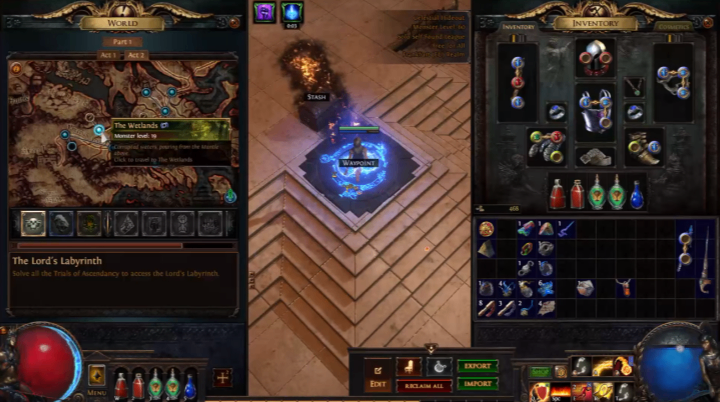
Step 1: Ignite Elementalist Becomes a Strong League Starter Choice in Path of Exile
League starters in Path of Exile need three important qualities: reliable early damage, cheap gear requirements, and strong scaling potential. The Ignite Elementalist continues to be one of the most attractive options because it can clear content efficiently without depending on expensive uniques or trade-only equipment.
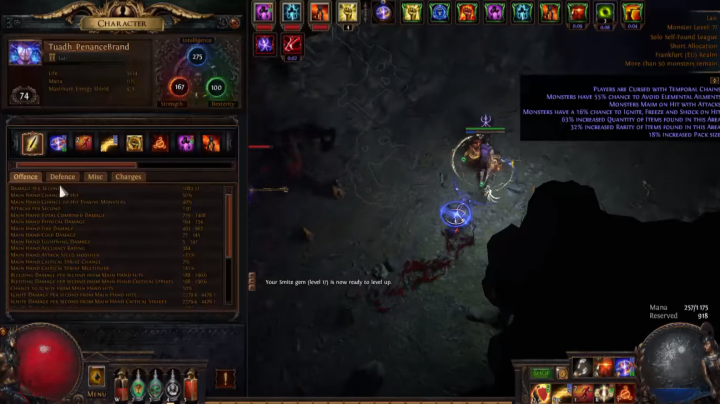
This test run focuses on a Penance Brand Ignite Elementalist designed for Solo Self-Found progression. The goal is simple: level quickly, transition into the main skill early, and push toward Exarch-level content as efficiently as possible.
Unlike many meta builds that require specific items immediately, Ignite Elementalist can begin with basic spell gems and naturally grow stronger through the campaign.
Step 2: Early Leveling Strategy – Rolling Magma and Firestorm Carry the Beginning
The leveling process starts with traditional Witch spell options. Early on, Rolling Magma provides consistent damage and excellent wave clearing, making it a comfortable choice before stronger Ignite mechanics become available.
The build later combines Firestorm with Ignite-focused support gems to improve damage during the campaign. Firestorm is especially useful because it provides reliable area damage while the character is still collecting the required gear and passive tree nodes.
During the early acts, the priority is not maximizing damage numbers but maintaining smooth progression:
Upgrade your weapon whenever possible
Prioritize spell damage and fire damage modifiers
Maintain enough mana regeneration
Collect useful socket colors for future skill swaps
Because Ignite builds rely heavily on damage over time, early preparation is important for a smooth transition.
Step 3: Switching Into Penance Brand Ignite at Level 31
The major turning point happens around level 31 when Penance Brand becomes available.
Penance Brand Ignite has gained attention because it combines strong clearing ability with the powerful Ignite Elementalist scaling package. Instead of constantly casting spells, players can place brands and allow them to trigger explosions while moving through maps.
The build uses several important support gems and mechanics:
Ignite Proliferation for screen-wide burning damage
Combustion for additional fire damage scaling
Elemental damage increases
Damage over time multipliers
Fire damage modifiers
The biggest advantage of the setup is mobility. Once enemies are ignited, the character can continue moving while the damage spreads.
This makes the build feel extremely smooth for mapping.
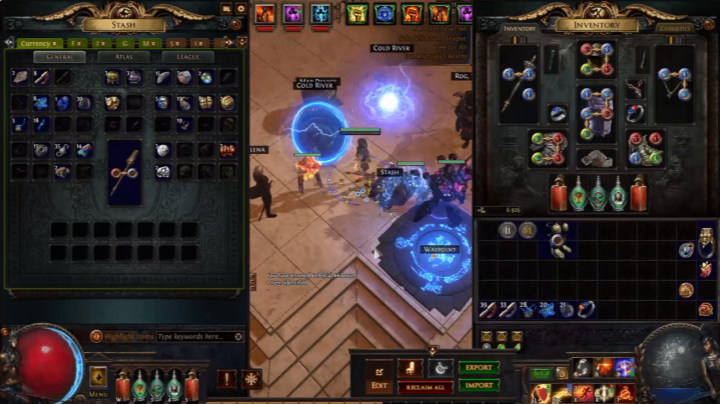
Step 4: Elementalist Ascendancy Provides Massive Ignite Scaling
The Elementalist ascendancy is the foundation of this build.
One of the most important choices is Shaper of Flames, which allows all damage types to contribute toward Ignite. This gives the build much more flexibility during leveling because players do not need to rely only on direct fire damage.
Other Elementalist benefits include:
Strong elemental scaling
Reliable Ignite application
Better damage over time potential
Improved clear speed through proliferation
Ignite builds traditionally struggle when enemies have high health because damage happens over time. However, Elementalist helps solve this weakness by dramatically improving Ignite consistency and coverage.
Step 5: Strengths and Weaknesses of Penance Brand Ignite
After testing the build through the campaign and early maps, several strengths become obvious.
Strong Clear Speed
Ignite proliferation remains one of the strongest clearing mechanics in Path of Exile. Once one enemy is ignited, nearby monsters quickly burn down.
This makes the build excellent for:
Campaign farming
Mapping
Expedition encounters
Delirium-style content
Low Gear Requirements
The build does not require expensive equipment to function.
Players can focus on simple upgrades:
Fire damage wand or scepter
Life modifiers
Resistances
Spell damage
Damage over time multipliers
This makes it especially attractive for SSF players.
Good League Starter Potential
Because the build works without expensive items, it can transition smoothly into a fresh league environment.
However, there are also weaknesses.
Step 6: Single Target Damage Is the Biggest Challenge
While Penance Brand Ignite feels amazing against groups of enemies, boss damage is more complicated.
The main concern is single-target performance against high-tier bosses.
Ignite builds naturally have delayed damage. Players apply the Ignite effect and then wait for the damage over time to finish.
Against normal monsters, this is not noticeable.
Against powerful bosses, however, the delay becomes more obvious.
The build may require additional investment into:
Fire damage over time multiplier
Increased Ignite damage
Better weapon upgrades
Higher gem levels
More passive tree investment
For casual mapping, the damage is excellent. For advanced boss farming, additional optimization is necessary.
Step 7: SSF Progression and Gear Priorities
Since this test was performed in Solo Self-Found, gear decisions focused on realistic drops rather than perfect trade items.
Important upgrades include:
Weapon
A strong wand or scepter with:
Fire spell damage
Damage over time multiplier
Spell damage
Gem levels
can significantly improve performance.
Defensive Gear
Because Ignite Elementalist focuses heavily on damage, defenses can become a problem.
Players should prioritize:
Maximum life
Elemental resistances
Movement speed
Defensive flask setup
During the test run, the build sacrificed some defenses for speed, which made certain encounters dangerous.
Step 8: Endgame Potential and Future Improvements
The final question is whether Penance Brand Ignite Elementalist can compete in endgame content.
The answer depends on the player's goals.
For mapping and general progression, the build performs extremely well.
For high-tier boss encounters, improvements are needed.
Possible upgrades include:
Better crafted fire weapons
More defensive investment
Optimized passive tree choices
Higher-level support gems
More efficient mana management
The build also offers room for experimentation. Players can adjust between maximum damage setups and safer defensive versions depending on their goals.
Step 9: Final Thoughts – A Smooth and Fun Path of Exile Starter Build
The Ignite Elementalist Penance Brand setup shows why damage-over-time builds remain popular in Path of Exile.
It offers:
Easy leveling
Strong clear speed
Affordable gearing
SSF compatibility
Smooth gameplay
Starting with Rolling Magma and Firestorm before transitioning into Penance Brand Ignite creates a natural progression path that feels rewarding throughout the campaign.
While the build may not instantly destroy the toughest bosses without investment in cheap Path of exile currency, its ability to clear maps efficiently makes it a strong choice for players looking for a reliable league starter.
For Path of Exile players entering a new league, Penance Brand Ignite Elementalist is a powerful, flexible, and enjoyable option worth testing.