






Summary
Breach farming in Path of Exile 2 has become one of the most efficient and enjoyable currency strategies in the current patch. With the introduction of the Wildwood in patch 0.5.5, Breach received a massive indirect buff that allows you to print divines without relying on delirium fog, oath runes, or pulling rare monsters out of clouds. If you'd rather skip the grind and buy POE2 Currency, this guide covers the full setup: Atlas tree, Wildwood wisp mechanics, Breach tree configuration, tablet mods, and the currency crafting loop that makes this strategy so profitable.

1. Why Breach Is So Strong Right Now
The core reason Breach is performing at a top-tier level is the Wildwood, added in patch 0.5.5. The Wildwood allows you to run juiced-up Breaches that generate enormous amounts of currency, and it does so without requiring 200% delirium. You can save your delirious maps for Simulacrum instead, which is generally the better use for them.
The key interaction is yellow Wildwood wisps. These grant rare monsters extra modifiers, which directly increases the number of items they drop. Because Breach spawns a huge number of rare monsters, this creates a powerful multiplicative effect. More rares, more mods per rare, more loot.
Wisp types and their effects:
Blue wisps: Give normal monsters a chance to be magic
Yellow wisps: Add extra modifiers to rare monsters (the most important for Breach)
Purple wisps: Add rarity, which is much stronger in PoE 2 than in PoE 1
Sacred wisps: Combine all three effects and add a chance for monsters to become bosses — the best outcome by far
A decent Wildwood run yields 3,000 to 7,000 wisps on average. Ritual can generate far more wisps, but that locks you out of Breach, so it doesn't fit this strategy.
2. Using the Sacred Bloom on the Atlas
The Sacred Bloom is the item that applies Wildwood juicing to your maps. Here's how to use it effectively:
Find a map you want to run, ideally in a city if possible (not mandatory, but better).
Look for maps with four unrun connections — this maximizes the value of the Bloom.
Click the Sacred Bloom on that map — it affects the selected map plus all connected maps.
Important restrictions:
Sacred Blooms do not work on delirium fog areas
They cannot be used on maps you've already run
They do not stack in your inventory
They come from Ritual
Despite these limitations, this is by far the most effective way to apply Wildwood juice to Breach maps.
3. Running the Map: Breach Execution
Once inside the map:
Jump into the Wildwood immediately and start collecting wisps while killing everything.
Move quickly — Wildwood traversal in PoE 2 is slower than PoE 1, so efficiency matters.
Pick up Sacred Wisps when they appear — they are not that rare and significantly boost rewards.
After collecting enough wisps, return to the map and clear all Breaches.
Breach clearing technique:
Once you've hit the Breach hands and stabilized the Breach, run around the outsides first, killing everything quickly.
Then move to the middle and kill the rares.
Patch 0.5.5 change: Breach now only spawns five monsters at a time instead of ten or twelve. This reduces server load and makes the mechanic less overwhelming, but it doesn't slow down the farm. You simply kill five, then the next wave, then the next.
4. Breach Rewards: Catalysts, Stones, and Essences
Breach farming generates several valuable outputs:
Reward | Value | Notes |
Breach Stones | ~2 divines each | From breach shards/splinters dropped per map |
Refined Catalysts (Sibilant, Reaver) | High value | Used on jewels |
Essence of the Breach | 1.25–1.5 divines each | Very common if essence monsters spawn near Breach |
Lavish Womb Gifts | Variable | Currency-focused rewards from the Breach tree |
Essence of the Breach is the standout underrated reward. By adding essence monsters to your maps, you can generate a steady stream of these, and with the right tree nodes, you can duplicate corrupted essence monsters for even more.
In a single session, it's common to accumulate 9+ Essences of the Breach, which converts to roughly 12 divines on top of everything else.
5. Atlas Tree Setup: Doriani vs. Jato
Why Doriani Is the Default Choice
Doriani is the recommended master for this strategy because he provides:
Increased effectiveness and rarity based on the number of explicit mods on your maps
Chance at extra modifiers on monsters
Strong synergy with 8-mod maps
Since you're running 8-mod T15+ maps, Doriani's scaling is maximized.
Jato Considerations
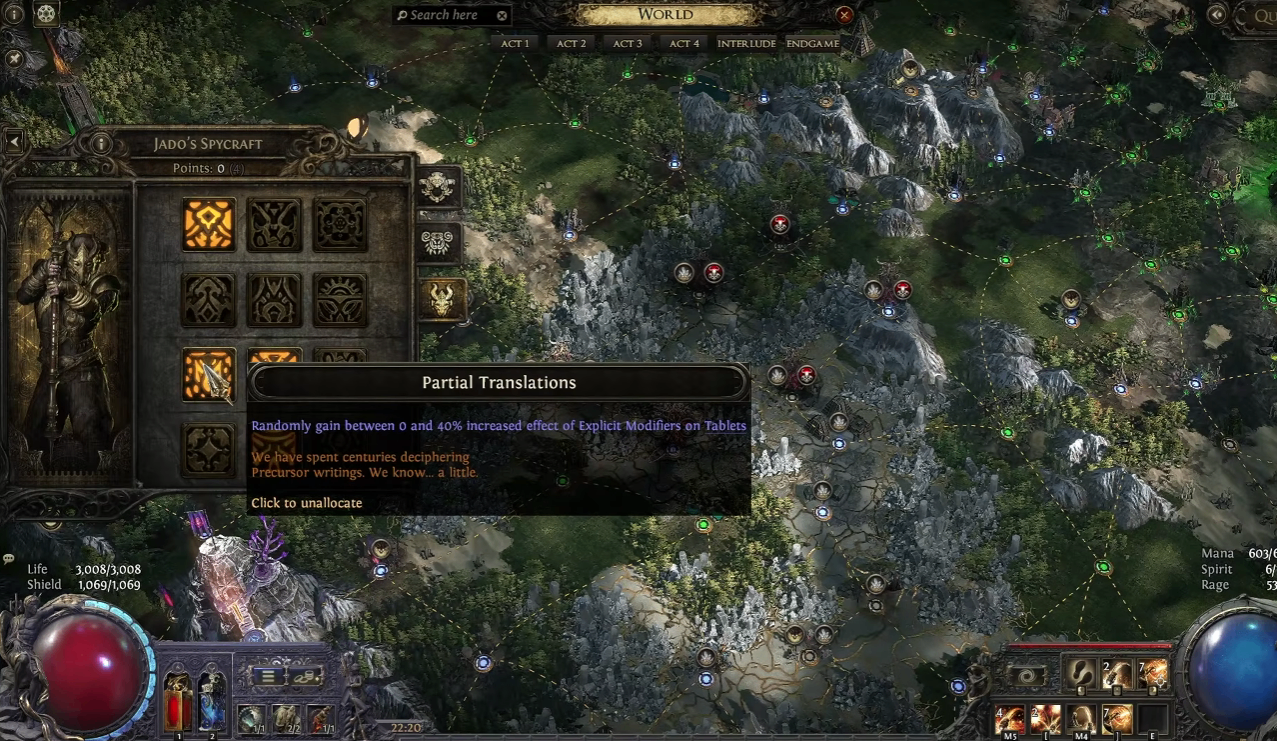
Jato can be better if you have four really good tablets and are running in a city, because of partial translations multiplying explicit modifier effects. However, GGG nerfed tablet rare monster additions from 3 to 2, which reduced Jato's ceiling. Partial translations don't seem to roll the +2 rare monsters up to +3, so Doriani ends up more consistent unless your tablets are exceptional.