






Summary: Inventory management becomes one of the biggest problems in RuneScape Dragonwilds once you start exploring deeper into Ashenfall.
You have limited inventory slots, carry weight matters, OSRS gold and new regions constantly introduce resources that are difficult to ignore. The situation became even more relevant with the 1.0 launch on September 15, 2026, which added the Storage Ledger alongside new content and console support.
The good news is that Dragonwilds gives you several tools that can make inventory management much easier.
Plan Your Inventory Before Leaving Base
The simplest improvement is also one of the most effective: decide what you're doing before you leave.
Going mining? Bring your pickaxe, combat gear, food, water and the supplies needed for the trip.
Going fishing? Take your fishing gear instead of carrying every other tool in your storage.
Going on a general exploration run into an unknown area is different. In that situation, bringing an axe, pickaxe and shovel can make sense because you don't know what you'll encounter.
The important part is to avoid filling your inventory with equipment that has no purpose during the current trip.
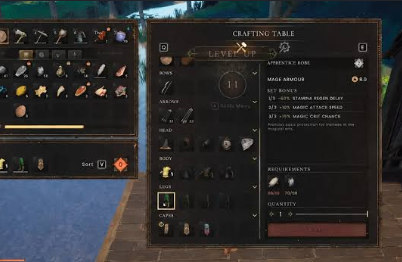
This becomes particularly important because inventory slots and carry weight are separate limitations. Ten different lightweight materials can fill ten slots even when you're still well below your weight limit. Conversely, a few heavy resource stacks can make you overloaded while plenty of slots remain available.
That's why a good inventory starts with empty space.
Don't Pick Up Everything You See
Early in a new region, picking up unfamiliar items is usually worthwhile.
New resources can reveal crafting recipes and help you understand what the material is used for. Once you know the area, though, you can become more selective.
A simple priority system works well:
New resources → rare resources → materials you specifically need → common materials you are running low on.
When your inventory starts getting full, stop collecting common resources first.
There's little reason to carry another pile of ordinary stone or wood when your base already has hundreds sitting in storage.
That approach is especially useful when you're deliberately farming one resource. If today's goal is iron ore, don't let random plants and common materials consume the space you need for iron.
Organize Your Base Storage by Category
A messy storage room creates another inventory problem.
Instead of throwing everything into random chests, give your storage system clear categories.
Ore and stone can have one area.
Logs and planks can have another.
Plants and farming materials can sit together.
Food, runes, monster drops, weapons and armour can have their own sections.
You can take this further by creating dedicated storage for a new region or activity.
When entering a new zone, having one or two temporary chests for that region's resources can keep unfamiliar materials separate until you understand how important they are.
More importantly, when you return from an expedition, you already know where everything belongs.
Use Linked Chests Around Your Crafting Area
One of Dragonwilds' best quality-of-life systems is the ability to craft using materials stored in nearby linked chests. Jagex added this functionality during Early Access, so you don't have to constantly remove resources from storage before crafting.
This means your personal inventory does not need to function as your workshop storage.
Instead, think of your base as a production area:
Gather resources → deposit them into linked storage → craft directly from the storage network.
Keep the relevant chests close to your crafting stations and you'll spend much less time moving items around.

Storage Ledger Is the Biggest 1.0 Quality-of-Life Upgrade
This is the part of the transcript that needs the biggest terminology correction.
It isn't a Storage Laser. The new 1.0 feature is called the Storage Ledger.
Jagex added it specifically to make unloading your inventory faster. When you interact with the Ledger, items in your inventory that already have an existing stack in a linked chest are automatically sorted into the appropriate storage.
Current guide data lists the Storage Ledger at Artisan level 28.
That makes it an extremely useful progression target for players who keep returning from expeditions with a full backpack.
There is one important limitation:
The Ledger doesn't magically decide where a completely new item should go.
The item needs an existing matching stack somewhere in your linked storage network. So before relying on the Ledger, seed your chests with the materials you want routed there.
Keep Food and Travel Supplies Separate
There's one easy mistake to make with automated storage.
You may actually want some items to stay in your personal inventory.
Food is the obvious example.
You may also want to keep drinks, runes, potions or frequently used utility items with you. Because the Storage Ledger moves matching items into linked storage, having a dedicated unlinked personal supplies chest can make the system easier to control.
Keep bulk crafting resources in your linked storage network.
Keep frequently used travel supplies in a separate manual chest.
That gives you automation without constantly rebuilding your hotbar.
Unlock the Personal Chest at Construction 40
The Personal Chest is the next major inventory-management milestone.
The spell unlocks at Construction level 40 and lets you access your Personal Storage from almost anywhere in Ashenfall, including vaults. Current data lists a cost of 20 Law Runes and 15 Astral Runes, with a 5-second cooldown.
This doesn't increase your normal inventory slots.
Instead, it effectively gives you another storage destination during long expeditions.
That makes it ideal for rare drops and valuable resources that you don't want to throw away simply because your backpack is full.
Keep Lodestone Materials in Your Personal Chest
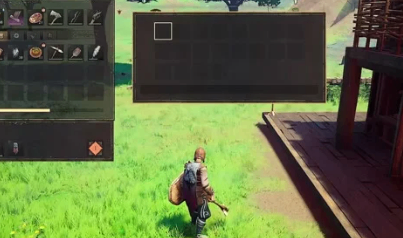
One particularly useful application is keeping emergency Lodestone materials in your Personal Chest.
That lets you turn a long expedition into a much more manageable loop.
Find a valuable resource area.
Fill your inventory.
Use the resources stored in your Personal Chest to create a Lodestone.
Teleport home.
Deposit everything.
Return to the Lodestone and continue the expedition.
The same idea works for long mining or woodcutting sessions where returning all the way to your main base would otherwise interrupt the run.
Jagex also added Home Teleport to Runecrafting in 1.0, which provides another option for returning safely to your claimed bed.
Weight Reduction Skills Are Worth Planning Around
Inventory slots aren't the only thing you can optimize.
Several skills reduce the weight of specific materials.
Mining level 5 gives Lift With Your Hips, reducing the weight of stone, clay and sand by 25%.
At Mining 36, Not-So-Heavy Metal reduces metal ore weight by 25%.
Fishing level 23 reduces fish carry weight by 25%.
Construction level 53 provides Construction Material Weight Reduction, while Runecrafting level 53 gives Essential Strength, reducing Rune Essence weight by 50%.
Woodcutting received a significant 1.0 adjustment: Wood Weight Reduction is now at level 88 and reduces wood weight by 50%. The Lumber Backpack remains at level 78 and is designed specifically for woodcutting runs.
So rather than treating every skill level as equally important, it can be useful to target the next weight-related milestone when you're already close to it.
Use Dedicated Storage for Bulk Resources
As your base grows, dedicated storage becomes increasingly useful.
Dragonwilds now has high-capacity Ore & Stone Storage and Lumber Storage, making them better suited to large resource stockpiles than filling ordinary chests with hundreds of identical materials.
Save normal chests for mixed crafting materials, monster drops, rare items and things that don't have specialized storage.
This also keeps your linked storage network easier to understand.
Turn Resource Respawns Into Gathering Routes
Don't think of resource gathering as a one-time trip.
Think of it as a route.
Current resource data shows many ore nodes respawn after roughly three in-game days, while some stone and other resources use different timers. Individual ore pages such as iron and tin list three in-game days for respawn.
That means you can build a recurring loop:
Mine one ore area.
Move to a tree route.
Clear a nearby enemy camp.
Return to another resource area.
By the time you complete the circuit, earlier locations may be ready again.
The result is much less inventory chaos because every expedition has a purpose.
The Best Dragonwilds Inventory System
The most effective setup isn't about carrying more things.
It's about carrying fewer unnecessary things.
Leave the base with a specific goal.
Keep several inventory slots open.
Prioritize new and valuable resources.
Organize chests by category.
Link storage to crafting areas.
Use the Storage Ledger to unload matching stacks quickly.
Keep food and travel supplies separate.
Unlock the Personal Chest at Construction 40.
And plan your gathering routes around resource respawns.
That approach becomes especially valuable now that Dragonwilds 1.0 is live and the game has expanded with Scorned Wilderness, Kuldra, new gear, new resources and console/crossplay support.
For a survival-crafting game built around collecting materials, good inventory management isn't just housekeeping. It directly determines how long you can stay out in the world, how efficiently you gather resources, make OSRS gold and how quickly you can get back to actually playing.