






Can a RuneScape player earn 777 million GP in time to pay for a flight home? After 16 days, this challenge shows how far bad drop luck can push a bank off target. The account held about 300 million GP when it needed roughly 414 million, and the gap came mostly from Magot King, elves, and Doom returns that missed expectations. This article breaks down the numbers, explains why steady Bloodwoods income still fell short, and lists lessons about expected value and variance. It suits challenge followers, bossing players, and anyone planning a high-stakes money-making run.
Why the Math Fails
The Gap Between Effort and Result
The flight costs 777 million GP, and by day 16 the bank sat near 300 million GP. Staying on pace required 414 million. The daily loop starts with Bloodwoods for steady income, then moves to Magot King and Doom in the hope of a valuable unique.
Even full days of PvM sometimes ended in a net loss once supplies and deaths were counted. Bloodwoods pay reliably, but they cannot close a gap this size before the Airbnb booking ends. A big drop stopped being a bonus and became a requirement. This matters most to players who build a challenge around a few rare uniques.
Where Drops Fell Short
Magot King, Elves and Doom
Magot King caused the largest miss. Each kill is worth roughly 467k to 476k GP once uniques are included, so about 700 kills should have returned around 326 million GP. The actual total was about 65 million OSRS GP, a deficit of nearly 261 million.
Elves teleport crystal drops ran roughly 32 million behind. Doom looked lucky early, but against its expected average value, the edge was only about 4 million. Together, the bank should have been near 589 million. Experienced bosses can use this to test whether a boss is truly carrying a run.
Expected Versus Actual
Comparing the Money Makers
This table compares each income source using figures from the challenge.
Source | Role in the Plan | Result | Reliability |
Bloodwoods | Steady base income | Consistent, below top-end rates | High |
Magot King | Main boss income | About 65M vs 326M expected | Low in this sample |
Elves | Teleport crystal drops | About 32M behind | Low in this sample |
Doom | Luck-dependent upside | Edge only about 4M | Situational |
Bloodwoods was the only dependable source, while every boss relied on variance.
Living With Variance
The Cost of Long Days
Meals were cheap basics: rice, eggs, a little chicken and soy sauce. Streaming ran around nine hours a day, followed by filming, editing demands and stressed sleep. The problem was not only calories but a lack of variety and nutrition, which left him tired and cranky.
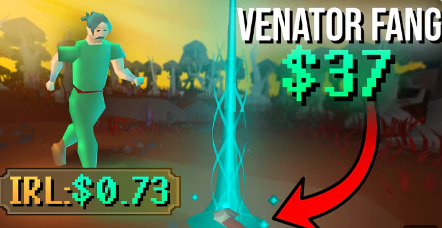
Deaths cost supplies and fees. One Doom mistake left money in the bag and added a reclaim cost. A rare pet also dropped with almost no liquid value.
One small win came off-screen: ordering noodles in Thai and answering the spice-level question at a mall. Sustainability matters most to players running long, public challenges.
Practical Takeaways
Three Lessons Worth Copying
Expected value does not protect a short sample. A strong money maker can still feel disastrous when uniques stay away.
Plans that depend on a few big outcomes break under bad timing. Balancing the grind with real-life moments also keeps a challenge watchable.
Is Bloodwoods Enough to Reach 777 Million cheap OSRS GP?
Not on its own in this challenge. Bloodwoods gave steady income, but even long days on guaranteed money would not fully close the gap before the booking ended. Players in a similar spot need a large drop, a longer schedule, or a lower target.
Why Does Expected Value Fail in Short Runs?
Expected value describes the average over many kills, not the next few hundred. With about 700 Magot King kills, the result landed far below average. Players should treat boss income as a range of outcomes and keep a cash buffer for dry streaks.
Does a Rare Pet Help a Gold Goal?
Not when the goal is liquid GP. A rare pet is exciting in most contexts, but here it arrived at the worst time and added almost no money. Players chasing a cash target should count pets as bonuses, not income.
Before You Grind
Quick Tips
· Set pace checkpoints, like the 414 million target on day 16, and check your bank against them.
· Compare actual drops to expected value before committing more days to one boss.
· Keep a steady earner like Bloodwoods as your base income.
· Budget for supplies, deaths, and reclaim fees.
· Plan real meals and sleep before long sessions.
Who Benefits Most?
Challenge followers: You get exact numbers showing how far luck can drift from expectation.
Bossing players: You can judge whether Magot King, elves, or Doom deserve more of your time.
Budget-focused players: You learn why a cash goal needs a reliable base and a buffer for losses.
In short, treat a gold goal as a risk plan, not a promise. Build around steady income, check expected value at fixed points, and protect your health and supplies. Boss drops can change everything, but a challenge that requires them is fragile.