









Quick Summary:
Want to break every elemental immunity in the game? There's only one way — hunting down Heralds inside Terror Zones. But is grinding for Sunder Charms actually worth 5+ hours of non-stop, no-logout gameplay? What are Heralds, how do they scale, and where's the real catch? Here's the full breakdown, tier by tier, so you know exactly what you're signing up for before you dive in.
What Are Sunder Charms, and Why Does Everyone Want Them?
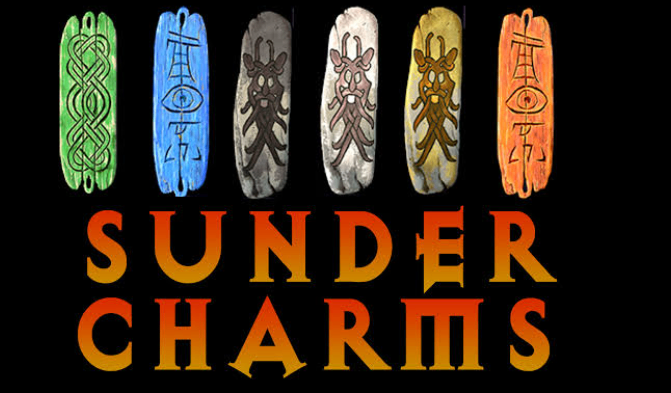
Sunder Charms are six brand‑new charms that each shatter one specific elemental immunity. Stack all six and no enemy in the game can no‑sell your damage anymore. Sounds amazing — until you learn the drop mechanic behind them: they are gated by the same brutal RNG as high‑tier D2R Runes (think Zod, Cham, or Jah). They only drop from certain Hell‑difficulty unique monsters, and the odds are so slim that you might farm for weeks without seeing one — much like waiting for that elusive Ber rune to complete your Enigma. Some players even believe that cubing specific rune combinations or using certain Horadric recipes can influence their appearance, though Blizzard has never confirmed it.
Best for: Endgame players chasing the strongest possible build who are willing to trade time for power. Value: Understanding what the reward actually is before committing to the grind.
Terror Zones 101: The Battlefield You Can't Ignore
Terror Zones randomly buff a level from any act for 30 minutes, pushing normal monsters +2 levels and champions/uniques up to +5. A level 85 character can suddenly be facing level 90 threats. This rotation exists specifically to keep the grind moving — and not every zone is worth your time.
Zone Tier | Worth Farming? | Why |
S-Tier | ✅ Yes | Highest density, best rewards |
A-Tier | ✅ Yes | Strong value, efficient farming |
B–F Tier | ❌ No | Low return, better to rest |
Best for: Players who want to farm smart rather than burn hours in low-value zones. Value: A simple tier filter saves you from wasting entire sessions.
Tracking Zones Without Losing Your Mind
Two tools make this grind survivable: a terror zone tier list (diablo2.io) to know what's worth farming, and a live terror zone tracker (d2emu.com) that shows the current and upcoming zone based on your local time. Check every 30 minutes — if it's S or A tier, go. If not, take a break.
Best for: Anyone who doesn't want to farm blind. Value: Turns a chaotic grind into a predictable schedule.
Hunting Heralds: The 2% Gamble
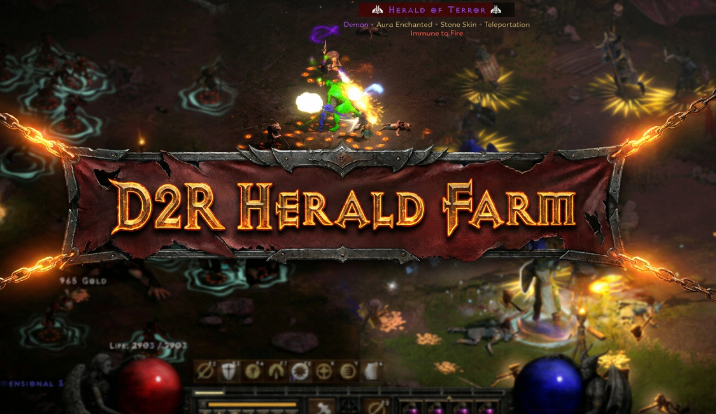
Killing champions, uniques, and elites gives a roughly 2% chance per kill to earn an invisible "token." Once earned, you'll see "You draw the Ire of a Herald!" — followed eventually by "A Herald is hunting you in..." Track it down, but be ready: Heralds hit hard, carry dangerous auras, and have massive health pools.
Best for: Players comfortable with slow, RNG-heavy progression. Value: Sets realistic expectations for how "invisible" this system really is.

The Tier 5 Trap: Why You Can't Log Out
Here's the brutal part. Heralds scale from Tier 1 ("Herald of Fright") to Tier 5 ("Herald of Terror"), and Sunder Charms only drop at Tier 4 or 5. The catch? You must stay in the same game session the entire time — no logout, no save-and-exit, no power outages allowed.
One real farming session showed the full climb:
Herald Tier | Name | Time Found |
1 | Herald of Fright | 4:43 PM |
2 | Herald of Dread | 6:40 PM |
3 | Herald of Fear | 7:01 PM |
4 | Herald of Horror | 9:36 PM |
5 | Herald of Terror | 9:44 PM |
Total time: roughly 5 hours of continuous, uninterrupted play — and that's with disciplined S/A-tier farming only.
Best for: Hardcore grinders with large uninterrupted play windows (think weekend binge sessions). Value: Honest math on the true time cost before you commit a whole evening — or your sleep schedule.
So... Is It Actually Worth It?
Once you hit Tier 5, every future Herald spawns as Tier 5 — meaning the "real" farming only starts after this multi-hour grind, and resets the moment you log out. For players juggling work, family, or basically a normal life, repeating this daily just isn't realistic — especially when the rewards often feel no better than a handful of cheap D2R Runes like El, Tir, or Ort. You invest hours of effort, only to see it vanish at logout, and the actual loot you haul in rarely justifies the time sink.
For casual and time-limited players, it may be smarter to skip the Sunder Charm chase entirely and focus on Worldstone Shards, farming colossal ancient statues, and Terror Zones purely for gear and XP.
Pro Tips Before You Commit
· Always confirm the current zone tier before farming — never grind blind.
· Set aside a full evening (5+ hours) if you're chasing Tier 5.
· Have snacks, water, and zero interruptions planned — bathroom breaks are the enemy here.
· If Sunder Charms aren't essential to your build, XP and gear farming is far more time-efficient.
Who Benefits Most?
· Hardcore/endgame players: Full immunity-breaking power, if you can spare the hours.
· Casual players: Skip the charm chase, farm zones for XP/gear instead.
· New/returning players: Understand the system before wasting a session chasing something you're not ready for.
FAQ
Q: What are Sunder Charms used for?
A: Each one breaks a specific elemental immunity, letting your damage type affect previously immune enemies.
Q: Where do Heralds spawn?
A: Exclusively inside active Terror Zones, after enough champion/unique/elite kills.
Q: Can I log out while climbing Herald tiers?
A: No — logging out, saving and exiting, or disconnecting resets your Herald tier progress.
Q: Which Herald tier drops Sunder Charms?
A: Only Tier 4 and Tier 5 Heralds have a chance to drop them.
Q: How long does it take to reach Tier 5?
A: Roughly 5 hours of continuous S/A-tier zone farming in one uninterrupted session.
Q: Does Diablo II: Resurrected support cross-progression between Switch and PC/other consoles?
Yes. The game features full cross-progression. By linking your Nintendo Account to your Battle.net account, all your online characters, loot, level, quest progress, skills, and talents will be available across all platforms where you own the game. However, you cannot be logged into the same Battle.net account on two different devices simultaneously.
Q: Can I play Diablo II: Resurrected on Switch offline?
Yes, but with a catch. You can play in Offline Mode, but the game requires an internet connection to periodically verify your license with the Battle.net servers—roughly every 30 days. Offline characters are saved locally on your Switch and cannot be used for cross-progression or online play.
Q: Does the Switch version support cross-play with PC or other consoles?
No. While cross-progression is supported, cross-platform play is not. Switch players cannot join the same games or lobbies as players on PC, PlayStation, or Xbox.
Q: What is the performance like on Switch (FPS and resolution)?
The Switch version targets 30 frames per second (FPS), which is generally stable, especially in the early game. The resolution typically runs at 900p when docked and 720p in portable mode. However, the game uses dynamic resolution scaling, which can drop as low as 480p in portable mode during intense action scenes to maintain performance. Some players have reported performance drops in later acts or during multiplayer sessions