









Summary
This review evaluates Windrose, an early-access open-world pirate survival game featuring resource gathering, base building, immersive sailing, naval combat, and RPG progression. Boasting varied biomes and roughly 70 hours of content, it delivers engaging exploration and skill-based combat, though it has minor flaws like repetitive locations and clunky inventory management. Ideal for pirate and survival genre fans, the game offers solid foundational gameplay. Players can buy Windrose Guinea to fully experience its early access features and support ongoing developer improvements.

Windrose arrives as one of the most anticipated open-world survival games in recent memory. Set across a sprawling archipelago filled with islands, secrets, and danger, it blends classic survival mechanics with sailing, exploration, and RPG progression. After extensive playtime, the question remains: does it live up to the hype, and is it worth the investment?
Core Gameplay and Survival Foundations
At its heart, Windrose is a survival experience. Players navigate islands, gather resources, manage hunger and health, chop trees, mine materials, and defeat creatures for better ingredients, armor, and weapons. Base building plays a central role. Placing a bonfire claims a large area for construction, and the system offers plenty of quality-of-life features that make building intuitive and satisfying.
Crafting stations pull resources automatically from any storage within the bonfire's radius. Workbench upgrades apply as long as they sit somewhere inside the base, removing the need for rigid placement. For those less interested in building from scratch, pre-built options exist. These conveniences help the early hours flow smoothly and keep the focus on adventure rather than micromanagement.
One small missing feature stands out: the inability to auto-deposit inventory items into nearby storage with a single click. Returning to base often means manually sorting loot chest by chest, which can feel tedious after a long voyage.
The Standout Feature: Sailing the Open Seas
What truly elevates Windrose is its sailing. Players begin with a simple dinghy and quickly progress to repairing a proper ship, rescuing crew, and setting out across the waves. The starting vessel, known as the Catch, delivers responsive controls and immersive audio. The sound of water against the hull and the rise and fall of waves create a genuine sense of mystery and adventure on the open ocean-something rarely captured so well in modern games.
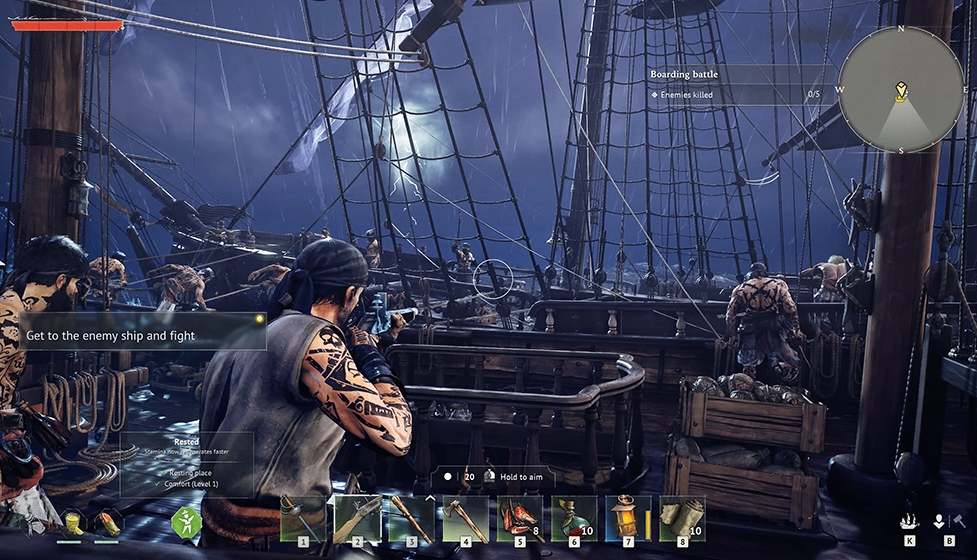
Ship progression feels rewarding. Players upgrade cannons, strengthen hulls, improve crew weaponry for boarding actions, and unlock cosmetic options including the ability to rename the vessel. Naval combat against hostile ships adds intensity, especially when sailing solo. Steering while aiming and firing cannons demands constant attention and becomes one of the most hectic yet satisfying systems in the game.
Exploration, Progression, and RPG Elements
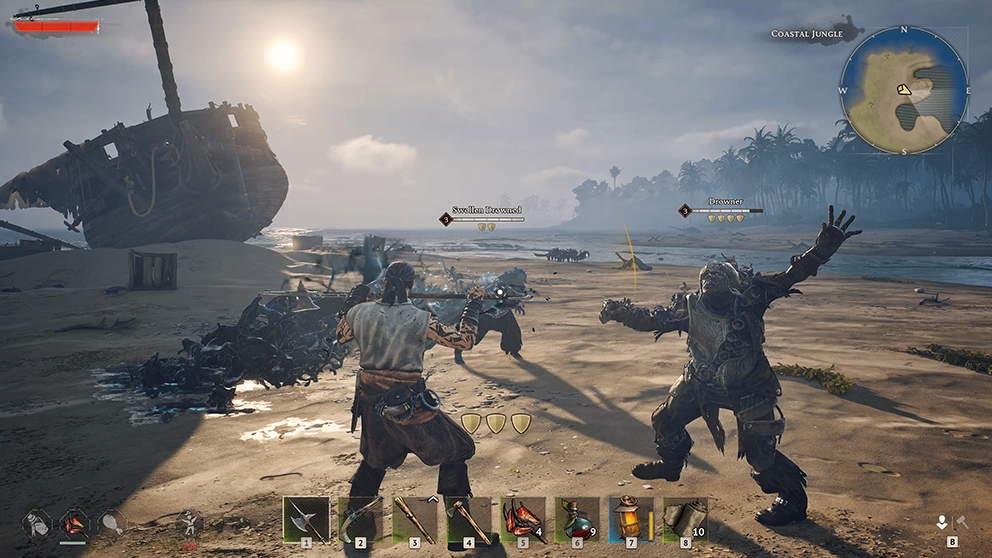
The world spans multiple biomes at early access launch: coastal jungle, foothills, and cursed swamps, with more content promised. Developers estimate around 70 hours of content, and the scale supports that claim. Gameplay revolves around sailing between islands, clearing points of interest, looting dungeons, harvesting resources, and moving onward.
Points of interest follow recognizable patterns-campsites, for example, often hide multiple chests-but enough variety prevents the experience from feeling purely repetitive. Fast travel becomes available through craftable bell points, with a limit of ten distinct locations. This system reduces backtracking without eliminating the joy of discovery.
RPG systems layer on top of the survival loop. Completing quests grants experience and skill points that improve stamina, health, or weapon damage. Feats function like a skill tree, letting players tailor builds. One effective approach focuses on critical hit chance and damage, pairing well with certain armor set bonuses for a high-risk, high-reward style.
Creatures vary by biome and include standard types alongside star-rated stronger variants and occasional unique ability users. Even as the player grows stronger, the world never feels entirely safe. This constant tension keeps exploration engaging.
Combat: Rewarding but Unforgiving
Combat centers on blocking, parrying, and poise management. Shields appear on both the player and enemies. Perfect timing blocks damage, preserves the player's poise, and strips poise from the opponent. Emptying an enemy's shields stuns them, opening the door for a devastating counterattack.
Melee weapons range from swords and maces to the classic rapier. Ranged options like muskets and blunderbusses offer slow but powerful opening shots. The system feels deeply satisfying when it works. Missing blocks or facing swarms, however, can lead to quick frustration, especially for solo players. The combat rewards skill and timing but punishes mistakes harshly.
Naval Battles and Faction Dynamics
As players venture farther, they enter waters controlled by different factions, both friendly and hostile. Blackbeard serves as a primary antagonist, and encounters with his forces deliver frequent naval combat. Managing the ship while engaging multiple threats solo creates memorable, high-pressure moments. Success brings loot, renown with various factions, and access to better upgrades and vendor items.
Pain Points and Areas for Improvement
Despite its strengths, Windrose has rough edges. Solo play amplifies certain challenges-managing a ship in combat while handling everything alone can feel overwhelming. Some points of interest lean toward repetition across the large map. Inventory management lacks the final quality-of-life polish that would make returning from a long trip more seamless.
These issues do not break the experience, but they stand out against the otherwise polished systems. The game is still in early access, so future updates may address many of these concerns.
Final Verdict: Who Should Buy Windrose?
Windrose succeeds most in its sailing, sense of exploration, and steady progression. It captures the romance of pirate adventure while delivering solid survival and RPG systems. Players who enjoy games centered on sailing, island hopping, and gradual power growth will find plenty to love. Those seeking a more relaxed solo experience or highly polished combat may encounter more friction.
For fans of the genre looking for a fresh take on open-world survival with a strong nautical focus, Windrose offers a compelling package. The combination of satisfying ship handling, meaningful upgrades, and a vast world to discover makes it easy to sink dozens of hours into the archipelago. Whether the full vision holds up long-term will depend on continued development, but the foundation is strong.
Anyone curious about the experience should consider trying Windrose Guinea as part of their next adventure. Many players looking to dive in fully choose to buy Windrose Guinea to experience the complete early access offering and support ongoing updates. The game delivers enough unique moments-especially on the open water-to justify the time and investment for the right audience.