Weekend Drop -














Whether you are choosing a spec for your first WoW Forever trial or weighing what you have already played, focus on combat you would enjoy repeating.
Feral Druid suits adaptable solo play, Protection Warrior suits tanking, Survival Hunter develops ranged and melee options, Frost Mage rewards control, and Enhancement Shaman mixes weapon hits with spells. Judge each with the tools available to you.
World of Warcraft: Forever launches November 4, 2026. Before committing to a main, separate an incomplete early toolkit from a playstyle you dislike, then check whether your preferred activities leave time for gathering or crafting. Their level-60 performance and launch-market profits remain unproven; the useful decision now is which everyday loop deserves more of your time.

Launch Specs and Professions at a Glance
Choose your WoW Forever main around the combat and responsibilities you want to try or already enjoy. Gathering is a conservative income plan when you spend time outdoors; crafting suits a funded project.
A dungeon-heavy schedule leaves fewer gathering opportunities, so match the profession plan to the activities you will actually repeat.
Spec | Suits Players Who Want | Starting Profession Plan | Main Trade-off |
Feral Druid | Solo exploration and adaptable combat | Skinning + Herbalism | Several forms and resources to manage |
Protection Warrior | Dungeon tanking with outdoor questing between runs | Mining + Skinning | Equipment upkeep and group coordination |
Survival Hunter | Outdoor combat with ranged and melee options | Skinning + Herbalism | The melee toolkit develops through talents |
Frost Mage | Spellcasting, control and outdoor PvP | Gathering first, or Tailoring + Enchanting with funding | Crafting consumes materials that could otherwise be sold |
Enhancement Shaman | Two-handed melee, burst and support spells | Herbalism + Alchemy, or gathering first | Weapon upgrades and mana recovery compete with profession spending |
These pairings are recommendations available to any class. A regular group can divide crafting responsibilities; solo players should consider how much profession time they want alongside leveling.
Turn Your Trial into a Launch Choice
A short WoW Forever session can reveal whether you enjoy controlling distance, managing recovery or handling several enemies. It cannot settle a level-60 rotation, raid demand or long-term income.
Use these four checks during a limited trial, or apply them to the session you have already finished. Use manageable encounters; you do not need a large pull to judge how a spec handles pressure.
Trial Stage | What to Judge |
Ordinary combat | Would I enjoy repeating this skill loop? |
An unexpected encounter | Is handling an extra enemy engaging with the tools I have? |
Between fights | Do recovery time and resource management feel frustrating? |
Before finishing | Which core skills remain locked, leaving part of the spec untested? |
Keep one provisional main and one alternative. Missing abilities justify reserving judgment, but you still have to play through the early levels.
If both the current routine and its later direction sound unappealing, choose another spec. You can wait for launch footage of the missing tools before deciding on a longer commitment.
Five Specs Worth Maining at Launch
For each WoW Forever spec, judge the tools available to you separately from those you expect to unlock later.

Feral Druid: Flexible Solo Leveling
Feral suits players who like having several answers to a bad pull. Once the relevant abilities are learned, Bear Form, Thorns and Swipe offer a way to handle small groups. Cat Form adds stealth and focused damage.
Healing between fights helps you continue questing, while Travel Form provides another movement option when available.
If your trial reached multiple forms, ask whether switching to Bear against an extra enemy and finding space to heal felt manageable.
Enjoying that recovery is a reason to keep Feral on your shortlist. If you only used early caster spells, its main attraction remains untested; constant form and resource management must still appeal to you.
Skinning plus Herbalism fits outdoor questing. Loot and skin eligible beasts you already need for objectives, then collect herbs along the route. If herbs are heavily contested, finish the quest circuit instead of repeatedly circling an empty gathering spot.
Keep an equipment budget: Forever makes your equipped weapon's damage relevant to attacks in form. Compare quest rewards and affordable alternatives before spending heavily on a temporary weapon.
Protection Warrior: Tank While Leveling
Protection is a good fit if you want to learn tanking during progression and keep that role for dungeons. Its Beta talents reward blocks with rage, while Master of Defense adds a chance to gain rage from dodging or parrying with a shield equipped. Thunder Clap and Cleave provide ways to spend rage against multiple enemies once available.
Judge whether you enjoyed managing rage and staying in control when another enemy joined. If you tanked a group, consider whether setting the pace and watching allies felt rewarding or exhausting.
Solo combat cannot answer whether you enjoy that responsibility. Keep pulls small when casters or incoming damage overwhelm your available tools.
Mining plus Skinning supports outdoor questing between runs. If your regular party spends most sessions inside dungeons, those professions will not generate much income during that time.
Choose whether separate gathering trips are acceptable; otherwise budget around quest rewards and ordinary loot sales, and postpone Blacksmithing. Return to outdoor objectives when forming another group takes too long.
Dungeon access does not guarantee profit or equipment. Keep your shield and weapon under review, and reserve repair funds before profession spending. Protection fits a player willing to accept group coordination and equipment upkeep alongside its combat appeal.
Survival Hunter: Grow into Hybrid Combat
Survival appeals to players who enjoy changing distance during a fight. Its talent progression adds Strider Kick, a melee attack with a brief movement-speed increase, and later Lacerating Strikes, which adds a bleed to Mongoose Bite.
These tools develop over time, so the finished melee playstyle should not be your expectation for the opening levels.
For your trial verdict, separate enjoying the pet-and-ranged routine from wanting a future melee build. If changing distance felt engaging, Survival deserves another look.
Without its later attacks, you have not sampled the full hybrid loop. If you only want melee from the opening levels, its progression may feel frustrating. Use ranged combat while the toolkit develops.
Lone Wolf is an option in the Marksmanship tree, requiring talent investment outside Survival. A petless hybrid setup therefore has a build cost; it is not a free toggle included with choosing Survival.
Skinning works naturally when your quests involve beasts, with Herbalism adding materials along the route. If stopping after every kill feels tedious, that profession loop may undermine the combat you enjoyed. Skin along your normal objectives, and prioritize other income when leather sales are weak.
Frost Mage: Control before Pull Size
Frost offers a satisfying progression from ranged casting into stronger control and instant-cast opportunities. Ice Lance gains value against frozen targets, with Fingers of Frost adding opportunities as the talent becomes available. Frost Nova, Blink and Polymorph give you ways to manage danger as you learn them.
Recall whether you enjoyed slowing enemies, repositioning and recovering mana between fights. If you reached Ice Lance, judge the extra decisions it added.
A trial before that unlock cannot settle the later rotation, but disliking ranged control and drinking is a meaningful warning. Start with small pulls; old farming routes need fresh testing after Blizzard's slow and damage adjustments.
Tailoring plus Enchanting offers bags, cloth equipment and disenchanting. Funding both means consuming items you could sell, and spending time on recipes and customers. Compare each craft with its material value and disenchanting with selling equipment intact.
If you want short questing sessions with little market management, gather and sell cloth initially. Develop crafting when a useful recipe or actual customers justify the time and material investment.
Enhancement Shaman: Melee with Spell Support
Enhancement suits players who enjoy two-handed weapon hits, Windfury bursts and access to healing and totems. Stormstrike moved to a 16-point talent with an eight-second cooldown in Blizzard's announced redesign, bringing an active melee ability earlier into progression.
Maelstrom Weapon comes later in the tree. Its melee-triggered charges reduce Lightning Bolt's cast time, eventually allowing instant casts with sufficient investment and charges. A brief early trial will not necessarily show that interaction.
Ask whether weapon swings, spell choices and self-healing felt enjoyable between exciting bursts. If you reached Stormstrike, assess the more active loop; without it, reserve judgment on that improvement. Enjoying one Windfury proc does not answer whether you tolerate the recovery. If frequent Shocks and healing leave you drinking after every fight, reduce unnecessary casts or tackle easier pulls.
Herbalism plus Alchemy fits players willing to gather and make consumables. Herbs retain a sale value, so test small batches before expanding.
If profession spending delays a meaningful weapon upgrade or essential training, sell herbs and postpone the next crafting push. For short sessions, selling herbs leaves more time for combat; PvP-focused players should also consider Engineering's utility.
Gold Planning through the Leveling Journey
Use these level bands as personal budget checkpoints in WoW Forever. Market demand follows the wider population's progress, which may be ahead of or behind your character.

Levels 1 to 30: Establish Cash Flow
For the first ten levels, protect enough cash for your next useful training visit, repairs and required gathering tools. Check actual trainer prices before optional spending. Prioritize attacks you regularly use and survival tools for your intended role.
Postpone ranks used only in a role you are not currently playing, then revisit them before changing activities. For example, a solo Feral player should preserve useful self-healing before spending on spells intended only for a separate group-healing role. A tank should retain the tools needed to regain control of enemies.
At a town stop, repair, review useful training and clear bag space. Gather along quest routes instead of adding long detours. If you lack WoW Forever Gold for that next training visit, sell surplus materials instead of holding everything for a hoped-for price rise. Keep materials for a specific near-term craft only after covering your reserve.
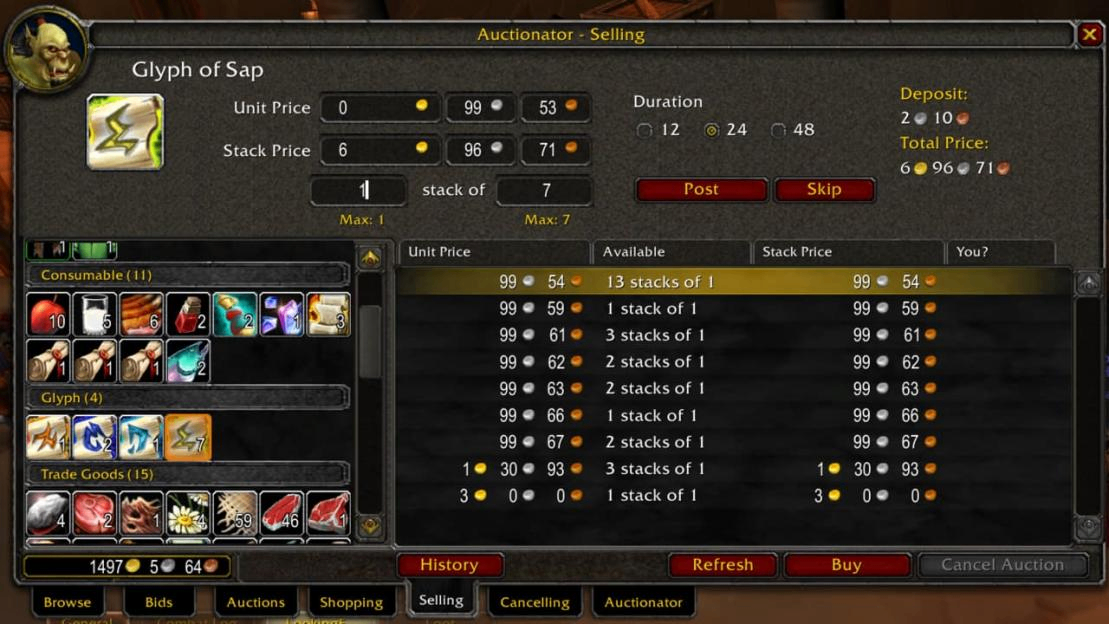
Compare vendor value with auction proceeds after costs. Offer a small quantity first; repeated failed listings mean you should review demand before collecting or posting more.
Levels 30 to 45: Protect Travel Funds
Check riding requirements and costs with the relevant trainer and vendor as you approach eligibility. Reserve that amount alongside routine expenses before allocating money to speculative stock or profession leveling. Use launch prices instead of assuming a Classic mount budget applies unchanged.
A useful budget separates essential training and repairs, a planned weapon or shield upgrade, and optional crafting capital. If an investment would drain the first category, delay it.
Calculate crafting profit from the expected sale price minus material value and auction costs. Self-gathered materials have an opportunity cost because you could sell them. Include unrecovered deposits from failed listings when reviewing whether repeated sales are profitable.
Levels 45 to 60: Test Crafting Demand
Stay with gathering if it still suits your playtime and produces sales. Consider Alchemy, Enchanting or Blacksmithing when you can identify a usable recipe, obtain its materials and retain enough cash for normal play. Test demand before producing a large batch.
Approach | Practical Starting Point | Main Risk |
Casual gathering | Sell materials collected during regular play | Competition and limited gathering time |
Crafting services or goods | Develop a specific recipe or small product range | Training, materials and uncertain demand |
Auction trading | Follow one familiar material market first | Unsold stock ties up funds |
The Legacy System's Bountiful Harvest perk supports finding additional Scarce resources through gathering. It offers longer-term gathering value, but no fixed income guarantee. Do not assume higher-level materials will sell faster than lower-level supplies still needed by progressing characters.
Gold Mistakes to Avoid Before 60
Choosing a main solely from Beta DPS can lead to an expensive change of plan. Compare the combat you will actually play, including solo recovery, group responsibilities and outdoor PvP. A level-30 result cannot settle a level-60 raid ranking.
Pushing a crafting profession too early can also consume your reserve. Stop the next skill-up batch when it would prevent essential training or equipment upkeep. Resume after sales replenish your funds, or keep gathering while you reconsider the recipe.
Spending WoW Forever Gold on temporary equipment deserves the same scrutiny. Prioritize an upgrade that addresses a real problem, such as slow kills or unreliable survival, and check upcoming quest rewards before spending. Replacing several adequate items at once can delay a more useful weapon or travel expense.
Stockpiling creates another trap: listed value is not completed income. Review items that repeatedly fail to sell, reduce the quantity offered and stop collecting that material exclusively until demand improves. An older gold-making route needs the same scrutiny when spawns, skills or competition have changed.
Keeping money available for repairs, training and consumables can be more useful than owning an expensive recipe with no customers. Set a spending limit before entering a profession market, and stop expanding inventory when sales cannot fund the next batch.
Choose Your Starting Combination
Keep Feral if its adaptability appeals, Protection if you want group responsibility, Survival if you accept its progression toward hybrid combat, Frost if control and recovery fit your pace, or Enhancement if routine melee and spell decisions remain enjoyable between bursts.
Then match professions to your available time. Gather during outdoor sessions; avoid relying on nodes you will rarely visit during dungeon play. Invest WoW Forever Gold in crafting after setting aside essential training and equipment funds.
If your trial never reached the tools that attracted you, keep the choice provisional. Check your chosen spec's next unlock at the class trainer and in its talent tree, then decide whether reaching it fits the time you want to spend before committing to a long profession grind.