










Summary:
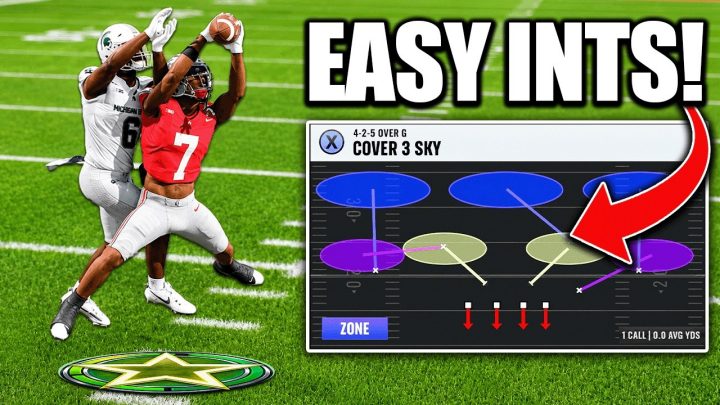
Defense in College Football 27 does not have to be complicated. A strong defensive scheme starts with five core principles: stop the flats, defend deep passes, stop the run, contain the quarterback, College Football 27 Coins, and generate pressure. Using a simple Cover 3 Sky setup from the 4-2-5 Over G formation can give players a reliable defensive foundation for Online Dynasty and competitive games.
Why Defense in College Football 27 Feels Difficult
Many players struggle on defense in College Football 27 because they try to make too many adjustments before understanding the fundamentals. Instead of constantly changing formations, a better approach is to build a reliable base defense and adjust it only when your opponent gives you a reason.
The 4-2-5 defensive playbook is an excellent starting point because it offers flexibility against both passing and rushing attacks. The key is making your defensive plays look similar before the snap, forcing your opponent to read the coverage instead of immediately identifying your strategy.
Start With a Consistent Defensive Shell
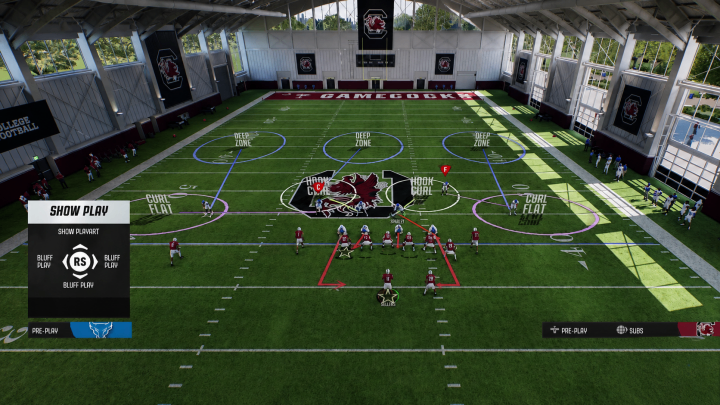
One of the most important concepts is disguising your defense. A Cover 2 shell can make different defensive plays look similar before the snap, allowing you to change the actual coverage without giving away your intentions.
For a basic setup, players can experiment with quarterback depth around five yards and safety depth around nine yards. Zone drops can also help protect common passing areas, with curl and flat defenders positioned to limit easy underneath throws.
The goal is simplicity. If every defensive play looks similar before the snap, your opponent has fewer clues about what is coming.
The Five Core Defensive Principles
A strong defense in College Football 27 should focus on five areas:
1. Take away the flats
2. Protect against deep passes
3. Stop the run
4. Contain mobile quarterbacks
5. Generate pressure
No single defensive call will perfectly accomplish all five. Instead, your base defense should cover as many of them as possible while allowing you to make targeted adjustments when necessary.
Cover 3 Sky as a Reliable Base Defense
Cover 3 Sky is an excellent foundation for this defensive strategy. It provides strong deep coverage while still giving defenders opportunities to protect underneath routes.
With appropriate zone drops, the curl-flat defenders can help limit quick throws to the sidelines. Meanwhile, the deep coverage makes it more difficult for opponents to score with simple vertical routes.
A user-controlled defender can then patrol the middle of the field and react to crossing routes, drags, slants, and other underneath concepts.
This creates a balanced defensive structure without requiring complicated match-coverage adjustments.
How to Improve Run Defense
Stopping the run requires patience. You do not necessarily need to shut down every rushing attempt. A better goal is to prevent explosive plays and force your opponent to consistently earn three to six yards.
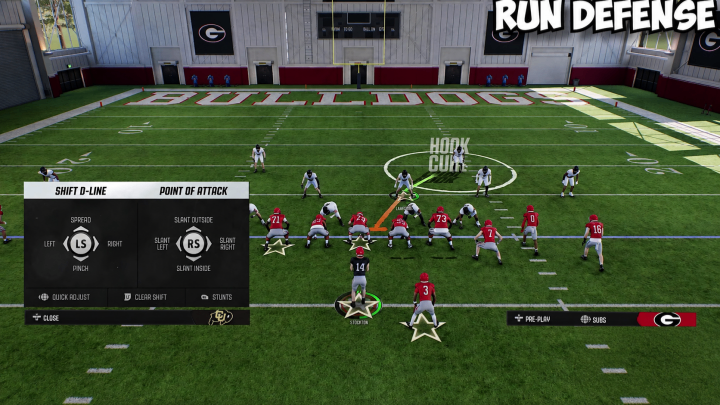
Against shotgun formations, positioning your user defender toward the halfback side can help you flow toward the running lane. When facing heavy formations with multiple tight ends or running backs, bringing a safety closer to the box can provide an additional run defender.
The Texas Four-Man stunt is another useful adjustment for attacking inside runs. Depending on the alignment, spreading or pinching the defensive line can help create better penetration.
However, bringing safeties into the box comes with a major risk: play-action. Avoid immediately sprinting downhill with a safety unless the situation demands it. Slow-playing the run allows you to react if the opponent keeps the ball or throws over the top.
Creating More QB Pressure
A common weakness of conservative Cover 3 defenses is that they may not generate enough pressure with four rushers. Fortunately, there are several ways to increase pressure.
Cover Zero is the most aggressive option. When using it, press coverage and move blitzing linebackers closer to the line so the pressure reaches the quarterback quickly.
The important point is speed. A Cover Zero blitz that takes too long to arrive defeats its purpose. Practice the setup until your pressure reaches the quarterback before short routes have time to develop.
For a safer approach, keep the Cover 3 shell and use stunts such as Texas Four-Man. Pass-rush adjustments can also help defensive linemen trigger faster sheds.
Containing Mobile Quarterbacks
Mobile quarterbacks can completely change a defensive game plan. If your opponent consistently escapes the pocket, quarterback contain becomes essential.
Simply calling contain is not always enough. The defender responsible for contain needs good athleticism and a useful angle outside the offensive tackle.
Spreading the defensive line can sometimes create a better contain angle. You can also manually move a defender into a more advantageous position before the snap.
The goal is to maintain outside leverage while still protecting against the quarterback's passing options.
Defending Short and Intermediate Routes
Quick throws are among the easiest ways for an opponent to move the ball. Drag routes, slants, and short passes can punish defenses that focus too heavily on deep coverage.
Your first answer should be your user defender. Patrol the middle and react to crossing routes instead of immediately chasing the quarterback.
When you need stronger underneath coverage, use more aggressive zone settings. This can force the quarterback to make longer throws, giving your deep defenders and user more time to make a play.
However, aggressive underneath coverage can create space elsewhere, so use it based on the situation.
Understanding Cover 3 Weaknesses
Every coverage has weaknesses, and understanding them is more important than blindly calling the same play.
Cover 3 can leave certain seams vulnerable depending on how the middle-third safety rotates. If your opponent repeatedly attacks the weak seam, you need to recognize the pattern and make an adjustment.
One solution is manually positioning a defender closer to the seam. Another is changing a deep defender to a middle-third, quarter, or deep-half assignment.
You can also use switch-stick techniques to quickly move onto the defender responsible for the vulnerable area.
The key is not trying to eliminate every possible weakness. Every defensive call gives something up. Instead, force your opponent to make difficult throws into areas you are prepared to defend.
Defense Is About Adjustments, Not Panic
One of the biggest lessons from this strategy is that you should not abandon your defensive scheme after one explosive play.
If an opponent struggles to move the ball but suddenly hits a 40-yard run, that does not automatically mean your defense is broken. Explosive plays happen, especially when there are significant differences in team speed and player ratings.
Stay disciplined, identify why the play happened, and make an adjustment only when the evidence shows that you need one.
Final Thoughts
The best College Football 27 defense does not have to be complicated. Start with a consistent shell, build around Cover 3 Sky, and understand the five defensive priorities: stop the flats, protect against deep passes, defend the run, contain mobile quarterbacks, and generate pressure.
From there, make adjustments based on what your opponent actually does. Use Texas Four-Man against the run, bring safeties into the box when necessary, increase underneath coverage against quick passing attacks cheap College Football 27 Coins, and use pressure packages when the quarterback has too much time.
Mastering these fundamentals will make your defense more consistent in College Football 27, whether you are playing Online Dynasty, head-to-head games, or competing at a higher level.