Weekend Drop -















Summary:
Mastering defensive macros in College Football 27 can completely change the way your defense performs. From generating consistent pass-rush pressure to shutting down corner routes and protecting the red zone in College Football 27 Coins, these six defensive macros provide a strong foundation for building a reliable defensive scheme.
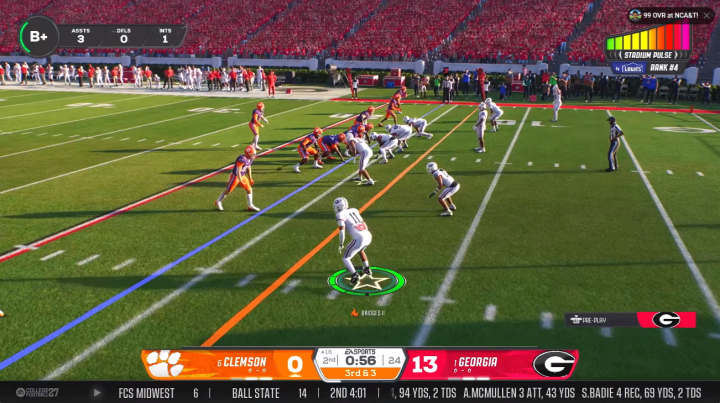
Why Defensive Macros Matter in College Football 27
Defense in College Football 27 is not simply about selecting the right play. The adjustments you make before the snap can determine whether your defense gives up an easy completion or forces a turnover. Defensive macros allow players to combine multiple adjustments into a simple input, making it much easier to create consistent defensive looks.
The best approach is to build a small collection of reliable macros and use them as the foundation of your defensive playbook. These adjustments can be especially useful in College Ultimate Team, Dynasty, Head-to-Head, and other competitive game modes.
1. Texas Four-Man Macro for Consistent Pass Rush
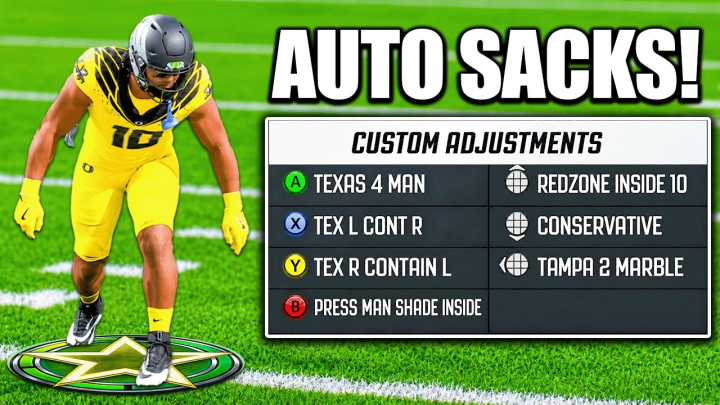
One of the most useful defensive macros is the Texas Four-Man setup. This macro combines a Texas four-man stunt with a defensive-line spread, creating more opportunities for your defensive tackles and edge rushers to generate pressure.
Spreading the defensive line is important because it opens the interior gaps and allows the stunt to develop more effectively. The result can be improved pass-rush sheds while still maintaining reasonable run-defense potential.
This macro works particularly well from formations that feature four defensive linemen, including Nickel Over, Single Mug, Nickel Load, Nickel Wide, 4-3 Over, and Over G.
For even more pressure, user-control a defender near the line of scrimmage and hover around the area where the offensive line is likely to struggle. You can also combine the macro with a pass guess when appropriate.
Player speed matters significantly here. Fast edge defenders and defensive tackles can make this setup much more dangerous.
2. Texas Stunt With QB Contain
The biggest weakness of the Texas Four-Man stunt is the quarterback rollout. Mobile quarterbacks can escape the initial pressure by simply moving outside the pocket.
The solution is a Texas Stunt With QB Contain macro.
This setup keeps the defensive-line spread and Texas stunt but adds a contain defender on the side where the quarterback is most likely to escape. Against a right-handed quarterback, containing the right side is often a strong starting point.
The macro can therefore be adjusted depending on which direction you want to protect. You can use a left Texas stunt with right contain or reverse the setup.
This adjustment is particularly valuable against players who repeatedly roll out to avoid interior pressure.
3. Press Man Shade Inside Macro
Man coverage can be difficult to defend in College Football 27, but a properly configured Press Man Shade Inside macro can make it much more reliable.
The setup combines defensive press coverage, inside route commitment, and inside coverage shading. The goal is to take away quick inside-breaking routes while forcing the quarterback to look elsewhere.
User control is extremely important with this strategy. You can user a safety, a linebacker, or the defender assigned to the running back depending on the offensive formation.
However, be careful when manually bumping receivers. Aggressive user contact can result in defensive pass interference, so timing and positioning matter.
This macro can also be paired with a pass-rush adjustment such as the Texas Four-Man setup. Combining coverage pressure with a strong pass rush can dramatically reduce the quarterback's time to find an open receiver.
4. Red Zone Inside-the-10 Macro
The red zone requires a completely different defensive mindset. Once the offense reaches the 10-yard line, space becomes limited and certain routes become extremely dangerous.
The Red Zone Inside-the-10 macro is designed to protect against several of these common scoring concepts.
Start from a Tampa 2-style defense. The macro can pinch and contain the defensive line while placing hook zones around five yards. The safeties move into inside-quarter responsibilities, while the outside cornerbacks use 10-yard hard flats.
This setup is designed to remove easy underneath throws while also limiting popular back-of-the-end-zone routes.
There is still one important weakness: deep corner and back-corner throws can sometimes exploit the way defensive backs react near the goal line. User control becomes essential here. Watch the back corner of the end zone and be prepared to switch defenders when necessary.
5. Conservative Defense for Late-Game Situations
When your opponent needs a touchdown quickly, aggressive defensive calls can become risky. A conservative macro can help prevent explosive plays while forcing the offense to take shorter gains.
Tampa 2 and Cover 3 Sky are strong starting points for this strategy. Use conservative defensive adjustments to make your zones play deeper and reduce the chance of giving up a one-play touchdown.
Against Cover 3, cloud flats can provide better protection against certain sideline concepts. Your user defender should focus on the seams first because quick seam throws can become easy completions if nobody takes responsibility for them.
Deep sideline routes are another major threat. You should stay active rather than relying completely on your AI-controlled defenders.
The key principle is simple: make the offense earn every yard.
6. Tampa 2 Mable for Stopping Corner Routes
Corner routes remain one of the most frustrating concepts to defend in College Football 27. A Tampa 2 Mable setup can help take away these throws.
The important adjustment is the zone-drop configuration. Set cloud flats around 25 yards while keeping curl flats around five yards. This creates a layered defensive structure that protects the deep outside area while maintaining underneath coverage.
The setup works especially well from Nickel formations and can also be adapted for Dime packages.
If you have two slot cornerbacks, you can create coverage on both sides of the field. This can turn the concept into a double-sided Mable look and provide additional protection against deep crossers and corner routes.
How to Build Your College Football 27 Defense
The biggest advantage of defensive macros is consistency. Instead of manually making several adjustments every play, you can create a small number of dependable presets and call them according to the situation.
A strong defensive system should include at least one pass-rush macro, one rollout counter, one man-coverage setup, one red-zone defense, and one conservative coverage package.
Remember that macros are not completely automatic solutions. User control remains extremely important. You still need to identify seams, deep sideline routes, corner routes, and quarterback rollouts during the play.
Final Thoughts
The best College Football 27 defenses are built around flexibility rather than one unstoppable play. The six macros above give you tools for generating pressure, stopping mobile quarterbacks, improving man coverage, defending the red zone, cheap College Football 27 Coins, and limiting explosive passing plays.
Start with the Texas Four-Man macro, then add the rollout counter and Press Man Shade Inside setup. Once those become comfortable, expand your defensive system with the red-zone, conservative, and Tampa 2 Mable macros.
With the right adjustments and active user defense, these macros can turn a predictable defense into a much more difficult opponent to attack.