Weekend Drop -













Summary
Defense wins championships in College Football 27, but only if you understand the advanced mechanics that separate average players from elite competitors. This guide breaks down the most effective defensive adjustments, coverage techniques, blitz strategies, College Football 27 Coins, and red zone setups that can completely transform your online performance.
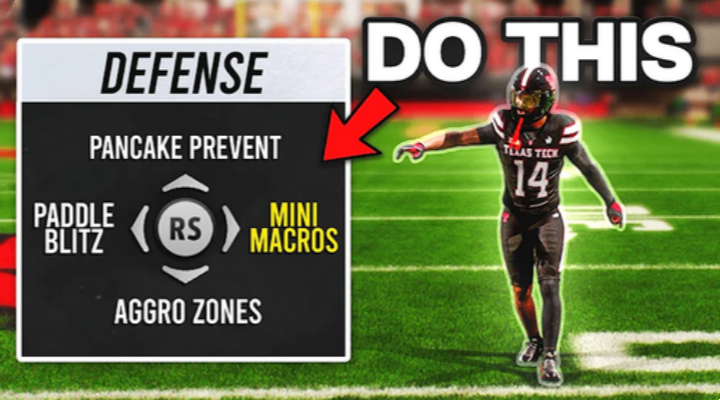
Step 1: Improve Your Defense with Better Safety Positioning
One of the simplest yet most impactful adjustments in College Football 27 happens before the ball is even snapped.
Open your Coaching Adjustments and change:
Safety Depth: 9
Safety Width: Pinch
This adjustment immediately improves both run and pass defense.
Benefits
Defends seam routes more effectively.
Closes running lanes much faster.
Prevents explosive rushing plays.
Gives safeties quicker reaction times against inside runs.
Many players overlook these settings, but they provide a strong defensive foundation throughout the entire game.
Step 2: Build Flexible Coverage with Mini Macros
Instead of creating complete defensive shells for every situation, experienced players now rely on mini macros.
Rather than assigning an entire coverage package, create smaller coverage pieces.
For example:
Strong Cover 3 Right
Weak Cover 4 Left
Cover 2 Weak Side
These "building blocks" can be stacked together to create countless defensive looks.
Advantages include:
More disguise before the snap.
Greater flexibility.
Faster adjustments.
Less time creating custom setups.
By combining multiple mini macros, you can create Cover 6, hybrid Cover 3/4, and numerous custom coverages without rebuilding your defense every play.
Step 3: Master Ghost Walking Against the Run
Running the football remains extremely effective in College Football 27, especially because offensive linemen frequently generate pancake blocks.
A safer solution is Ghost Walking.
Instead of attacking the hole aggressively:
Turn your user-controlled defender around.
Wait patiently.
Let the running back enter your area.
Make the tackle.
This conservative technique prevents offensive linemen from engaging your defender.
Advantages include:
Fewer missed tackles.
Less chance of getting pancaked.
Consistent 3–5 yard gains instead of allowing explosive runs.
While aggressive run shooting can create bigger losses, Ghost Walking offers much greater consistency.
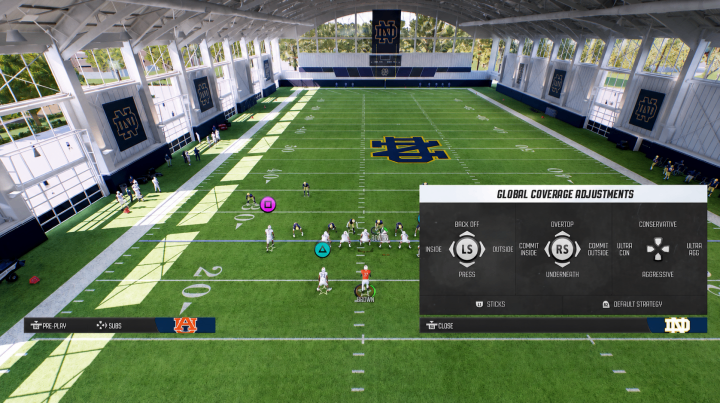
Step 4: Put Every Zone on Aggressive
One of the strongest hidden adjustments in College Football 27 is changing all zone defenders to Aggressive.
This setting dramatically improves zone behavior.
Aggressive zones:
Jump underneath routes.
React quicker to flats.
Cover crossing routes better.
Contest corner routes more effectively.
Hook zones become much tighter over the middle, while curl flats respond faster to quick throws.
Because deep passing is currently less reliable, aggressive zones rarely get punished over the top.
This simple adjustment makes Cover 2, Cover 3, and Cover 4 significantly stronger.
Step 5: Learn Advanced Man Coverage
Man coverage has received major improvements this year.
However, elite players don't simply call Cover 1 or Cover 2 Man—they customize leverage.
There are two important mechanics:
Shading
Adjust leverage toward:
Inside
Outside
Underneath
Over the top
Route Commit
If you've identified your opponent's tendencies, you can commit defenders toward expected routes.
For example:
Inside commits stop drags and crossing routes.
Outside commits defend corner routes.
Individual receiver adjustments are far more effective than adjusting the entire secondary.
Top defenders constantly read tendencies before making these changes.
Step 6: Improve User Defense with Switch Stick
Switch Stick remains one of the most powerful defensive mechanics.
However, many players accidentally abandon deep coverage after switching defenders.
A safer solution is using:
Cover 4 to the flooded side
Cover 2 or Cover 3 elsewhere
Inside quarters protect vertical streaks while you manually cover crossing routes.
This allows aggressive switching without sacrificing deep coverage.
The result:
Better user control.
Fewer blown coverages.
More interceptions.
Step 7: Generate Pressure with Paddle Blitzing
Paddle Blitzing combines user blitzes with instant defender switching.
The process is simple:
Blitz your user.
Immediately switch to another defender using the D-pad.
Continue playing coverage.
This creates overload pressure while keeping seven or more defenders in coverage.
Players using controllers with rear paddles (Elite, DualSense Edge, or SCUF) gain an additional advantage because they never remove their thumb from the movement stick.
That faster transition creates much smoother user coverage.
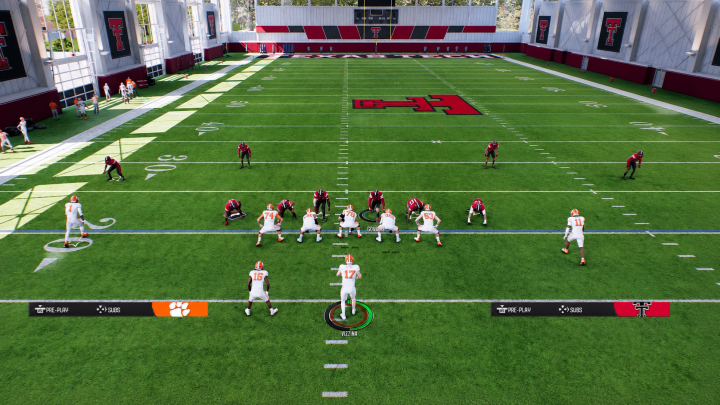
Step 8: Build an Elite Red Zone Defense
Stopping offenses inside the 20-yard line requires different coverage principles.
An extremely effective setup includes:
Outside corners in Curl Flats.
Safeties in Inside Quarters.
Mid Read defender remaining in the middle.
Strong-side hook set to Ultra Aggressive.
Why Curl Flats?
Unlike Hard Flats or Cloud Flats, Curl Flats defend:
Corner routes
Flat routes
Short out routes
Quick checkdowns
If you're confident your opponent will pass, add:
QB Spy
Contain Rush
This eliminates quarterback scrambles while maintaining strong coverage.
Step 9: Create Pressure While Rushing Only Two Defenders
One of the strongest defensive concepts is rushing only two defenders.
The setup works best from four-man fronts.
Instructions:
Drop one defensive end into coverage.
Assign one interior defender as QB Spy.
Leave your best edge rusher isolated one-on-one.
Advantages include:
Nine defenders in coverage.
One-on-one pass rush opportunities.
QB Spy preventing scrambles.
If the edge defender wins his matchup, the quarterback has almost nowhere to escape.
Step 10: Lock Down Opponents with Press Man Coverage
Press Man is one of the strongest defensive styles in College Football 27.
For Cover 2 Man:
Press receivers.
Shade underneath.
Shade inside.
This removes many common passing windows while allowing safeties to protect deep routes.
For Cover 1:
Use the same shading adjustments but add:
Hard Flats
Curl Flats
User Hook Zone
This brackets drag routes and underneath concepts while maintaining deep protection.
Against obvious passing situations, combine Press Man with a two-man rush and QB Spy for maximum coverage.
Step 11: Counter the Popular Bunch Formation
Bunch formations remain one of the strongest offensive metas.
Fortunately, one defensive shell handles nearly every common concept.
Start with:
Cover 4 Quarters
Then make these adjustments:
Man coverage on the running back.
Man coverage on the point receiver.
Vert Hook on the slot defender.
User the Quarter Flat defender.
This setup effectively defends:
Corner Strike
Dagger
Durham
Slot Fade combinations
Running back flats
Crossing routes
Because Cover 4 Match automatically distributes responsibilities, every major route combination becomes significantly more difficult to attack.
Additional Defensive Tips
To maximize defensive consistency:
Learn offensive tendencies rather than relying solely on play calls.
Mix man and zone coverages to stay unpredictable.
Use aggressive zones against pass-heavy opponents.
Incorporate QB spies whenever scrambling quarterbacks become a threat.
Build custom mini macros to disguise your defensive intentions.
Practice user switching until it becomes second nature.
Winning consistently online often comes down to disguise, patience, and execution rather than constantly sending heavy blitzes.
Final Thoughts
Elite defense in College Football 27 isn't about calling random blitzes or hoping for turnovers—it's about understanding the game's mechanics and making smart adjustments before every snap. By optimizing safety positioning, using flexible mini macros, mastering Ghost Walking, leveraging aggressive zone coverage, refining man coverage techniques cheap College Football 27 Coins, and learning advanced concepts like Paddle Blitzing and two-man rushes, you can consistently shut down even the strongest offenses.
Whether you're climbing Ranked Seasons, competing in online leagues, or preparing for tournaments, these defensive strategies provide a complete blueprint for success. Practice each technique individually, then combine them into your defensive game plan. Once these adjustments become second nature, you'll force more turnovers, limit explosive plays, and establish yourself as one of the toughest defenses in College Football 27.