Weekend Drop -














Summary:
College Football 27 Dynasty players have discovered a powerful Training Results progression method that can preserve unspent skill points while reducing unwanted NIL increases and deal-breaker problems. Here’s how the method works and why it could change Dynasty roster management.

College Football 27 Training Results Explained
Player development is one of the most important parts of Dynasty Mode in College Football 27. During the Training Results period, players receive a major influx of skill points that can be used to improve attributes and overall ratings, College Football 27 Coins.
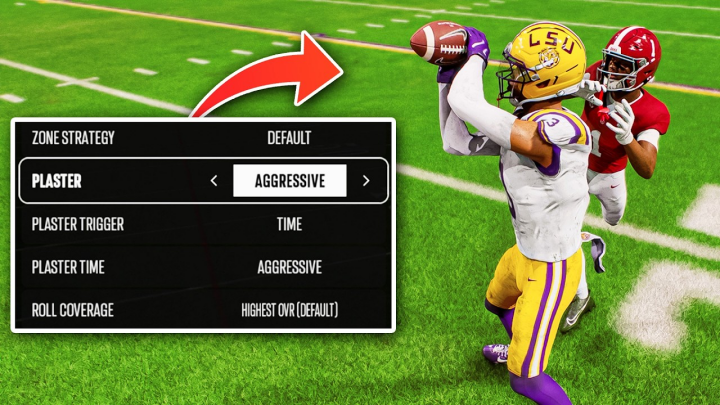
The problem is that leagues using auto progression normally spend those points automatically. EA also added a warning that unspent points can be automatically assigned when advancing past the Training Results period.
That can create frustrating situations. For example, if a quarterback needs 20 points to increase Throw Power but only has 18 available, the game may automatically spend those points on cheaper attributes instead of allowing the player to save them for the upgrade they actually want.
However, a newly discovered progression method appears to give Dynasty players significantly more control.
How to Preserve Your Skill Points
The key is to change the Auto Progress Players setting before entering the Training Results period.
First, turn auto progression off before advancing into Training Results. Once you enter the period, your players' accumulated skill points should remain available for manual spending instead of being automatically assigned.
The important part comes next.
After reaching Training Results with auto progression disabled, return to the league settings and change the progression setting back to automatic. You can then advance through the next stage and check your roster.
According to the discovered method, the previously unspent skill points can remain available rather than being immediately consumed.
The process essentially takes advantage of how College Football 27 handles manual and automatic progression at different stages of the Dynasty offseason.
Because this appears to rely on how the game's progression system is currently coded, it could be considered an exploit rather than an intended feature. EA could potentially change the system in a future update.
Why Hoarding Skill Points Matters
Saving skill points is useful for much more than simply getting better attributes.
One of the biggest advantages involves NIL expectations.
In College Football 27, player overall ratings and progression can influence NIL demands, roster expectations, and certain deal breakers. Increasing a player's overall too early can therefore make that player more expensive to keep.
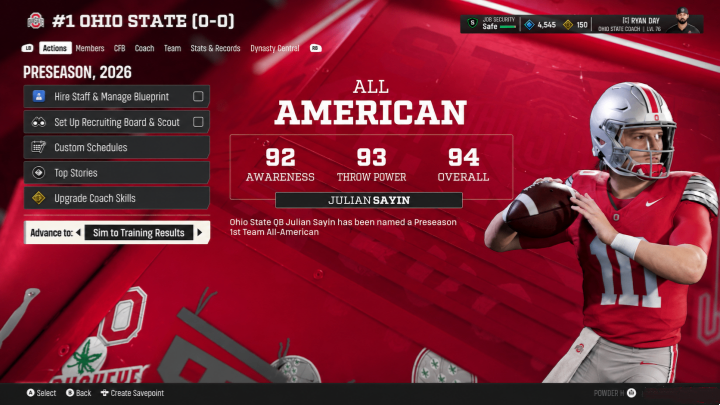
Imagine you have a freshman quarterback sitting behind an established starter. You could spend his skill points immediately and turn him into a higher-rated player, but doing so could also increase his NIL expectations.
Instead, you can potentially keep the player at his current rating while allowing his skill points to accumulate.
Once he becomes your projected starter, you can spend those saved points and dramatically increase his attributes without having increased his NIL expectations at every previous progression stage.
This creates a powerful roster-building strategy.
Turn Young Players Into Cheap Future Stars
The method could be especially useful for freshmen, sophomores, and backup players.
Suppose you recruit a talented quarterback with a relatively low NIL expectation. There may be little reason to immediately maximize his overall rating if he is unlikely to start for several seasons.
Rather than upgrading him every offseason, you can allow him to accumulate skill points while remaining a backup.
When his time to become the starter arrives, you can potentially spend a large pool of saved points and turn him into a high-rated player.
The result is essentially a cheap high-overall player who avoided repeated NIL increases during his development.
This strategy can also work with running backs, wide receivers, linebackers, defensive backs, and other positions where young players can spend several seasons developing behind starters.
Avoiding NIL Reassessments
The biggest long-term advantage may come when a player approaches his final college season.
If a junior already has a strong rating and a high NIL expectation, continuously upgrading him can push his overall higher and potentially increase the cost of keeping him.
Instead, you can hold his skill points and delay major upgrades.
Once he enters his senior season, you can use the accumulated points to maximize his attributes.
At that point, there is much less time for another NIL reassessment to affect your Dynasty roster.
This makes the strategy particularly interesting for players who want to maximize the value of their roster before graduation or the NFL Draft.
Better Control Over Quarterback Development
Quarterbacks are one of the best examples of why manual progression can matter.
Some important quarterback upgrades can be expensive, meaning players may need to save points for multiple weeks before they can afford a major attribute increase.
Throw Power, Speed, and other important attributes can require significant investments. Automatic progression may instead distribute points across cheaper upgrades such as Awareness, Elusiveness, or other smaller attributes.
That can leave you with a quarterback who has technically improved but still lacks the specific traits your offensive system requires.
Hoarding points gives Dynasty players much greater control over development.
You can prioritize the attributes that actually matter to your scheme instead of allowing the game to decide.
Position Switching and Cross-Training Opportunities
The strategy may also create additional possibilities with position development.
Players can potentially accumulate experience through cross-training or temporary position changes before eventually moving them back to their original position.
Combined with saved skill points, this could allow Dynasty users to develop unusual player builds that would be difficult to create through normal progression.
For example, a player could spend time developing specific attributes in another position before returning to his intended role later.
This gives experienced Dynasty players another layer of roster experimentation.
Will EA Patch the College Football 27 Exploit?
The biggest question is whether EA will leave this progression behavior untouched.
Because the method appears to manipulate the interaction between manual and automatic progression, it is possible that EA could patch it in a future update.
The NIL system is clearly designed to make player development and roster management more complicated. Allowing users to completely avoid certain progression consequences may not be what the developers intended.
For now, however, Dynasty players who discover the method can potentially gain much more control over player development, NIL management, and long-term roster construction.
Final Thoughts
The Training Results progression method could become one of the most interesting Dynasty strategies in College Football 27.
By delaying upgrades, players can potentially hoard skill points, control attribute development, manage NIL expectations, reduce transfer risks, buy cheap College Football 27 Coins, and create stronger future starters.
The smartest approach is not necessarily to make every player better as quickly as possible. Instead, Dynasty success may come from knowing when not to upgrade a player.
For rebuilding programs and long-term Dynasty saves, that difference could be enormous.