










Summary
College Football 27's Road to Glory mode has arrived with significant upgrades, including three new playable positions: Tight End, Edge Rusher, and Free Safety. This guide covers everything from player creation to college recruitment, helping you build a dominant tight end from high school through the NFL Draft—while also showing you how to wisely manage your College Football 27 Coins to maximize your player's development and unlock key upgrades along the way.
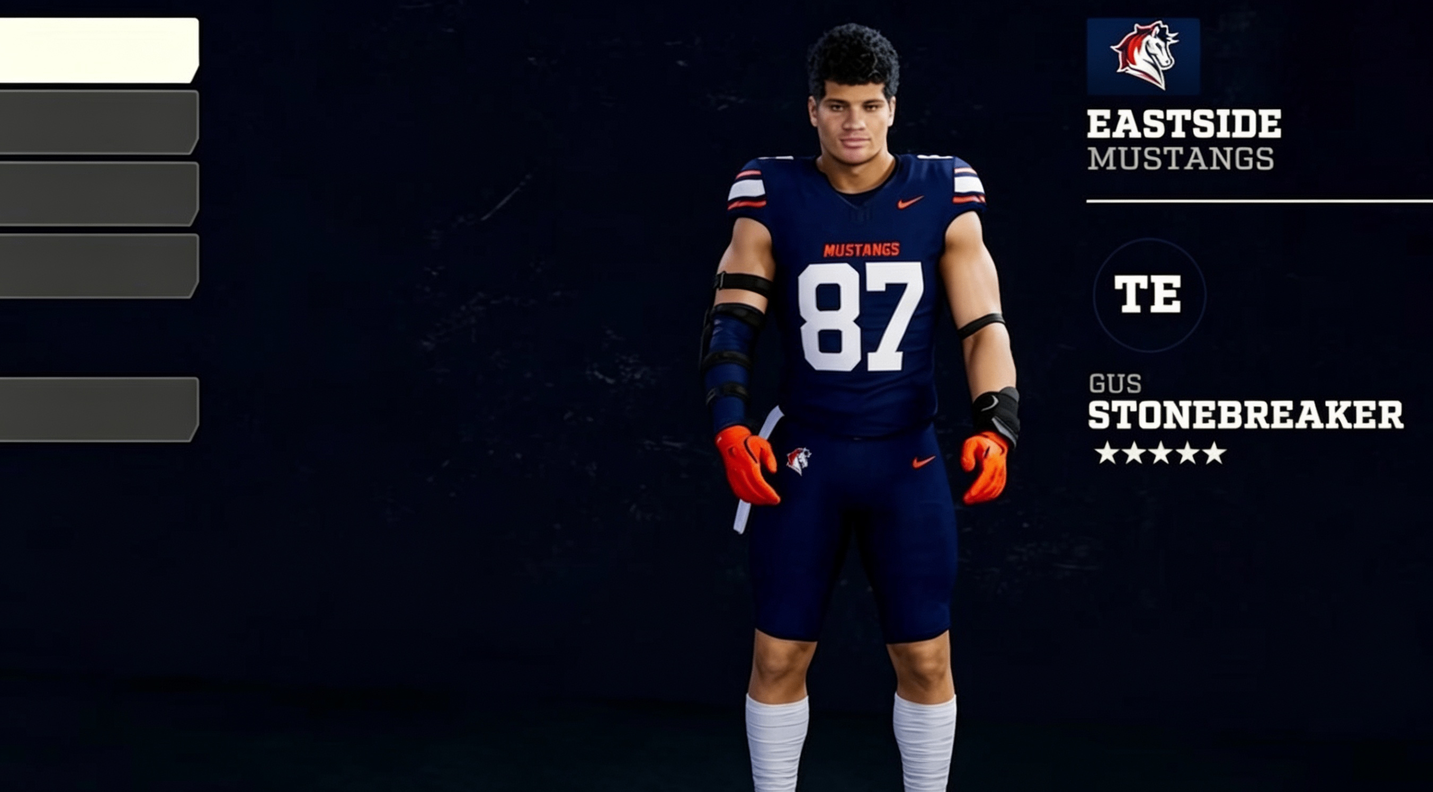
Getting Started: Creating Your Player
Choosing Your Position
Tight end offers one of the most flexible roles in Road to Glory. You can specialize as a vertical seam receiver, a red zone mismatch weapon, or a balanced blocker-receiver hybrid. Unlike wide receivers, tight ends contribute to both the passing and running games.
The addition of tight end, edge rusher, and free safety addresses a long-standing community request. For players seeking a physical, possession-receiving role that can also block, tight end is the ideal choice.
Player Customization
You can import a custom high school using Team Builder, or choose from six generic schools: Mustangs, Rattlers, Orcas, Pumas, Cyclones, and Renegades. Your player's height and weight directly impact attribute caps—a 6'6", 220 lb build provides an excellent balance of size and speed for a physical tight end.
Heavier builds improve blocking and trucking but reduce agility, while lighter builds offer better speed and route running. Appearance options include hairstyles, facial features, and gear that can be customized further as you progress through college.
The New Player Builder System
Attribute Caps Explained
The 2027 Road to Glory introduces a NBA 2K-style attribute allocation system. You set Max Potential caps during creation, representing your player's ceiling. Two cap types exist: physical caps (determined by height, weight, and body type) and Max Potential caps (set by point allocation). Physical caps are permanent and more important than Max Potential caps because you can increase the latter using Cap Breakers earned through awards, records, and championships.
Recommended Tight End Build
For a physical tight end modeled after players like Rob Gronkowski, prioritize:
Primary Attributes: Catching and Catching in Traffic (high 90s for contested catches), Trucking (94+ for running through defenders), Break Tackle (93+ for yards after contact), Release (88+ for beating press coverage), and Route Running (80+ across short, medium, and deep).
Secondary Attributes: Speed and Acceleration capped around 84 (adequate for a physical TE), Agility and Change of Direction in the 80 range, and Blocking as lower priority since in-game performance often overrides blocking stats.
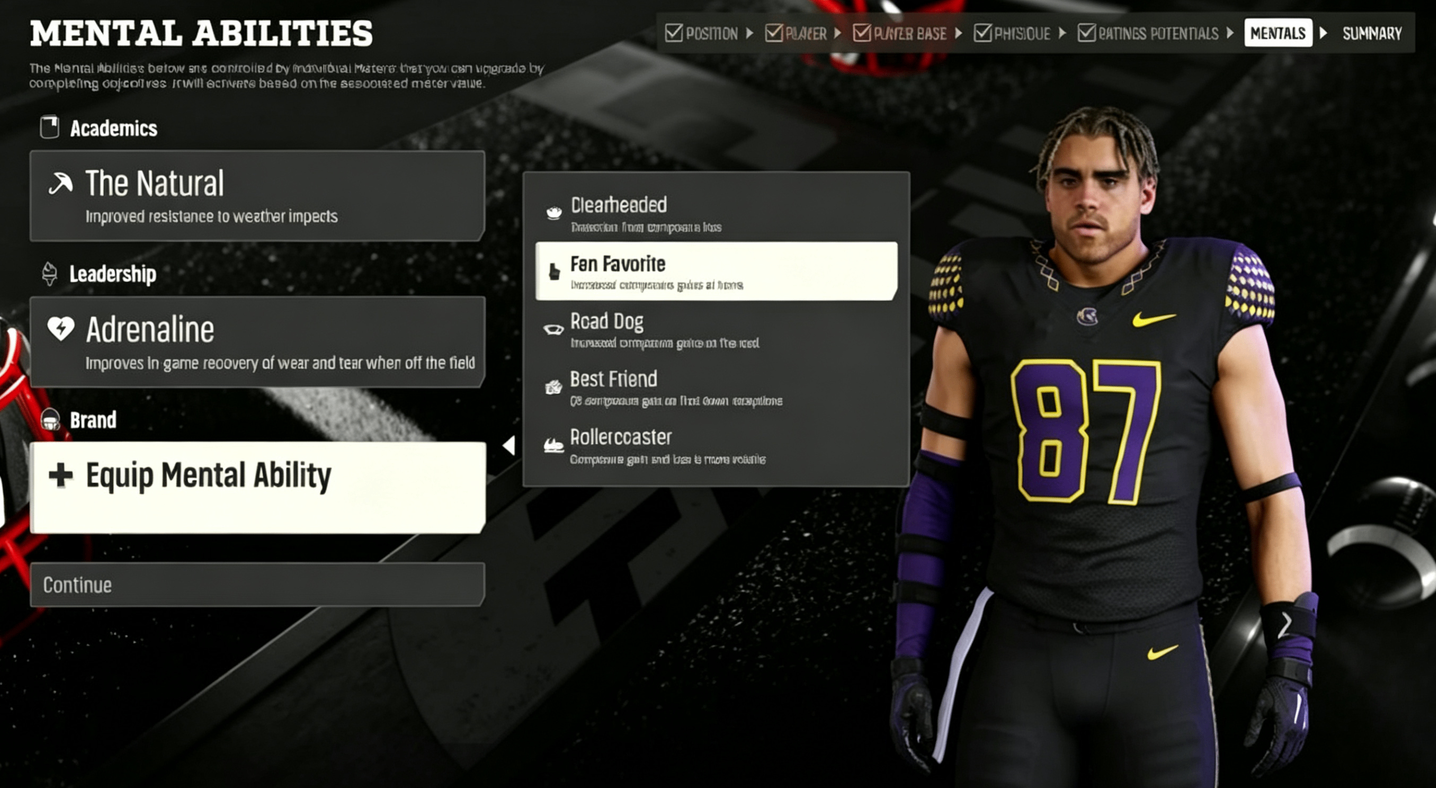
Mental Abilities: Natural (improved resistance to weather impacts), Adrenaline (better in-game recovery of wear and tear), and Clear-Headed (protection from composure loss during bad games).
Your stat allocation determines your archetype: Physical Route Runner (balanced catching and route running), Vertical Threat (focuses on deep receiving and jump balls), or Blocking TE. Platinum-tier abilities like 50/50, Downhill, and Sure Hands become available based on your archetype and attribute levels.
The Progression System
Your player's Max Overall increases as you improve your Legacy Score through winning big games, beating rivals, delivering in key moments, and winning awards. You can earn up to 25 Cap Breakers to increase attributes beyond their original Max Potential caps.
Skill points are earned through practice and game performance. Key changes from College Football 26 include: no "Training" option to spend energy for easy skill points, no XP sliders, and Wear and Tear being integral (disabling it applies an XP penalty).
To maximize skill points: perform well in weekly practice drills (at least Bronze medal), complete game objectives, improve Leadership (higher Leadership = better Team XP multiplier), and balance your Weekly Agenda across Academics, Health, Fitness, and Brand.
EA's progression tuning targets players reaching approximately 95-99 overall by their junior year, depending on your starting recruit star level. A five-star elite recruit progresses faster than a two-star underdog, with on-field performance as the biggest factor. 99 overall is achievable through gameplay alone.
The High School Experience
High school gameplay has been significantly improved. The Moment System gives you 5 moments (choose 4 to complete) that update your Tape Score. Failing moments is less punishing than in 26—you won't drop from five-star to three-star for a few mistakes. Your actual stats now matter more than moment completion.
Evaluating College Offers
The recruiting system now features NIL-style benefit packages. When evaluating offers, examine: Skill Points (signing bonus), Coach Trust (affects starting position and playing time), Leadership and Fitness (long-term development bonuses), and the depth chart (competition at your position). Coach Trust is critical—it determines whether you start or sit on the bench.
Before your senior night game, cut your recruitment to your top three schools. Consider immediate playing time (TE1 or TE2), offer quality (maxed offers are rare), program fit (offensive scheme, quarterback quality), and conference competition.
Tips for Success
Early Season Strategy: Don't skip practice—it's your only XP source until you get playing time. Focus on Leadership for more XP from everything. Balance your Weekly Agenda to avoid academic ineligibility. Master position drills—consistent practice improves in-game performance.
When on the Bench: Practice is your primary XP source. Treat every practice rep as a game rep. Complete objectives when you get field time. Impress coaches to earn more playing time.
Building Draft Stock: Beating rivals improves your stock. Winning as an underdog is heavily rewarded. Consistent performance matters more than one highlight play. Your Legacy Score carries over into Madden NFL 27's Superstar mode on draft day.
Making Your Decision: Prioritize playing time—can you start as a freshman or sophomore? Evaluate offer quality—skill points equal immediate development, while Leadership and Fitness bonuses provide long-term growth. Consider program fit—does the offensive scheme suit your play style?

Final Thoughts
College Football 27's Road to Glory represents a significant step forward. The addition of tight end, the revamped player builder, and the NIL-inspired offer system all add depth to the career experience. Consistency is key—practicing well, managing your agenda, and capitalizing on in-game opportunities will build your legacy.
Remember: you don't need to spend money to reach 99 overall; progression through gameplay alone is viable. Whether you're building a physical tight end or trying a different position, the new systems give you more control over your player's development than ever before. Good luck on your journey to the NFL Draft!