Weekend Drop -












Summary
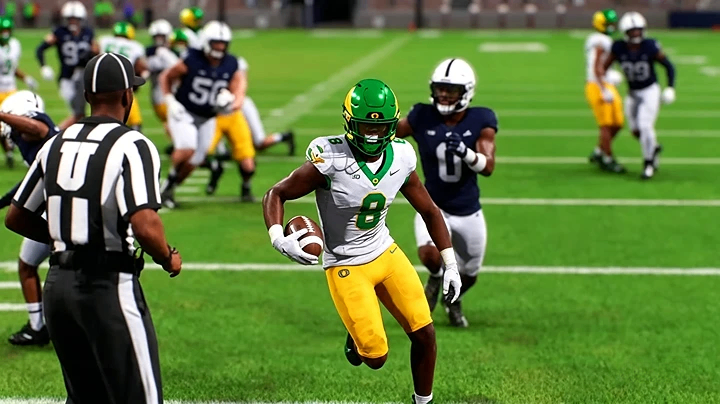
Struggling to make an impact in College Football 27 Road to Glory as a defensive player? A Free Safety career can feel difficult early because you need to read offenses, create turnovers, and develop your attributes while relying on your teammates to finish games. Managing progression efficiently is also important, and some players may look into resources like CFB 27 Coins to speed up team-building or improve their overall experience.This guide follows the progression of London Bridges, a Free Safety who transferred from NC A&T to Oregon and turned into one of the most dominant defensive backs in college football. From earning interceptions, upgrading abilities, surviving injuries, and winning the BIG 10 Championship, this step-by-step approach explains how to maximize a defensive career and compete for the Heisman Trophy.
Part 1: Transfer to a Bigger Stage and Build Early Momentum
Why Move From NC A&T to Oregon?
London Bridges started his journey at NC A&T, where the team reached the College Football Playoff against Colorado. However, a late-game quarterback collapse ended the season after a pick six and a fumble.
Despite the loss, the season proved that the Free Safety was already performing at an elite level. After finishing third in the Heisman race, the next step was finding a bigger program with more exposure.
The move to Oregon provided:
More national attention.
Stronger teammates.
More opportunities to create game-changing plays.
If your RTG player is already producing but lacks recognition, transferring to a stronger program can help you compete for major awards.
Part 2: Create Turnovers by Reading Offensive Formations
How to Get More User Picks at Free Safety
The biggest advantage of playing Free Safety is the ability to control the entire defensive backfield.
At Oregon, London Bridges immediately started producing interceptions because he focused on reading formations instead of randomly chasing receivers.
A reliable approach:
Watch the offensive alignment before the snap.
Identify screen plays based on receiver positioning.
Move into passing lanes instead of following the receiver directly.
Attack the ball once the quarterback commits to the throw.
Screen plays are especially valuable opportunities. The quarterback often telegraphs the throw, allowing a Free Safety to step in front and create an easy interception.
After making plays, abilities begin lighting up, giving you more chances to influence the game.
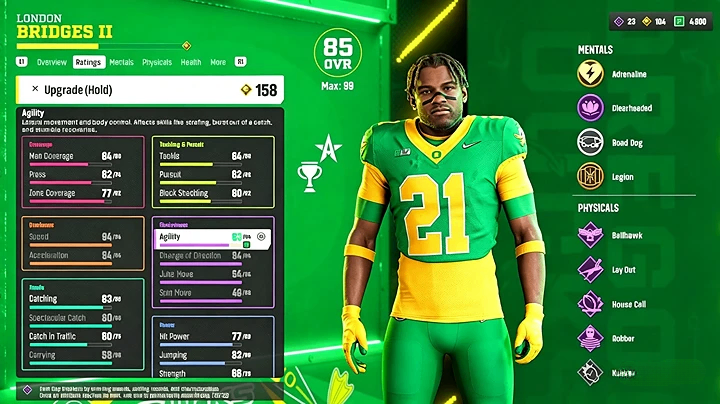
Part 3: Upgrade Attributes and Maximize Abilities
Why Attribute Management Matters
As the season becomes more difficult, raw skill is not enough. You need to invest your skill points into abilities that directly improve your impact.
London Bridges continued earning upgrades throughout the season and eventually reached an 85 overall rating.
Focus your upgrades on:
Coverage ability.
Speed and movement.
Defensive awareness.
Interception-related abilities.
Before the Penn State matchup, multiple abilities were upgraded, helping create more impact plays in important games.
Players who want to speed up roster development or improve multiple modes may consider resources such as College Football 27 Coins, but your RTG progression should still focus on making smart attribute decisions.
Part 4: Handle Injuries and Defensive Responsibility
Incorrect or Correct Methods
One of the biggest challenges came when Oregon’s starting quarterback suffered a compound fracture and missed the rest of the season.
The mistake would be assuming the offense can continue winning without adjustments.
Incorrect Method:
Expecting the backup quarterback to perform exactly the same.
Ignoring defensive responsibility.
Trying to force turnovers instead of playing smart coverage.
Correct Method:
Increase defensive impact.
Create stops when the offense struggles.
Focus on tackles, sacks, and interceptions.
Control momentum through defense.
After the injury, London Bridges understood that he needed to become a bigger leader on defense.
Part 5: Beat Indiana and Illinois During the Heisman Push
How to Build Your Award Case
Late-season games are important because every defensive statistic matters.
Against Indiana, Oregon faced the defending champions, a team that had won two of the previous three national championships.
London Bridges changed the game by:
Creating a user interception.
Returning the pick for a touchdown.
Helping Oregon control the matchup.
The same approach continued against Illinois.
The goal was not just winning. It was creating visible impact:
Tackles behind the line.
Turnovers.
Momentum-changing plays.
Every big defensive moment helps strengthen your Heisman argument.
Part 6: Max Out Abilities Before the Final Stretch
How to Prepare for Championship Games
Before the final regular-season matchup against Ruckers, London Bridges had upgraded four abilities into the Platinum tier.
This preparation mattered because the final games determine:
Conference championship chances.
Playoff position.
Individual awards.
Against Ruckers, the objective was simple:
Make consistent tackles.
Avoid giving up big plays.
Continue creating statistics.
Finish the season strongly.
The result was a victory that secured Oregon’s place in the BIG 10 Championship.
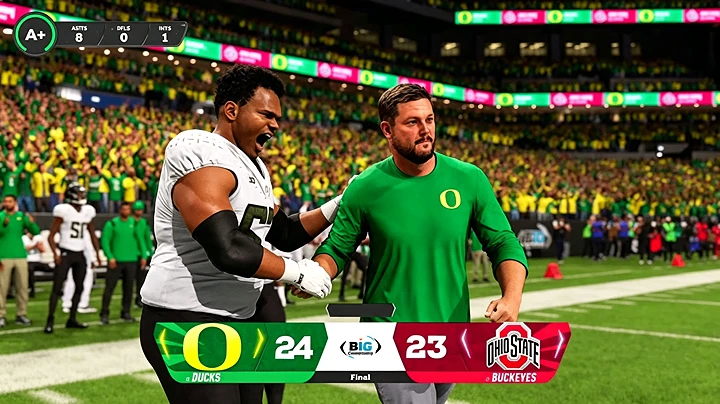
Part 7: Win the BIG 10 Championship Against Ohio State
Why This Game Requires Patience
The matchup against Ohio State was the biggest challenge of the season.
The Buckeyes controlled the game early, forcing Oregon’s defense to stay disciplined.
A successful Free Safety strategy:
Do not abandon coverage trying to force a turnover.
Study repeated offensive patterns.
Attack predictable routes.
Make the critical play when the opportunity appears.
London Bridges eventually created the turning point with a user interception returned for a touchdown.
The game stayed close, but Oregon completed the comeback and won the BIG 10 Championship by one point.
Part 8: Complete the Heisman Campaign
How to Become a Heisman Finalist
By the end of the season, London Bridges had built a strong resume:
Multiple interceptions.
Defensive touchdowns.
Seven tackles for loss in the championship game.
Leadership role on a winning team.
The key lesson is that defensive players need more than interceptions. Consistent impact across the season matters.
A Free Safety can compete for the Heisman Trophy by combining:
Turnovers.
Big defensive plays.
Team success.
Strong performances in major games.
Key Takeaways
Transfer decisions can dramatically improve RTG exposure.
Free Safety rewards players who read formations before reacting.
Screen plays are valuable interception opportunities.
Upgrade coverage and interception-related abilities first.
Injuries require defensive players to take more responsibility.
Championship performances can decide Heisman chances.
Conclusion
Building an elite Free Safety in College Football 27 RTG requires more than chasing interceptions. The most successful path is developing your attributes, reading offenses, making smart defensive decisions, and delivering in important games. For players looking to optimize their overall team-building strategy, understanding progression and resource management is also important, especially when planning how to use CUT 27 Coins efficiently across different modes. The journey from NC A&T to Oregon shows how a defensive player can become a team leader, win the BIG 10 Championship, and compete for the Heisman Trophy by consistently creating game-changing moments.