Weekend Drop -













Summary
Establishing a dominant ground game is the foundation of winning football in College Football 27, and whether you're building your ultimate team through grinding or looking to buy CFB 27 Coins to accelerate your roster upgrades, mastering these run schemes will give you the competitive edge you need. This guide breaks down everything from basic terminology to advanced play-calling strategies.
Understanding the Basics: Gaps and Techniques
Before diving into plays, you need to understand the language of the game.
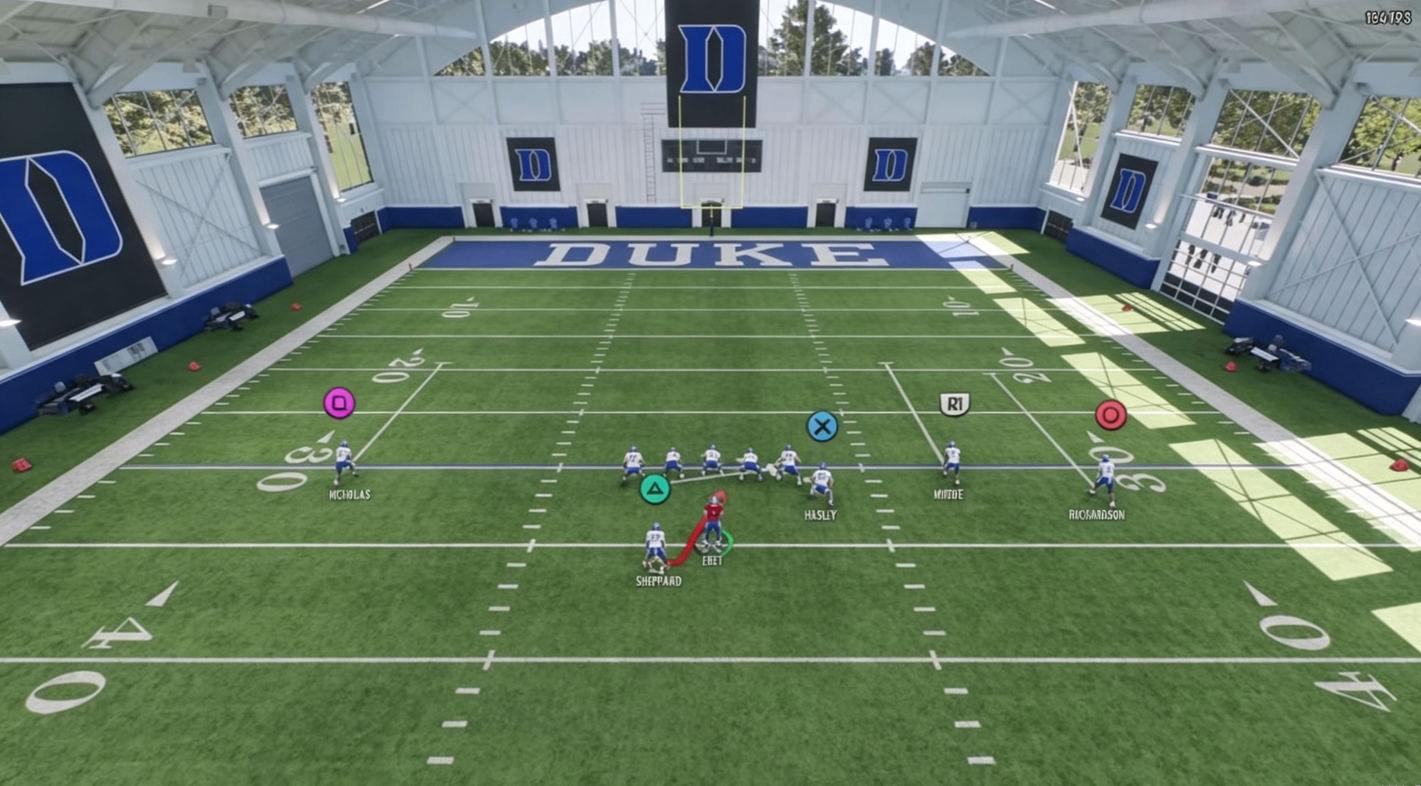
Gaps are the spaces between offensive linemen:
A Gap: Between center and guard
B Gap: Between guard and tackle
C Gap: Between tackle and tight end
D Gap: Outside the tight end
Play side is the direction the play is designed to go; back side is away from it.
Defensive lineman techniques use a numbering system:
Even numbers (0, 2, 4) : Head-up on a lineman
Odd numbers (1, 3, 5) : Outside shoulder of a lineman
Even with "i" (2i) : Inside shoulder of a lineman
A 3-technique lines up on the outside shoulder of the guard, for example.
Inside Zone: The Most Versatile Run
Inside Zone works against almost any front as long as the numbers are right.
How It Works
The offensive line gets a "hat on a hat," while the running back finds the crease. Each lineman is responsible for their playside gap but will double-team to a linebacker if that linebacker enters their gap.
The Three Bs: Bang, Bend, Bounce
Read the center's block to the linebackers:
Bang it front side – Hit the first opening
Bend it back side – Cut back if a crease opens
Bounce it outside – Last resort when nothing opens inside
Tight End Alignment
Your tight end's alignment significantly impacts effectiveness:
Defensive Front | TE Alignment | Why |
Odd Front | Play Side | Creates double teams |
Even Front | Back Side | Creates double teams on interior linemen |
Against blitzes, consider more single blocks—double teams can be too slow to develop.
Reading Safety Rotation
Strong rotation (safety toward TE): Causes issues running away from the TE
Weak rotation (safety away from TE): Causes issues running toward the TE
Before snapping, peek at the safety on the backside of your run.
Outside Zone: Creating Cutback Lanes
Outside Zone stretches the defense horizontally to create vertical creases. This is not an east-west run.
Reading Outside Zone
Read from the outside in:
Eyes on the tackle or tight end
If you can get outside, take it
If they kick out the defender, move your eyes inside
Find the gap and get downhill
Pre-Snap Reads
Wide alignment: Likely a kick-out block
Tighter alignment: Good chance at a reach block
Formation Adjustments
If outnumbered to the play side:
Flip the play direction
Motion a receiver over
Prepare to make the unblocked defender miss
Against different fronts:
Even fronts: More success hitting the outside
Odd fronts: Bigger cutback lanes
Nub Formations
One or two tight ends to one side with no receivers. Excellent against man coverage—corners align to the receiver side, leaving the TE side favorable.
Gap Schemes: Power and Counter
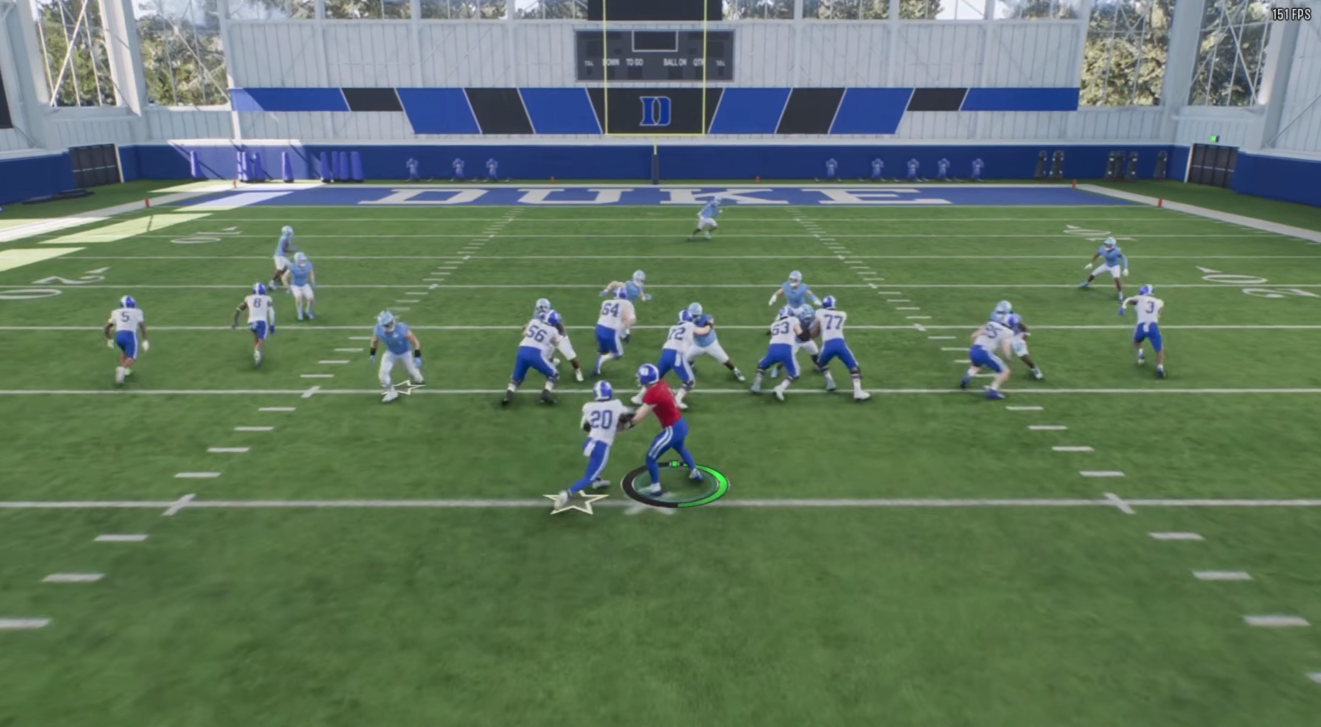
These plays have specific gaps they're designed to hit.
The "Down, Kick, Wrap" Rule
Down block: Play-side linemen block toward the middle
Kick-out block: TE/FB (Power) or guard (Counter) kicks the end out
Wrap block: Guard (Power) or TE/FB/T (Counter) wraps through the crease
Reading Power and Counter
Hit inside the kick-out block
Let the wrapper lead to the linebacker
Do not outrun your blocker
Cut inside or outside based on available space
Formation Considerations
Against even fronts:
Running to a 3-technique creates a double team
Running to a 2i means your guard must win the block
Against odd fronts:
Extra TEs create more double teams
Power: both TEs on the same side
Counter: TEs on opposite sides
Matchup Awareness
Use the pre-snap matchup tool (D-pad left, then right stick left):
Green: Favorable
Yellow: Toss-up
Red: Bad matchup
Addressing Safety Rotation
Rotation to the play side causes problems. Add a number by:
Using trips formations
Motioning a player over
Auxiliary Runs
Sweep (Pin and Pull)
First puller: Kick-out
Second puller: Reads the block, wraps inside if reach
Keep sprint off until ready to cut. Think of it like outside zone.
ISO (Lead)
TE or FB leads on an isolated linebacker. Works well against odd fronts and when defenses blitz overhang defenders.
Duo
Power without a puller. Gets downhill quickly. Excellent for double teams and short-yardage situations.
Trap
Great complement to Power. Works best against a 3-technique or wider, targeting a weak link on the D-line.
Advanced Playbook Selection
Best Run-First Playbooks
West Virginia: Premier run-first playbook with Gun Power I Tight—heavy package with multiple handoff options and QB-designed runs
Colorado: Go-Go offense with shotgun two-back formations creating misdirection
Best Balanced Playbooks
Oregon: Beginner-friendly with play-action, tricky runs, screens, and deep shots
South Carolina: Complete spread offense with Gun Trips HB Weak creating constant conflict
Best Passing Playbooks with Run Threats
UL Monroe: Explosive shotgun formations with strong stock plays
Ohio State: Strong passing concepts with designed QB runs
Florida International: Deep shotgun passing playbook with excellent route combinations
Play-Calling Tips and General Principles
Numbers, Angles, and Matchups
Numbers: If the box is loaded, audible to a pass. Use RPOs and read options to even the numbers.
Angles: If a blocker has a long way to go, that's a bad angle.
Matchups: Check pre-snap indicators. Attack favorable matchups.
Ball Carrier Moves
Move | Best Use |
Spin | Head-on defender with built-up speed |
Juke | Feinting to create space |
Truck | Strong RB with high trucking stat |
Stiff Arm | Maintaining speed against tackler |
Hurdle | Lone defender in your path |
The Golden Rule: Patience
Do not sprint too early—when you sprint, you commit to a track. "Slow to fast through": let blocking develop, see the gap, then hit it fast. Holding sprint may cause blocks to shed quicker.
Against Cover 3 with a rolled-down safety: add a number or use RPOs.
Against man coverage: use nub formations or motion.
Against two-high looks: get overhang defenders out of the box.
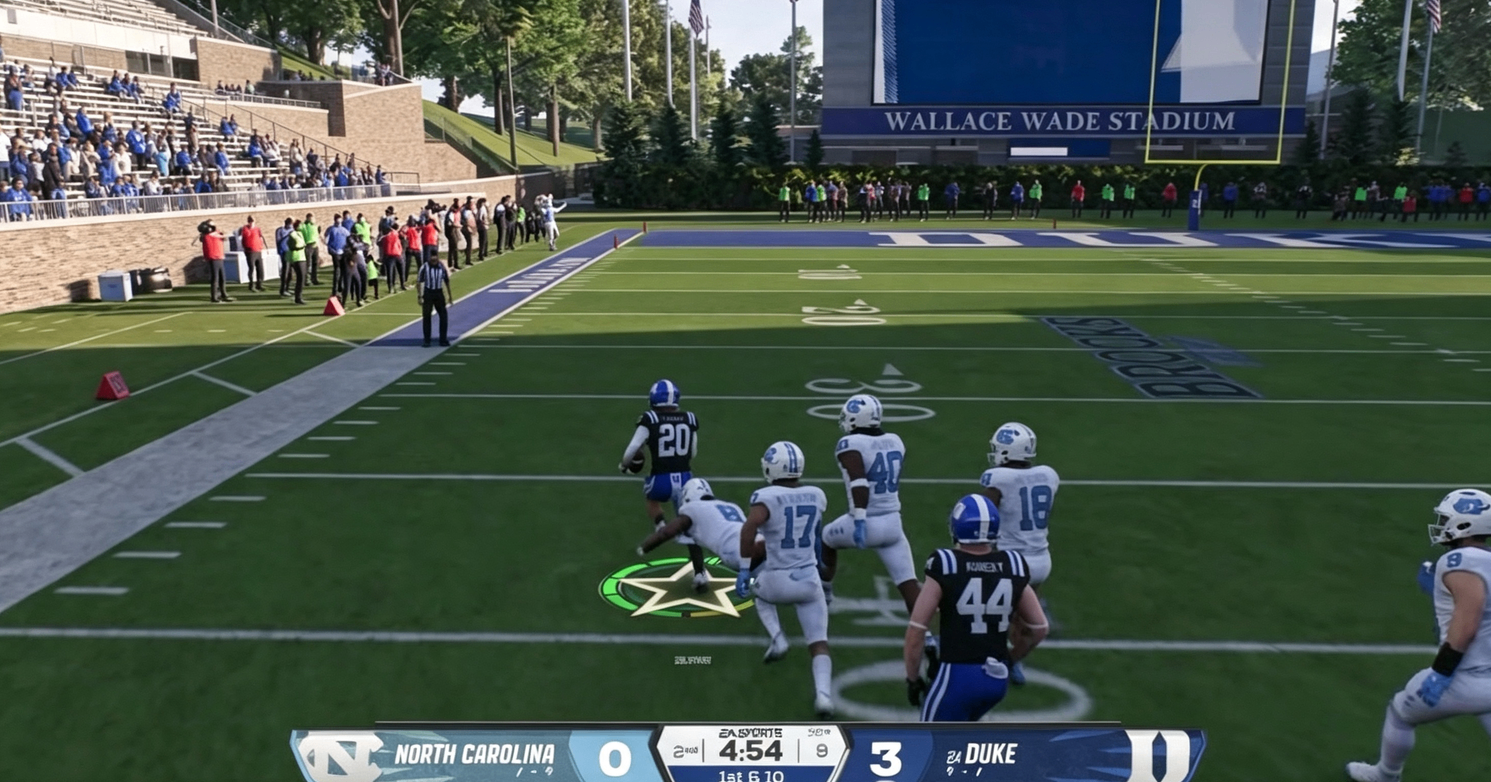
Conclusion: Building Your Run Game
Master the run game step by step:
Start with reads – Make inside zone reads second nature
Add TE alignment – Once reads are automatic
Layer in safety rotation – Add this higher-level read when ready
Stick with a playbook and learn it inside out. Your playbook is the heartbeat of your offense—the best one is the one that works for your roster and play style. If you're looking to upgrade your roster faster without breaking the bank, you can find cheap CFB 27 Coins at MMOEXP, a trusted platform that offers secure transactions and competitive prices to help you build your dream team while you focus on mastering the schemes that suit your identity.