Weekend Drop -












Summary:
The Druid can look weak on paper, but the right movement, transformations, healing, and matchup knowledge can make it extremely dangerous. This guide covers how to build a Druid for PvP, when to use Panther or Bear, how to counter Rogue throwing knives, which stats matter, and how to survive expensive high-gear runs without throwing away your kit. Managing Dark And Darker Gold can also help players prepare for costly gear and high-value farming runs.
1. Why Druid Is Strong in PvP
Druid's biggest advantage is transformation flexibility. You can switch between human form, Panther, and Bear depending on the situation.
Each form has a different purpose:
· Panther: mobility, gap closing, chasing and burst opportunities.
· Bear: powerful melee pressure and high-impact attacks.
· Human form: healing, utility, ranged options and preparation.
· Movement: lets you decide when and where fights happen.
The biggest mistake is treating one transformation as your permanent combat form. Strong Druid players constantly change forms according to enemy positioning.
2. Panther vs. Bear: When Should You Transform?
Panther Form
Panther is excellent when you need to close distance quickly.
Use Panther when:
· A Ranger is trying to escape.
· A Rogue is preparing a ranged attack.
· An enemy is isolated.
· You need to reposition quickly.
· You want to punish an opponent's bad positioning.
However, Panther should not be used recklessly against heavily armored targets.
A Panther attack may look impressive, but against a tanky Fighter or another high-defense opponent, the damage can be disappointing.
Don't transform just because Panther is available.
Bear Form
Bear is your heavy-pressure transformation.
Use Bear when you have enough space to commit to melee combat. Your goal is to land attacks consistently rather than throwing out abilities randomly.
One missed Bear attack can completely change an engagement, especially against a geared opponent.
Before transforming, make sure you have a realistic path to your target.
3. Movement Is the Most Important Druid Stat
One of the clearest lessons from the gameplay is that Druid's movement can determine whether the class feels powerful or terrible.
Prioritize movement-related stats when building an aggressive Druid.
Movement helps you:
· Close distance.
· Escape ranged attacks.
· Chase fleeing enemies.
· Create Bear engagement opportunities.
· Avoid melee swings.
· Disengage after taking damage.
A slow Druid can become an easy target despite wearing expensive gear.
This is especially important when using expensive kits. High-value equipment doesn't compensate for poor positioning.
4. How to Counter Rogue Throwing Knives
Rogue throwing-knife builds can be extremely frustrating for Druid players.
The key counter is pre-transformation.
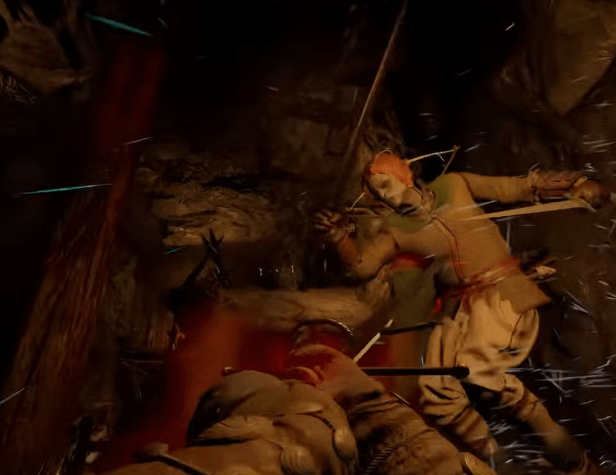
If you expect the Rogue to pull out a throwing knife, already be prepared to transform into Panther. When the Rogue commits to the ranged attack, use Panther's mobility to dash toward them and land a hit.
The important part is predicting the animation instead of waiting until after the knife is thrown.
If the Rogue realizes you can punish the ranged attack, they may become much more hesitant to repeatedly throw knives.
That gives you control over the fight.
5. Natural Healing and Potions
Against damage-over-time or repeated ranged attacks, healing efficiency becomes extremely valuable.
Natural healing can reduce the impact of repeated chip damage, while potions provide immediate recovery.
A practical approach is:
Take damage → disengage → maintain healing → reposition → re-enter.
Don't waste your entire health pool trying to finish an enemy immediately.
If a Rogue repeatedly throws knives, surviving the initial burst and recovering between engagements can dramatically reduce their advantage.
6. How to Fight Fighters
Fighter is one of the matchups where transformation timing matters.
A heavily armored Fighter may absorb Panther damage extremely well, making direct aggression inefficient.
Instead of repeatedly attacking armor, look for opportunities to:
· Force the Fighter to move.
· Attack from unexpected angles.
· Maintain distance.
· Use Panther for repositioning.
· Punish defensive cooldowns.
· Switch back to human form when healing is needed.
Don't stand in front of a geared Fighter and trade attacks simply because you have a strong Bear.
7. Be Careful Against Barbarians
Barbarian can punish Druid extremely hard if you fight in confined spaces.
Avoid chasing a Barbarian through multiple doors without a clear advantage.
Doors can become traps because the Barbarian may be waiting for you to enter melee range.
If the enemy is retreating, ask yourself whether you actually need the kill.
A disciplined player can simply let the Barbarian escape and continue farming rather than risking an expensive kit.
8. High-End Gear Doesn't Make You Invincible
The golden Panther and Bear setup demonstrates an important lesson: expensive gear can look amazing without necessarily producing amazing combat results.
A high-end kit may have excellent defensive statistics but still suffer from poor action speed, agility, or movement.
Don't judge a build by its price.
Look at the actual combat stats:
· Strength
· Agility
· Movement speed
· Action speed
· Physical Damage Reduction
· Magical Resistance
· Cast speed
· Healing efficiency
A balanced kit is often more effective than a flashy collection of expensive pieces.
9. Don't Become a Walking Money Bag
When you're wearing extremely expensive gear, every enemy has an incentive to kill you.
Your equipment becomes a psychological weapon, but it also makes you a target.
Avoid revealing your full strength unnecessarily.
If another player is poorly geared and clearly trying to farm bosses, there may be no reason to fight them.
Sometimes allowing a weaker player to leave is the smarter economic decision.
Your objective isn't to kill every player on the map.
Your objective is to extract with more value than you brought in.
10. How to Handle Low-Health Enemies
One of the easiest ways to throw a Druid run is chasing a weak enemy too far.
If someone runs through multiple rooms, don't automatically follow.
Check:
· Is my health high?
· Is my teammate nearby?
· Are there mobs?
· Could another team be waiting?
· Do I have an escape route?
· Is the enemy actually worth the risk?
A low-health player can still bait you into a terrible fight.
11. Best Druid PvP Mindset
Druid rewards patience.
Instead of constantly looking for damage, look for windows of opportunity.
A strong sequence might look like:
Human form → identify enemy → prepare healing → Panther engage → reposition → Bear punish → disengage → heal → repeat.
This approach keeps your opponent guessing and prevents you from committing everything to one attack.
Final Druid Tips
· Build around movement and agility rather than price alone.
· Use Panther for mobility and sudden engagements.
· Use Bear when you have a safe melee opportunity.
· Don't blindly Panther into heavily armored enemies.
· Predict Rogue throwing-knife attacks and punish them with Panther.
· Keep potions available during PvP.
· Natural healing can reduce repeated chip damage.
· Avoid fighting Barbarians in cramped spaces.
· Don't chase enemies through dangerous rooms.
· Expensive gear does not replace good movement.
· Evaluate your entire kit's stats instead of its price.
· Sometimes letting an enemy escape is the correct play.
Final Verdict
The strongest Dark and Darker Druid isn't the player with the most expensive golden kit. It's the player who understands movement, transformation timing, matchup knowledge, and risk management.
Panther gives you the mobility to control engagements, Bear provides serious melee pressure, and human form gives you the tools to recover and prepare. Master the transitions between these forms, especially against Rogue, Fighter, Ranger, and Barbarian, and Druid becomes far more consistent in both PvP and high-value farming runs. If you want to buy Dark And Darker Gold, managing your resources carefully can also help you prepare for costly gear and high-value farming runs.