Weekend Drop -
















Ordinary minion Necromancers have reasons to look forward to Diablo 4 Season 16: Aspect of the Great Feast gains a substantially larger damage bonus, and Skeleton Mages receive interaction fixes.
The outlook is harsher for extreme Singularity setups and Blood Wave, while Bone Spear trades piercing damage for critical chance. A summoner fan can be cautiously encouraged without assuming every existing setup becomes stronger.
The 3.3.0 Public Test Realm opens October 27 at 10 a.m. PDT. This is a PTR preview of proposed changes, with the clearest opportunities and risks separated by build.

Necromancer Builds at a Glance
Build | Proposed PTR Direction | Main Reason |
Ordinary minion builds | Offensive opportunities with defensive trade-offs | Great Feast buff, mage interaction fixes and lower Shadow Mage Barrier generation |
Extreme Singularity setups | Unintended summon count targeted | Excess active Skeleton Mages corrected |
Blood Wave | Direct nerf and damage-interaction corrections | Lower upgrade multiplier, Kessime's Legacy and Hematolagnia fixes |
Bone Spear | Mixed rework | Higher base damage, piercing multiplier replaced with critical chance |
Blood Surge / Sever | Higher listed damage | Nova and scythe attack coefficients increased |
For a long-time Diablo IV summoner player, the encouraging part is that ordinary minion damage has several routes to improvement.
The central concern is whether those gains outweigh losses from your particular equipment and defensive choices. A build using the intended mage count starts from a different position than one whose performance depends on excess summons.
Ordinary Minions Have Reasons for Optimism
The strongest reason to revisit a conventional skeleton army in Diablo IV is Aspect of the Great Feast. Its damage bonus rises from 35-55%[x] to 70-110%[x]. Unlike the Singularity count correction, this gives players a positive change to build around without making an unintended army size the basis of the recommendation.
Great Feast Can Recover Some Damage
The listed bonus range doubles, but the resulting multiplier does not. Using the unscaled maximum values in the notes, a 55% increased-damage effect becomes a 110% effect: 1.55 times damage becomes 2.10 times damage.
That is approximately 35.5% more damage from this isolated multiplier, assuming it affects the same damage and stays active under comparable conditions.
That is a meaningful gain for a setup already using the aspect. It can offset part of a separate offensive loss, including the removal of Blood Moon Breeches' critical damage power.
It cannot automatically compensate for every lost multiplier, a smaller army and equipment changes together.
For illustration, consider only the listed maximum Great Feast bonus and a fully applicable 60% Blood Moon critical multiplier. Their old combined contribution would be 1.55 multiplied by 1.60, or 2.48. The new Great Feast contribution alone would be 2.10, approximately 15.3% lower.
This simplified example excludes slot scaling, replacement pants and all other effects; it shows why a large aspect buff can recover substantial damage without guaranteeing a net gain.
A summoner that never relied on that pants multiplier has a different balance of gains and losses. Your starting equipment therefore matters more than a blanket verdict that minions have been strengthened or weakened.
If your Diabo 4 gold is limited when Season 16 arrives, evaluate your current setup before committing to costly gear rerolls.
Mage Fixes Improve Specific Interactions
Skeleton Mage attacks will correctly count as Core Skills for some effects that previously failed to recognize them. This matters when a relevant Core Skill interaction is part of your configuration. It does not make every Core Skill bonus newly applicable or guarantee the same benefit to every mage build.
The mage's Blizzard attack also gains its intended Vulnerable application. That helps a setup relying on that attack for Vulnerable coverage; it is not a separate benefit to count automatically for Shadow Mages. Keep the chosen mage variant in view when comparing the changes.
Together, these fixes improve the prospect of building around intended interactions. They give conventional summoners reasons to revisit their supporting effects even if they have no interest in elaborate resource preparation or equipment swapping.

Survival Is the Main Caution
Shadow Mages Upgrade 2 has its Barrier amount per attack reduced from 3% to 1%. That is a two-thirds reduction in the listed amount generated per attack, not a statement that your final Barrier or overall survivability falls by two-thirds. Attack frequency, other protection and incoming damage still determine how exposed the character becomes.
A build relying heavily on that generation may feel less forgiving when enemies reach the Necromancer. Blood Orbs offer help of a different kind: they now heal Minions for 10% of their Maximum Life, while player healing falls from 15% to 10%.
Keeping the army healthy and keeping its owner alive are separate needs, so minion healing does not replace the lost protection automatically.
For someone who wants a normal skeleton army, the PTR is worth watching with cautious optimism. The damage opportunity is concrete, and relevant mage interactions should behave more consistently.
A stronger ordinary summoner remains plausible, especially without dependence on the removed pants multiplier; its durability and final equipment choices deserve as much attention as the damage increase.
Singularity's Extreme Setup Faces a Fix
Extreme Singularity builds in Diablo IV combine specialized preparation and equipment with attempts to preserve summon-time values through snapshotting. Their damage is a poor baseline for an ordinary army using the intended number of Skeleton Mages.
Blizzard's confirmed fix targets the ability to keep more Skeleton Mages active than intended. It does not confirm that all resource snapshotting or equipment swapping will stop working. The notes also do not establish how much damage an affected setup will lose.
For a conventional summoner, the important question is whether the build depends on that unintended count. If it does not, its outlook rests more on the shared damage and defensive changes discussed above. An excess-summon correction alone cannot establish that a normal skeleton army has become weaker.
Blood Moon Breeches Lose Offensive Power
Blood Moon Breeches shift toward defense in the Diablo IV PTR, removing an offensive reason to equip the pants. Their replacement power depends on enemies being cursed.
Effect | Previous Version in the Notes | Proposed PTR Version |
Summons randomly inflict Decrepify or Iron Maiden when dealing damage | 7-10% chance | 5% chance |
Critical Strike Damage against enemies affected by your Curses | 50-60%[x] increased damage | Removed from the power |
Damage Reduction from Cursed enemies | Not part of this power | 20-30% |
Removing a 60% increased-damage multiplier does not mean losing 60% of total damage. An isolated multiplier falling from 1.60 to 1.00 represents a 37.5% loss to the affected contribution, before accounting for replacement equipment. The Great Feast example above shows how another change can recover part of that loss.
For the new defensive role, curse coverage is the deciding factor. A build with an independent, reliable curse source has a different outlook from one relying entirely on the pants' reduced application chance.
Compare them with a realistic Legendary alternative by checking protection against dangerous enemies and the damage retained by the replacement. Factor in the gold needed to enchant replacement gear rather than treating the swap as free.
The pants can still have a purpose, but their old offensive value no longer settles the equipment choice.
Blood Wave Has Several Damage Changes
Blood Wave players need to separate its direct numerical adjustment from corrections to abnormal hits and scaling. Combining everything into one estimated nerf percentage would hide the interactions that matter most to a particular character.
The Upgrade Multiplier Falls
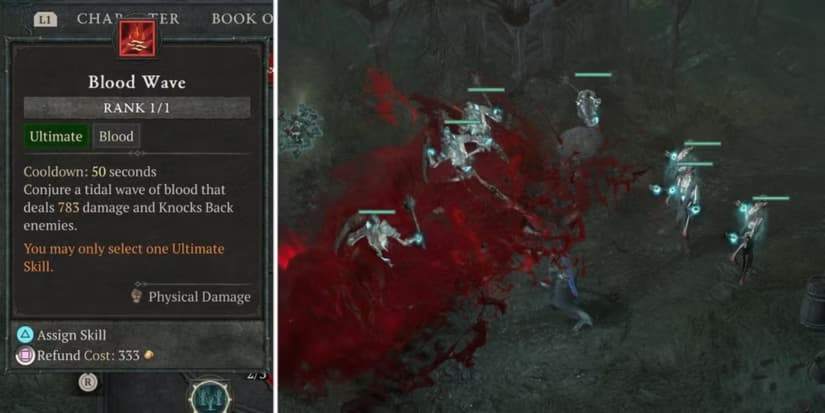
Blood Wave's Damage Bonus upgrade falls from 30%[x] to 20%[x]. Considered alone, a multiplier changing from 1.30 to 1.20 means approximately 7.7% less damage for the contribution it affects, with other factors held constant. The ten-percentage-point change is not a ten-percent estimate for the complete build.
The more consequential uncertainty concerns Kessime's Legacy. Blizzard says Blood Wave could hit enemies more times than intended when used with that item. Correcting extra hits can change practical output separately from the upgrade reduction, especially in encounters where those hits contributed heavily.
Hematolagnia also has corrections involving excessive scaling with Skill Ranks and inconsistent application of its damage bonus to Blood Wave. Their combined effect needs measurement on the affected setup. The notes do not supply a universal before-and-after damage figure.
Blood Wave Has the Clearer Downside
Among these headline builds, Blood Wave has a clearer negative direction: the upgrade multiplier falls, and a source of unintended extra hits is being corrected. Hematolagnia's inconsistent interaction still needs observation, so the full change cannot be reduced to one percentage.
A working Season 15 Blood Wave character can continue serving its current purpose. For next-season planning, boss damage with Kessime's Legacy is the most useful early comparison. If repeated hits supplied much of a setup's output, a modest-looking numerical nerf can understate its practical exposure.
Diablo IV players who enjoy Blood Wave can keep it on their shortlist, but these notes give stronger grounds for caution than for expecting an improvement.
Bone Spear Trades Piercing for Crit
Bone Spear's headline increase in Diablo 4 is easy to read: its listed damage rises from 160% to 175%. The upgrade replacement makes its overall direction harder to judge, particularly for characters already well supplied with Critical Strike Chance.
Higher Base Damage Has a Cost
Component | Previous Version in the Notes | Proposed PTR Version |
Bone Spear damage | 160% | 175% |
Pierce Damage Bonus upgrade | 10% increased damage per enemy pierced, up to 50%[x] | Replaced with +10% Critical Strike Chance |
Bone Graft Legendary Node damage bonus | 60% | 70% |
The base coefficient increase is approximately 9.4%. That improves the starting damage calculation, but it does not automatically compensate for a piercing bonus that could become substantially larger under suitable conditions. Bone Graft's improvement also matters only when the build uses and benefits from that node.
For a character short on Critical Strike Chance, the replacement upgrade can make critical hits more consistent. Its value falls when existing effects already bring the relevant skill close to its effective critical chance limit. Review the skill's chance under combat conditions before treating the added ten percentage points as fully useful.
Which Bone Spear Players Benefit
The trade is more attractive for a character whose critical chance is still developing and whose encounters rarely deliver the old upgrade's full piercing benefit. A stronger base hit and more consistent critical strikes can both contribute in that situation.
For a well-equipped character already near its effective critical chance limit, the replacement can add little while removing a useful packed-enemy multiplier. Dense lines of enemies and isolated bosses therefore deserve separate judgments. A stronger initial hit can coexist with weaker damage later along a crowded projectile path.
This gives returning Bone Spear players a reason to revisit their setup, with a specific question to answer: does the extra critical chance improve their actual damage, or would it duplicate chance they already have?
Players already near the critical chance limit can save gold by prioritizing other upgrades instead of rerolling for more of the same stat. The proposed changes support renewed interest, but they do not establish a return to the top of the meta.
Other Skills Gain Damage
Blood Lance also moves from 160% to 175%. Blood Surge's nova rises from 125% to 140%, while Sever's scythe attack increases from 100% to 120%. These are useful candidates for comparison if you already have supporting equipment.
They are not evidence that every alternative becomes equally competitive. For a player choosing a backup, an available, coherent configuration is a better starting point for PTR testing than selecting whichever isolated percentage rose the most.
Paragon and Shared Gear Still Matter
The remaining Diablo IV changes can strengthen a build's supporting damage, but only through nodes and equipment it actually uses.
Effect | Proposed PTR Change |
Flesh Eater Legendary Node damage bonus | 60% to 70% |
Scent of Death Legendary Node damage bonus | 45% to 60% |
Frailty Legendary Node damage bonus | 60% to 70% |
Banished Lord's Talisman Critical Strike Damage bonus | 130-150%[x] to 80-100%[x] |
Flesh Eater, Scent of Death and Frailty provide additional offensive gains for qualifying configurations. Their increased bonuses cannot all be counted as improvements to every Necromancer, and their percentages should not simply be added to Great Feast's change to estimate total damage.
Banished Lord's Talisman is a general equipment adjustment, not a Necromancer-exclusive nerf. A character using its affected power has another loss to account for; one using a different amulet does not inherit that penalty.
This is why two summoners can read the same notes and reasonably reach different conclusions about their current equipment.
What to Keep on Your Shortlist
When the Diablo 4 PTR opens, focus on the unresolved question for your build: normal army damage and survival, corrected Blood Wave boss hits, or Bone Spear against packs versus single targets. Keep the surrounding setup comparable and change one major component at a time.
Ordinary summoners deserve renewed attention: Great Feast and relevant mage fixes offer concrete reasons for optimism, with defensive adjustments to account for.
Blood Wave faces clearer downside risk from its lower multiplier and corrected extra hits. Bone Spear's appeal depends on how much useful critical chance it gains against the piercing damage it loses. For a long-time minion player, a conventional skeleton army is worth putting back on the shortlist.