Weekend Drop -














Start MapleStory Classic World with Maple Island quests, move into accessible Victoria Island maps after your first job, then compare Kerning Party Quest with field training from level 21 onward.
At level 30, complete your second job advancement and test Fire Boars, Ligators, Jr. Wraiths, or Evil Eyes against your actual KPQ results. There is no universal level at which leaving KPQ becomes faster.
Include recruitment, queues, and restocking in your comparison. Stronger monsters need reliable hits and affordable potion use.
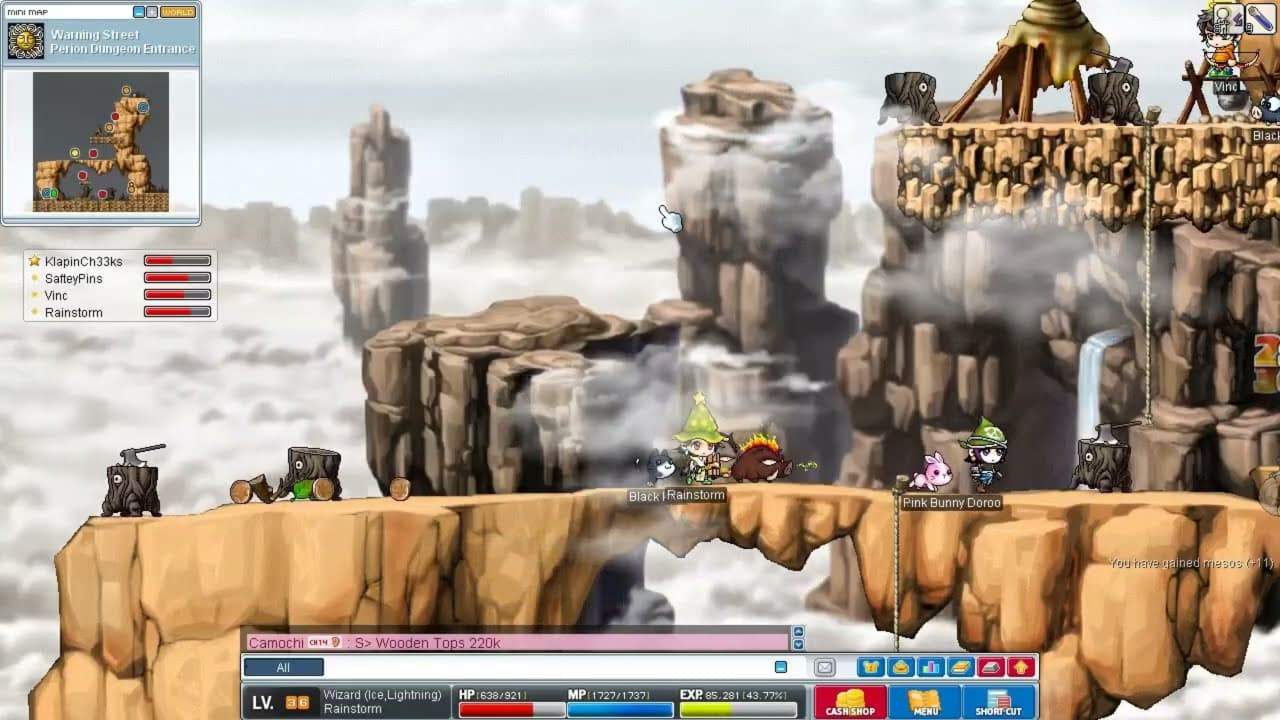
Level 1-30 Quick Leveling Route
For levels 1-30 in MapleStory Classic World, combine quests with monsters you can defeat consistently, then try KPQ at level 21. All four first jobs, including Magician, advance at level 10. Visit your class instructor again at level 30 for second job advancement before evaluating your next training route.
Level | Suggested Route | What to Do |
1-10 | Maple Island, then Lith Harbor surroundings | Complete nearby quests and finish reaching level 10 on manageable monsters. |
10-15 | Henesys Hunting Ground I, Ellinia's Slime Tree, or Kerning Construction Site | Pick a platform where your attacks connect reliably; avoid chasing stronger spawns. |
15-21 | Bubblings, Caution Falling Down, or Stirges | Split the map with active teammates and watch potion use. |
21-25 | KPQ or Ant Tunnel | Try a complete KPQ cycle; use field training when entry delays become excessive. |
25-30 | KPQ Rush, KPQ Bonus, Ant Tunnel, or Wild Boars | Continue the sustainable option and prepare for second job. |
Three Things to Do Early
Start Citizenship at level 12 through Arthur in Henesys Town Hall or Roxy in Kerning City Civic Center. Its progression provides access to shop benefits and discounts; check your grade's available stock before restocking.
At Caution Falling Down, reached through Kerning Construction Site, divide floors and assign a stronger teammate to the Blue Mushrooms below. Return to mushrooms or slimes if Bubblings drain your supplies.
Check ores, scrolls, and quest materials before selling them. Combine quests with monsters already on your route to avoid unnecessary travel.
Best Level 30-40 Training Spots
Use these class priorities to begin testing MapleStory Classic World maps. Check hits, casts per kill, and potion use.
Choose Your First Map by Class
Class | First Trial | If It Is Too Slow or Expensive |
Fighter, Page, Spearman | Evil Eyes for reachable groups; then Fire Boars | Return to Ant Tunnel mushrooms if climbing or contact damage eats your gains. |
Ice/Lightning Wizard | Fire Boars once your ice attack reliably kills in one or two casts | Keep training on easier Ant Tunnel monsters while the attack develops; ice weakness alone is insufficient. |
Fire/Poison Wizard | Ligators, then Jr. Wraiths when Fire Arrow delivers efficient kills | Use Evil Eyes with your established attack. Avoid relying on fire against Fire Boars. |
Cleric | Zombie Mushrooms; test Jr. Wraiths with Holy Arrow or Heal | Heal damages nearby undead. Compare skill levels, mob density, and MP per kill; return to Zombie Mushrooms if inefficient. |
Hunter, Crossbowman, Assassin, Bandit | Fire Boars; try Jr. Wraiths once hits and damage are consistent | Step back to Evil Eyes or Ant Tunnel mushrooms if misses or slow kills persist. |
From level 30 onward, start with your class's first trial and move to stronger targets only when your EXP gains and potion costs justify the switch.
Level 30-33: Fire Boars and Ligators
From Perion, navigate toward Deep Valley II, enter The Burnt Land I, and continue to The Burnt Land II. Fire Boars share the second map with Dark Axe Stumps. Its two main tiers suit a small group: cover the upper section while another player clears below.
Fire Boars are weak to ice and resist fire. Diamond Ore and quest drops such as Arwen's Glass Shoe add loot value, but rare drops cannot fund every session. When managing MapleStory Classic World Mesos, judge the map by ordinary drops and potion costs before counting a lucky item.
If II is occupied, inspect I or III before spending ages changing channels. Move onward when a harder target gives better measured EXP without making your supplies disappear faster.
For Ligators, take Kerning City's connection into The Swamp of Despair I. The swamp chain offers alternatives if the first map is busy. Agree on separate sections in a party; solo players should choose a circuit they can clear without constant backtracking. Outdoor Ligators have different stats from their KPQ counterparts, so easy stage-one kills do not guarantee equally easy field training. Choose the swamp over KPQ when access is immediate and your sustained clearing beats the complete quest cycle.
Level 33-36: Jr. Wraiths and Evil Eyes
Enter Kerning Subway through the Subway Ticketing Booth, pass Line 1 (Area 1) into Transfer Area, then head to Line 2 (Area 1). Jr. Wraiths dominate this large map, with Jr. Neckis below. Wide platforms give ranged attackers room to work; melee characters should gather nearby targets into groups their attacks can reach.
Jr. Wraiths are weak to fire and holy and can drop Mokbi Throwing Stars. If misses are common, return to Fire Boars or easier monsters. Line 1 (Area 2) offers another Jr. Wraith option when the main map is occupied.
Evil Eyes belong to the Sleepywood route. Travel through Ant Tunnel toward Ant Tunnel Park and the Cave of Evil Eye maps. Use short clearing loops and controlled drops between platforms. Divide floors in a party; solo, avoid circuits dominated by rope climbing. Try an adjacent cave when crowded.
Level 36-40: Curse Eyes and Alternatives
Curse Eyes are a separate target in Ellinia's tree dungeons. Look for Tree Dungeon, Forest Up North IX, entered from The Forest North of Ellinia. Its narrow vertical layout lets a party divide platforms, while solo players need a repeatable climb-and-drop circuit. Continue there only while kills and potion use remain comfortable.
If crowded, try Lupins in Monkey Forest I, connected to The Forest of Wisdom. Staying at Fire Boars or Jr. Wraiths through the high 30s is reasonable. Forgotten Hollow remains unavailable at Grand Launch.
KPQ Rush vs Bonus vs Grinding
In Classic World, KPQ starts at level 21 through Lakelis in Kerning City with a party of four. Grand Launch availability is channels 3-12, and players can continue beyond level 30. Check that everyone agrees on the run type before entering.
Rush groups clear the quest, leave the bonus room, and attempt another entry. Bonus groups remain to train on mushrooms in a private room. Rush depends heavily on coordinated stages and short waits; Bonus gives the party a period without outside competition.
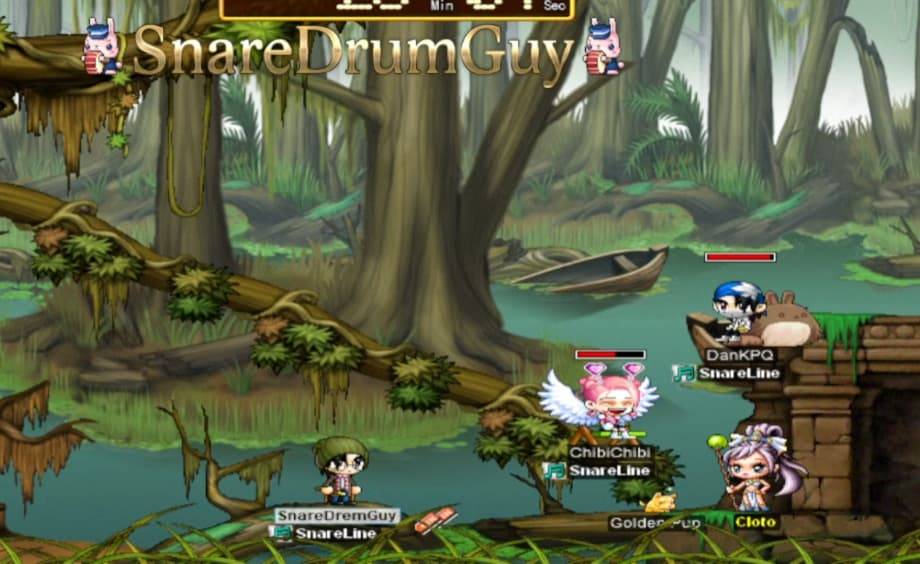
A Community EXP Comparison
One player who used an EXP tracker reported the following results. These are personal observations with incomplete character and party details, followed by arithmetic using that player's estimates.
Measure | KPQ Rush | KPQ With Bonus |
Reported average cycle | About 6 minutes | About 30 minutes |
Progress per cycle | About 2.5%, inferred from 40 runs per level | About 15%, reported |
Calculated progress per hour | About 25% of a level | About 30% of a level |
Calculated time per level | About 4 hours | About 3 hours 20 minutes |
The calculation treats those cycle times as complete. Additional waiting would increase the totals. Bonus produces about 20% more progress per hour in this sample, equivalent to roughly 17% less time per level. This does not establish a universal EXP rate or predict another class's results.
Rush also delivers more completion boxes when the group cycles quickly. For MapleStory Classic World Mesos planning, record the contents you receive and their realistic value separately from EXP. Random rewards make a short run of unusually good boxes a poor income forecast.
Why Other Players Prefer Rush
Another player training at levels 30-35 reported three- to four-minute clears with one- to two-minute waits. A level 33 Fighter also described Rush as faster and less expensive than a Curse Eye party. Those accounts reflect different teams and field conditions from the tracker sample.
Coordinated teams lose less time on puzzles and bosses, while crowded field maps make private training more attractive. These accounts cannot predict results on your character.
Choose Rush, Bonus, or Field Training
Continue Rush when your party clears smoothly, re-enters quickly, and you want repeated completion rewards.
Choose Bonus when re-entry waits disrupt Rush and your four players can steadily clear separate floors without excessive potion use.
Leave KPQ when a suitable field map is available and offers better sustained EXP or lower costs, or when recruitment consumes much of your session.
Find Your KPQ Exit Point
Record three consecutive KPQ cycles, including recruitment and re-entry time. Then train for 10-15 minutes on a suitable field map, recording EXP and supplies consumed. Compare EXP per minute and net meso change over equivalent periods; include travel and restocking when estimating a longer session.
Repeat after a meaningful damage increase or a change in queue conditions. Leave KPQ when field training consistently meets your priorities, regardless of whether that happens at level 30, 32, or later.
Managing Mesos While Leveling
Potion Cost and Skill Efficiency
Compare recovery per meso at the shops you can currently access. Meat and Lemons were recommended in test-era guides, but check today's prices and avoid wasting recovery through overhealing. Citizenship stock can change the comparison.
Track the cost of a kill alongside its EXP. If a stronger skill consumes more MP while still taking the same number of casts, it may not improve that particular grind. Check its current damage and MP costs before committing further skill points; avoid copying a blanket low-rank skill rule across different classes.
Use a normal attack to finish a nearly defeated monster when doing so is safe and does not slow you excessively. Reduce unnecessary contact by attacking from a suitable platform and gathering only what you can control. If a session drains your reserve, return to easier monsters before another equipment upgrade becomes unaffordable.
Drops Worth Keeping or Selling
To preserve MapleStory Classic World Mesos, check Diamond Ore, quest materials, Pan Lids, Mokbis, and scrolls before selling. Reserve what your quests need; count surplus as income only when it sells.
The October 21 launch update reduced quantities of several ores in Companion's Magic Boxes. Old box-opening totals therefore make an unreliable budget. Treat rare drops as occasional income; cover routine potion use with repeatable earnings. Count unsold items separately from cash available for your next restock.
Check Your Session Balance
Calculate net training income as collected mesos plus completed loot sales, minus the replacement cost of potions consumed and other expenses. Count potions from your starting stock too.
These hypothetical 15-minute examples use invented totals, not live prices or measured map earnings:
Session | Mesos and Completed Sales | Potion Replacement | Other Costs | Net |
A | 4,000 | 2,500 | 500 | +1,000 |
B | 4,000 | 5,000 | 500 | -1,500 |
Session B needs lower consumption or better earnings to remain sustainable. An unsold rare item does not cover that shortfall. Compare EXP alongside the balance before accepting a temporary loss.
Recommended Routes for Different Players
Fast Leveling with a Regular Party
In Classic World, measure your regular team's Rush cycles after second job. Stay while access is quick and results beat field training. If waits grow, agree on Bonus or move to a map with separate sections. Use the class table to assign targets your teammates can handle. Retest around 35 after further skill investment.
A Route for Tight Budgets
Start at your class's fallback and establish a positive session balance. Test the next target for 10-15 minutes, including replacement costs for consumed potions. Change one factor at a time, such as positioning or attack choice. Retreat if losses persist; advance when ordinary earnings can sustain the session.
Solo and Casual Progression
Keep quests and training within one town cluster: Perion for Fire Boars, Kerning for swamp or subway maps, and Ellinia for tree maps. Inspect nearby alternatives before abandoning a crowded area. Use KPQ for variety when a group is available, and retest a familiar map after equipment upgrades before traveling farther.