







Summary
The Two-Seam Fastball in MLB The Show 26 can be much more than a slower version of the four-seam. Its arm-side movement helps change the hitter’s expected contact point and generate weak contact. Players using MLB The Show 26 Stubs can build around pitchers with strong fastball combinations, but success still depends on pitch location, handedness, movement, and knowing when to pair the two-seamer with a four-seam fastball.
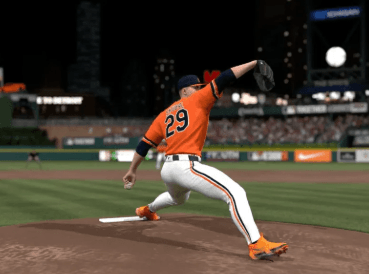
1. What Makes The Two-Seam Fastball Different?
The two-seamer typically moves toward the pitcher’s arm side. For a right-handed pitcher, that movement runs toward the right side from the pitcher’s perspective, while a left-handed pitcher gets the opposite movement.
That movement gives the pitch a different purpose from the four-seam fastball.
Its main strengths are:
Arm-side movement that can shift the hitter’s contact point
Useful for producing weaker contact
Different visual path when paired with a four-seam
Effective around the edges of the strike zone
The exact movement depends on the pitcher’s attributes, so not every two-seamer will behave the same way.
2. Where Should You Throw The Two-Seamer?
Location should be based on both pitcher handedness and hitter handedness. Instead of focusing only on the initial target, think about where the ball will finish after its movement.
| Situation | Useful Two-Seam Location |
|---|---|
| RHP vs RHH | Toward the hitter’s hands |
| RHP vs LHH | Toward the hitter’s body |
| LHP vs LHH | Toward the hitter’s hands |
| LHP vs RHH | Toward the hitter’s body |
| Ground-ball approach | Lower part of the zone |
| Changing eye level | Upper edge when control allows |
The lower zone can help create ground-ball contact, while an upper-edge two-seamer can disrupt the hitter’s timing and eye level.
3. Two-Seam Fastball vs Four-Seam Fastball
These pitches become more dangerous when used together.
The four-seam fastball offers a straighter path and usually provides the velocity needed to challenge hitters directly. The two-seamer changes that path with arm-side movement.
| Pitch | Main Strength | Best Use | Main Risk |
|---|---|---|---|
| Two-Seam | Arm-side movement | Weak contact and edge locations | Can run into the power zone |
| Four-Seam | Velocity and direct path | High-zone attacks | Easier to track if predictable |
Using similar release points can make the two pitches harder to distinguish before the ball starts moving.

4. Build Better Pitch Sequences
The two-seamer works best as part of a complete pitch mix rather than as a pitch thrown repeatedly.
A simple approach is:
Early count: Use the two-seamer near the edge to look for weak contact.
Two strikes: Move the target just outside the zone and let the movement test the hitter’s discipline.
Full count: Keep the pitch close enough to the zone to avoid giving away a free walk.
After high fastballs: Use the two-seamer to change the hitter’s expected contact point.
Adding a slider or curveball gives the hitter another movement and speed profile to consider.
5. Adjust For Hitter Handedness
Handedness changes how the two-seamer approaches the hitter, but there is no single location that works every time.
If a hitter starts sitting on the same arm-side location, change the target or switch to another pitch. Repeating a low-and-away two-seamer throughout an at-bat can eventually make the pattern predictable.
The goal is to make the hitter react to the pitch rather than anticipate it.
6. Control And Pitching Execution
Execution is just as important as pitch selection. A well-designed two-seam location means little if the pitch ends up over the middle.
For different pitching interfaces:
Pinpoint: Focus on consistent timing rather than forcing extra movement.
Classic: Choose locations that match the pitcher’s control.
Meter/Pulse/Pure Analog: Avoid aggressive targets when the pitcher cannot reliably hit them.
Always check the pitch history as well. If the hitter has already seen several two-seamers moving in the same direction, changing the location or returning to the four-seam can make the next pitch harder to predict.

7. Avoid Common Two-Seam Mistakes
The biggest mistake is treating every two-seamer the same.
Remember these points:
Don't throw it to the same location every at-bat.
Don't assume it behaves exactly like a sinker.
Don't ignore velocity separation from the four-seam.
Don't leave a moving fastball over the center of the plate.
Don't force movement at the expense of control.
When building a Diamond Dynasty pitching staff, players who want more roster flexibility can also explore MLB 26 stubs for sale when looking for pitchers with the right attributes and pitch combinations.
Final Thoughts
The Two-Seam Fastball in MLB The Show 26 becomes much more effective when movement, location, handedness, and pitch sequencing work together. Use it to change the hitter’s expected contact point, pair it with a four-seam fastball, and avoid predictable patterns. With better execution, the two-seamer can become a reliable tool for generating weak contact and controlling at-bats.