










Summary
The Curse of the Allflame expansion continues Grinding Gear Games' effort to expand the roster of Transfigured Skills, introducing new options that change how familiar abilities function rather than simply increasing their damage. Among the first revealed additions are Holy Hammers of Spirals and Reap of Butchery, two skills that encourage completely different combat approaches.
This guide explains when these new Transfigured Skills are worth using, which builds benefit the most, and how to prepare your character before investing in them. Whether you're planning a fresh league starter or looking for an endgame upgrade, following these steps will help you evaluate the new skills more efficiently and avoid costly mistakes.
Part 1: Understand What a Transfigured Skill Changes
Why it matters
Many players equip a new Transfigured Gem expecting it to be a direct upgrade over the original skill. In reality, Transfigured Skills usually change gameplay instead of simply increasing damage.
That means your existing support gems, passive tree, Ascendancy, and equipment may no longer be optimal.
What to do
Before switching skills:
Read the Transfigured Gem's description carefully.
Compare it with the original version.
Check whether your current supports still provide maximum value.
Test the skill in lower-tier maps before committing expensive crafting resources.
Treat every Transfigured Skill as a new build rather than a replacement gem.
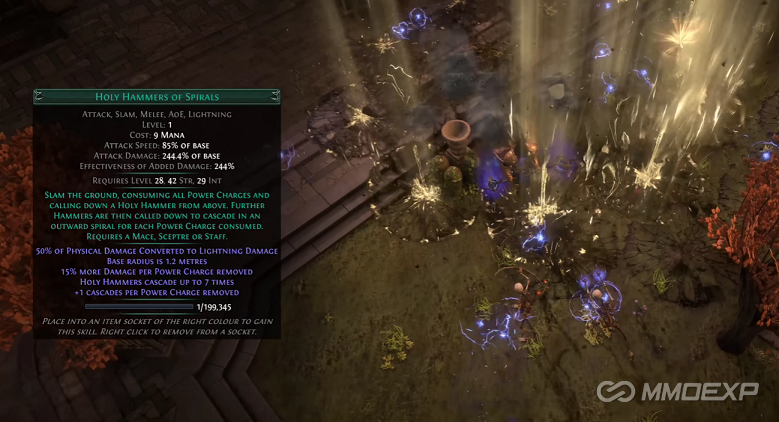
Part 2: Build Around Holy Hammers of Spirals
Why it matters
Holy Hammers of Spirals introduces a completely different style of melee spell gameplay.
Instead of focusing on straightforward attacks, the skill creates spiraling hammer projectiles that can cover larger areas and continuously damage enemies as they travel.
What to do
When building around Holy Hammers of Spirals:
Prioritize increased Area of Effect.
Invest in Cast Speed to improve clear speed.
Position yourself so enemies remain inside the hammer spirals.
Use movement skills to guide monster packs into the rotating projectiles.
This approach rewards good positioning more than constant movement.
Additional tips
The skill performs best against dense monster packs where multiple enemies remain inside the spiraling attack path.
For fast-moving bosses, practice positioning so the boss stays within the hammer pattern for as long as possible.
Part 3: Maximize Reap of Butchery
Why it matters
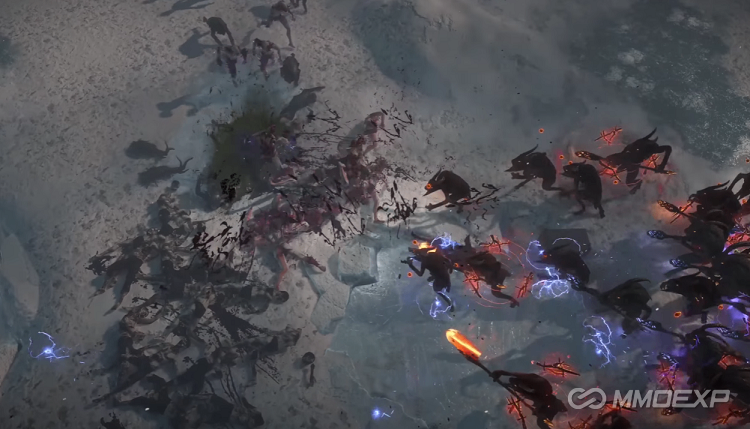
Unlike Holy Hammers of Spirals, Reap of Butchery encourages aggressive melee combat.
The skill favors staying close to enemies, making positioning and survivability much more important.
What to do
To improve performance:
Build sufficient Life before prioritizing damage.
Cap all Elemental Resistances early.
Maintain reliable Life recovery through Leech or Regeneration.
Stay close enough to maintain consistent Reap hits without exposing yourself unnecessarily.
Learning boss attack patterns becomes much more valuable when using this skill because you'll spend far more time within melee range.
Additional tips
Use mobility skills between attacks instead of standing still continuously.
Surviving longer generally produces higher overall damage than chasing maximum offensive stats.
Part 4: Upgrade Your Character Before Switching Skills
Why it matters
Many players blame a new skill for poor performance when the real issue is outdated equipment.
Even the strongest Transfigured Skill cannot compensate for weak weapons or insufficient defenses.
What to do
Before changing your build, review:
Weapon damage
Life total
Elemental Resistances
Movement Speed
Support Gem levels
If several of these areas are underdeveloped, upgrading your gear will usually produce greater improvements than changing skills.
Players often spend valuable POE Currency experimenting with multiple Transfigured Gems. Completing your core equipment upgrades first helps reduce unnecessary investment and makes it easier to evaluate each new skill under proper conditions.
Part 5: Adjust Your Passive Tree Carefully
Why it matters
A Passive Tree designed for the original version of a skill may perform poorly with its Transfigured counterpart.
Different damage types, hit patterns, or scaling methods often require different investments.
What to do
After equipping your new skill:
Identify its primary scaling mechanic.
Remove passive points that no longer provide meaningful value.
Prioritize damage nodes that directly support the new version.
Reevaluate your Masteries after major changes.
Avoid copying older builds without confirming they support the Transfigured version specifically.
Part 6: Test New Skills in Real Gameplay
Why it matters
Training dummies and tooltip damage rarely reflect actual mapping performance.
Clear speed, survivability, and boss consistency determine whether a build succeeds.
What to do
Evaluate each skill by running several different activities:
Campaign progression
Early Atlas maps
Dense mapping layouts
Single-target boss encounters
Record whether you experience:
Comfortable mana sustain
Reliable survivability
Efficient clear speed
Acceptable boss damage
Small adjustments to support gems or equipment often solve problems without requiring a complete rebuild.
Part 7: Prepare for the Curse of the Allflame League
Why it matters
Only a small number of Transfigured Skills have been revealed before launch.
Additional gems may significantly change the strongest league starters.
What to do
Rather than planning around only one skill:
Prepare multiple leveling options.
Keep useful support gems available.
Save refund points for early Passive Tree adjustments.
Avoid investing all your currency immediately after league launch.
Remaining flexible during the first few days of the league allows you to adapt if another newly revealed Transfigured Skill proves stronger for your preferred playstyle.
Key Takeaways
Holy Hammers of Spirals rewards positioning, Area of Effect, and sustained damage against groups of enemies.
Reap of Butchery emphasizes close-range combat and requires stronger defensive investment.
Upgrade your equipment before judging the effectiveness of a new Transfigured Skill.
Adjust your Passive Tree specifically for the Transfigured version instead of relying on older builds.
Test new skills across mapping and boss encounters before committing significant currency.
Maintain flexibility during the early days of Curse of the Allflame, as additional Transfigured Skills may change the meta.
Conclusion
The Curse of the Allflame expansion continues to redefine familiar skills through meaningful gameplay changes rather than simple numerical upgrades. Holy Hammers of Spirals and Reap of Butchery each introduce distinct combat styles that reward different approaches to positioning, gearing, and character progression. By building a solid foundation first, upgrading equipment before making major changes, and testing each skill in practical content, you can take full advantage of these new Transfigured Skills while avoiding unnecessary rebuilding costs as the new league begins.