






Summary: Starting RuneScape: Dragonwilds 1.0 from scratch can be overwhelming. The game combines RuneScape-style skills with survival, crafting, combat, farm OSRS gold, farming and exploration, and the first few hours can easily disappear into unnecessary resource gathering.
The good news is that you do not need to optimize everything.
You just need to establish the right systems early.
Here is the route I would use for the first two hours of a fresh 1.0 save.

Get a Vault Core First
One of the smartest early objectives is getting your first Vault Core.
Vault Cores unlock the Lodestone recipe, allowing you to start building your own fast-travel network. A player-built Lodestone currently costs 32 Stone, 20 Rune Essence and 1 Vault Core.
The important part is that you do not necessarily need to spend your first Vault run clearing every enemy or finishing everything inside.
Your immediate goal is simply getting the Core and getting back out safely.
That changes the early game dramatically because Lodestones let you create useful travel points around Ashenfall instead of repeatedly walking the same routes.
Vault Cores are also worth collecting later because they are used for other progression and crafting requirements, and current guides report that they respawn after several in-game days.
Build a Simple Starter Base
Once fast travel is available, stop worrying about building an impressive house.
Your first base only needs the essentials: a bed, storage, crafting stations and a roofed shelter.
The more important question is where you build.
A useful early base should be close to a Lodestone, resources and the routes you expect to travel repeatedly. Current 1.0 guides also emphasize establishing a safe, enclosed base early rather than spending your opening hours wandering without a reliable respawn and storage point.
This is especially important because your first base is really a logistics hub.
Later on, you can build much larger structures.
For the first two hours, save the resources.
Farm Flax and Potatoes Immediately
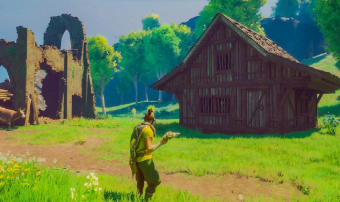
Once the basic shelter is ready, start collecting Flax and Potatoes.
Flax is particularly useful because it feeds directly into early crafting and helps you reach ranged weapons sooner. Potatoes and other early food resources also give you a sustainable supply rather than forcing you to constantly hunt for your next meal.
The most important thing is to start farming as soon as you unlock the ability.
That turns gathering from a temporary solution into a renewable resource loop.
This is one area where 1.0's expanded systems make the early game smoother than the original Early Access experience.
Craft a Bow and Test Every Weapon
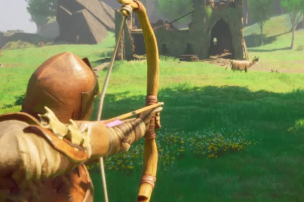
The bow should be one of your first useful weapons.
It gives you a safer way to handle groups and lets you kite enemies rather than standing in melee range for every encounter.
But do not immediately commit all your materials to one weapon type.
Craft the cheap early versions of several weapon categories and test them.
Dragonwilds gives different weapon types their own attack patterns and special attacks, so discovering your preferred playstyle before investing in higher-tier equipment can save a lot of materials.
The 1.0 combat changes also make this experimentation more worthwhile because Special Attacks now use their own resource bar and attacks can be canceled with defensive inputs.
Start Using Processing Stations Before Bed
One of the easiest efficiency gains is also one of the simplest.
Do not go to sleep with your processing stations empty.
Load your ore, food, hides and other materials into the appropriate stations before ending the day. That way, the time you spend sleeping is also advancing your crafting and processing.
This is exactly the kind of small optimization that saves hours over a full playthrough.
Dragonwilds is built around turning one resource into another through multiple crafting stations, so always ask yourself what the next processing step is instead of leaving raw materials sitting in storage.
Prioritize Agility, But Keep Playing Naturally
You do not need to obsess over a single skill tree.
Most skills will level naturally while you gather, craft, fight and explore.
However, Agility stands out because its early movement unlocks have an immediate impact on exploration.
Double Jump unlocks at Agility level 10, while Air Dash comes later at level 32. These movement abilities can change how you navigate terrain and avoid attacks.
The important part is that Agility does not demand constant dedicated grinding. Jagex designed it to award passive XP while traveling on foot, alongside its dedicated courses.
So keep moving.
You can build Agility naturally while doing everything else.
Learn Parrying Early
When combat starts getting harder, learn the parry system instead of simply crafting stronger gear.
In 1.0, a successful parry restores 50% of your maximum stamina and opens an optional Visceral Attack.
That makes parrying much more valuable than it was in Early Access.
It is not just a defensive move anymore.
You are effectively turning enemy attacks into opportunities to recover stamina and counterattack.
Practice against individual enemies first, then start using the timing during larger fights.
Use Rema on the Move
The new Anima vents are another early-game system worth learning.
They let you interact with rune essence and produce the corresponding elemental runes without always returning to a traditional altar.
That means you can keep your spell supply topped up while exploring rather than constantly interrupting your route.
This becomes increasingly important as your skill levels unlock more utility spells.
Do Not Grind Before You Need To
The biggest mistake I would avoid in the first two hours is over-grinding.
Follow the main quest and complete useful side quests as they appear.
When enemies start surviving noticeably longer or your current equipment stops keeping up, then step back and upgrade your gear.
You do not need a full endgame preparation session every time you enter a new area.
That approach also fits the current beginner-guide consensus: the opening hours are structured around progressing the early questline, establishing a base and gradually upgrading your equipment rather than immediately exploring the entire world.
Place Lodestones Strategically
Once you have several Vault Cores, do not scatter Lodestones randomly.
Think of them as a travel network.
A good Lodestone location is usually near a frequently farmed resource, a Vault, a new region, or a location that would otherwise require a long return trip.
Current guides specifically recommend using forward Lodestones around repeat farming routes and major progression points rather than building every one next to your main base.
That is where the system starts to save enormous amounts of time.
Your First Two Hours Should Build a Foundation
The goal of the opening two hours in RuneScape: Dragonwilds 1.0 is not to become overpowered.
It is to remove the biggest sources of wasted time.
Get a Vault Core. Build your first Lodestone. Establish a simple base. Start farming. Buy OSRS gold. Test your weapons. Keep your processing stations running. Let Agility level naturally, learn to parry and continue following the questline until the game gives you a reason to upgrade.
That gives you a much stronger foundation for the rest of Ashenfall without turning the early game into a checklist of unnecessary grinding.
And because Dragonwilds 1.0 launched with the full Scorned Wilderness finale and Kuldra content, there is plenty of room to optimize later. You do not need to solve the entire game during your first night.