







In short: Efficient storage can completely change the early game in survival-building systems. The key is understanding the difference between recipe workshops and processing stations, then building your storage around how each system accesses resources. Link nearby material chests to recipe workshops, manually carry new resources to processing stations to unlock recipes, and separate raw materials from finished products. A clean resource loop means less running, faster crafting, and smoother progression. You can also buy Runescape gold to level up faster and stay ahead if you want to accelerate your early setup.

Understand Workshop Types Before Building Your Base
The crafting system can generally be divided into two categories: recipe-based workshops and processing stations.
Recipe-based workshops are used for equipment such as weapons, armor, magic items, jewelry, and bows. Once you unlock a recipe, the workshop can show the required materials and let you craft items in batches.
Processing stations work differently. They handle resources such as ore, wood, food, leather, and potions. You normally need to physically bring the relevant materials to the station before new recipes and processing options become available.
This difference is important because gathering a new resource isn't only about having more materials—it can also advance your crafting progression.
Make Linked Chests Do the Work
Recipe-based workshops can automatically access materials stored in linked chests.
As long as the chest has its link option enabled and remains within the workshop's effective range, the station can pull materials from it automatically. You don't necessarily need to place every storage container directly beside the crafting station.
The most efficient principle is simple:
Put materials near the workshop and let the workshop find them.
That means less inventory management and fewer unnecessary trips across your base.

Processing Stations Require a Different Routine
Processing stations require more active management.
Whenever you discover a new resource, place it in your inventory and take it to relevant stations such as the Spinning Wheel, Loom, Tanning Station, or Kiln. Check each one for newly unlocked recipes.
A good early-game habit is to make a quick crafting-station tour whenever you obtain a completely new material. This prevents important recipes from remaining hidden simply because you never brought the resource to the correct station.
For players trying to accelerate their early setup, you can also RS gold to level up faster and stay ahead, allowing you to fill key resource gaps while establishing your crafting network.
Organize Storage From Raw Materials to Finished Products
For long-term base management, one of the easiest systems is to give each production area two dedicated storage containers:
Raw Materials: Ore, logs, raw leather, basic ingredients
Finished Products: Ingots, planks, cooked food, potions, processed materials
For example, keep ore and metal ingots near your furnace area. Put raw stone and processed stone together in the stone-production zone. Food ingredients and prepared meals should have their own dedicated storage.
This setup makes it immediately obvious where an item belongs, which becomes especially useful when you're exploring a new region and collecting large amounts of unfamiliar resources.
Use Output Directions and Dedicated Storage
Many processing stations have a defined output direction.
A sawmill, for example, can direct processed wood into a dedicated wood-storage container. Similar setups can be used for ore, stone, and other processed materials.
Once configured correctly, your production line becomes much easier to maintain because processed resources move directly into their intended storage rather than filling your inventory.
Also keep heavy gear, combat supplies, potions, and food in separate non-linked chests.
This prevents automated organization or workshop interactions from accidentally pulling away supplies you want to keep ready for exploration and combat.
Build Regional Storage and Hidden Warehouses
Whenever you enter a new area, create a temporary regional storage chest.
Put your first batches of new wood, ore, food, and other unfamiliar resources inside it. Once you've learned what the area provides, you can return later and move everything into your permanent storage network.
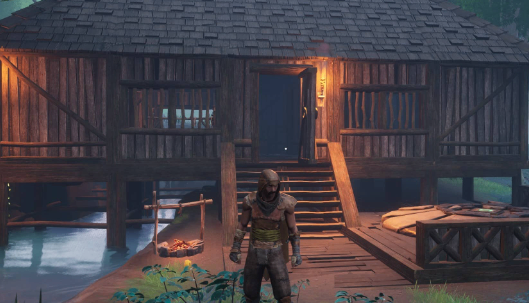
If aesthetics matter, consider building a hidden underground warehouse beneath your main base. Keep the workshops upstairs and the organized storage room downstairs.
The result is both clean and practical: crafting stays close to your main activity area while bulk resources remain safely organized below.
For RuneScape veterans, the philosophy is familiar: divide resources by function, minimize unnecessary movement, and keep the entire production chain flowing.
TL;DR:
Separate recipe workshops from processing stations, link material chests to crafting stations, carry new resources to processing stations to unlock recipes, and organize storage from raw materials to finished products. Add regional chests during exploration and keep combat supplies in non-linked storage.
What storage system are you using for your current base, and which resource is the hardest to keep organized?