Weekend Drop -












Summary
If you want to win more gunfights, make fewer mistakes, and climb the Valorant ranks more consistently, raw aim is only part of the equation. Understanding how each weapon is meant to be used is just as important. This guide breaks down the core mechanics, common mistakes, and practical uses of Valorant’s major weapon categories so you can make smarter decisions in every round and get more value from your Valorant Account.

1. Why weapon knowledge matters more than pure aim
Many players have decent movement, crosshair placement, and game sense but still lose too many duels. The problem is often not their aim—it is how they use their weapon.
Every gun has different recoil, accuracy, spread, movement speed, damage range, penetration, and firing rhythm. Treating every weapon the same can put you at a major disadvantage.
A Stinger should not be used like a Vandal, and a shotgun should not be played like a rifle. Once you understand these differences, your fights become much more consistent.
2. Valorant weapon guide: use every gun for its strengths
1. Pistols: Classic, Shorty, Frenzy, Ghost, and Sheriff
Pistol rounds can set the tone for the entire half, making weapon control especially important.
Classic: Avoid mindlessly spamming left-click at medium or long range. Control your firing rhythm and use the right-click burst at close range when appropriate.
Shorty: This is a close-range burst weapon. Use it around tight corners or to finish extremely low-HP enemies rather than taking open fights.
Frenzy: The Frenzy performs best at close range and while moving. Pull down quickly to control its early recoil and avoid unnecessary long-range fights.
Ghost: Excellent for accurate headshots, jiggle peeks, and quick follow-up shots. Avoid firing too quickly at longer distances.
Sheriff: Precision is its biggest strength. Headshots are ideal, but controlled body shots can also finish unarmored enemies during pistol rounds.
2. SMGs: Stinger and Spectre
SMGs are built around mobility and close-range pressure rather than stationary spraying.
Stinger: Extremely strong up close but difficult to control once the spray gets longer. Pull down immediately and avoid extended fights beyond roughly 15 meters.
Spectre: More consistent and forgiving than the Stinger. Its larger magazine and better control make it more reliable for multi-kills and aggressive run-and-gun situations.
3. Shotguns: Bucky and Judge
Shotguns are all about controlling the distance of the fight. Instead of chasing enemies, create positions where opponents have to walk into your effective range.
Bucky: Damage drops noticeably as distance increases. At close range, aiming around the upper chest gives you a reliable pellet spread. At longer ranges, the alternate fire can help finish weakened targets.
Judge: The Judge has a noticeable recoil and spread pattern. Crouching can tighten the spread, while jumping dramatically reduces consistency. Only use aggressive jump shots at extremely close range.
4. Rifles: Bulldog, Guardian, Phantom, and Vandal
Rifles are the backbone of most competitive Valorant rounds, but each one rewards a different style.
Bulldog: Often overlooked, the Bulldog is surprisingly reliable. Its burst fire is particularly effective when ADSing, making it useful for controlled medium- and long-range engagements.
Guardian: Built for precision. Its excellent first-shot accuracy makes it ideal for headshots, long-range duels, and controlled wallbangs.
Phantom: Recent recoil improvements make the Phantom easier to control during sustained sprays. It is particularly strong in medium-range fights and when finishing damaged enemies.
Vandal: Still one of the best weapons for one-tap headshots. However, spraying becomes less reliable at longer distances, so use taps and short bursts beyond roughly 25–30 meters.
5. Precision weapons: Marshal and Outlaw
These weapons reward good positioning, timing, and disciplined peeking.
Marshal: Highly accurate even without ADS, making it excellent for quick peeks and holding tight angles. Managing your reload timing can also help you maintain pressure between shots.
Outlaw: Its two-shot magazine creates an important risk-reward decision. If your agent has no mobility or escape ability, firing one shot and repositioning is often safer than immediately using both rounds.
6. Sniper rifle: Operator
The Operator can completely control an angle, but mistakes are heavily punished.
Learn the exact timing between scoping in and firing so you do not shoot before the weapon becomes accurate.
Avoid exposing your entire body while scoped.
Use small-angle or pixel peeks when holding dangerous sightlines.
Experiment with your scope settings to find a setup that makes quick-scoping and repositioning more comfortable.
The Operator is strongest when you force enemies to challenge you on your terms rather than repeatedly taking wide open peeks.
7. Machine guns: Ares and Odin
Machine guns are better suited to suppression, wallbangs, and controlling predictable positions.
Ares: Its accuracy improves as you continue firing, so pre-firing before swinging can help you establish pressure immediately.
Odin: Its high penetration and sustained fire make it excellent for wallbangs, pre-firing common positions, and denying enemies behind cover.
Both weapons become much more effective when you understand common wallbang spots and enemy movement patterns.
Instead of trying to out-duel a Vandal in an open area, use these weapons to exploit cover and force opponents into uncomfortable positions.
3. The most common Valorant weapon mistakes
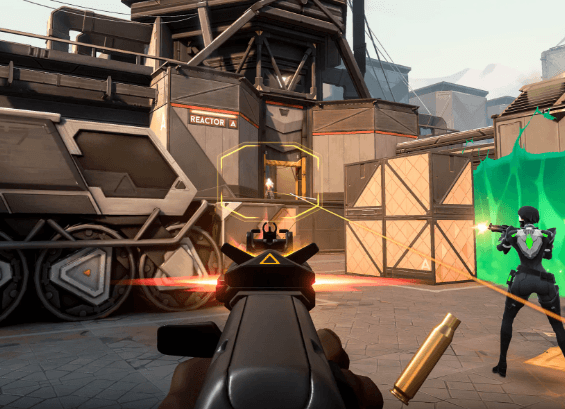
Many lost gunfights come from poor weapon usage rather than poor aim.
Common mistakes include:
Spraying too much at medium and long range
Using shotguns outside their effective range
Failing to switch between taps, bursts, and sprays
Ignoring how crouching affects weapon spread
Taking overly wide peeks with sniper rifles
Fighting at ranges that favor the enemy's weapon
Using every gun with the same shooting rhythm
Fixing these habits can make your gunfights noticeably more consistent without requiring a dramatic change to your mechanical skill.
4. How to practice Valorant gun mechanics effectively
If you want to improve faster, do not simply spend hours shooting bots. Practice with a clear progression.
1. Learn the ideal range for each weapon.
Know where your gun is strongest before taking a fight.
2. Practice taps, bursts, and sprays.
Learn when each firing method is appropriate instead of relying on one habit.
3. Train movement and shooting together.
Practice deadzoning, strafing, crouching, and repositioning while maintaining accuracy.
4. Treat weapon selection as part of your strategy.
Your weapon should match the map, position, economy, and expected engagement range.
5. Apply the mechanics in real matches.
The goal is not to memorize recoil patterns. It is to recognize situations where a specific weapon gives you an advantage.
5. Final thoughts: winning gunfights is about more than aim
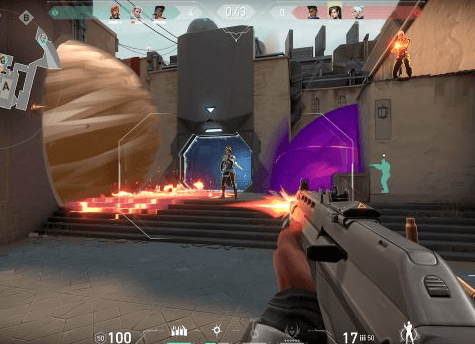
Being a strong Valorant player is not simply about hitting more headshots. It is about understanding why a weapon works, where it works, and when you should use it.
Once you understand each gun's effective range, recoil behavior, movement limitations, and firing rhythm, your decisions become much cleaner. You will take better fights, make fewer unnecessary mistakes, and give yourself a much better chance of climbing the ranked ladder. For players looking to complement their progress with a Buying Valorant Account option, understanding these weapon fundamentals remains essential for getting the most from every match.