Weekend Drop -













Warlock is the first class to study for high-level play within World of Warcraft: Forever's level-30 duel bracket, while Paladin has the strongest qualifying record.
The Forever Open ended on October 18 with Warlockguy defeating fellow Warlock Neepzen. Shamans Cdew and Oddwaffletv finished third and fourth, making Shaman the other class worth revisiting before choosing a launch main
The Forever Open tested level-30 builds; WoW Forever launches November 4 with a level-60 cap. Additional talents, abilities and equipment may significantly change these matchups. These results concern Horde-only beta duels, so use them to choose what to investigate for your preferred PvP activity
Qualifiers and Finals Tell Different Stories
The community qualifier analysis covered 4,673 matches. A separate reconstruction of the finals bracket, excluding same-class fights and counting individual duels within series, gives a different view of WoW Forever PvP performance:
Class | Qualifier Win Rate | Finals Cross-Class Duels | Finals Win Rate |
Warlock | About 60% | 26 wins, 7 losses | 79% |
Paladin | About 63% | 16 wins, 13 losses | 55% |
Shaman | About 46% | 19 wins, 11 losses | 63% |
Mage | About 49% | 4 wins, 12 losses | 25% |
The finals column measures individual games, so a 2-0 series contributes two wins. It excludes the Warlock mirror matches deciding the title. Its much smaller, selected field and different opponent distribution prevent reading the two columns as a balance change.
The distinction changes the recommendation: Paladin excelled across qualifiers, while Warlock's strong results continued against finalists. Shaman's podium finishes show how much a below-even class average can conceal. Four players qualified per class by design; their subsequent results carry more information than equal finalist counts.
Warlock Strength Starts with Soul Link
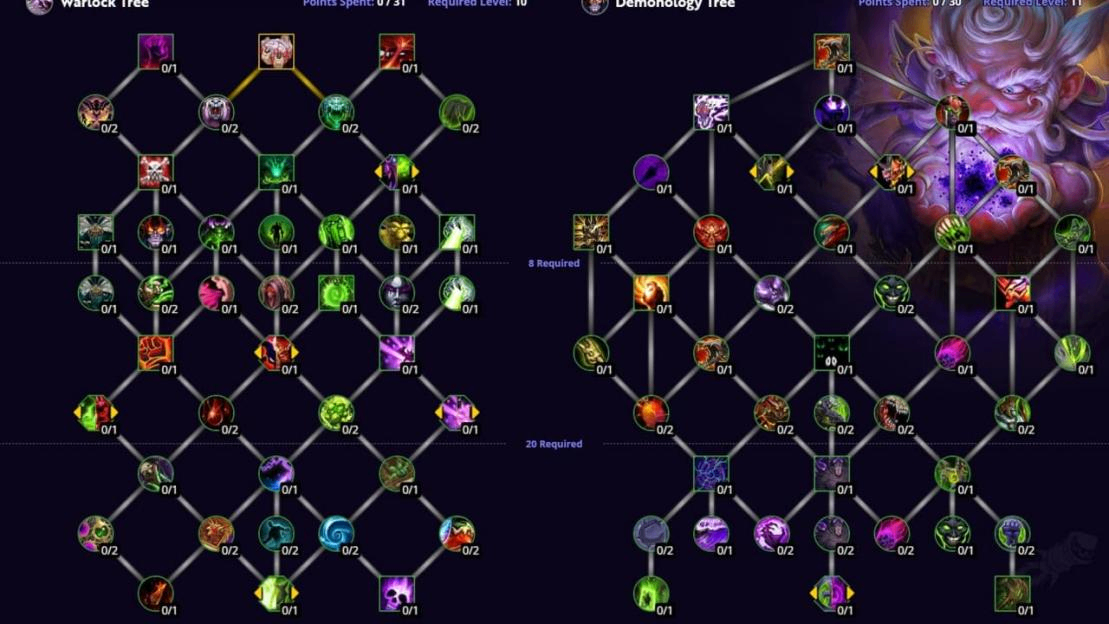
The qualifier report found three of four advancing Warlocks entered with 5/21/0. That costs 26 points: a normal level-30 character has 21, so copying it at that level requires all five ranks of the Legacy perk Talented.
It brings talent points forward without raising the eventual 51-point cap. Without it, prioritize the 21-point Demonology route to Soul Link before adding the five Affliction points.
Blizzard moved Soul Link to that 21-point position. Its tooltip redirects 30% of incoming damage to an active demon, helping the Warlock survive while continuing to apply pressure.
Before fighting, confirm the buff is active and keep pet health visible: losing the demon removes that protection. Players could change talents between qualifiers and finals. The split does not establish Warlockguy's finals build or pet.
Before spending WoW Forever Gold on Warlock gear upgrades or enchants, confirm which demon and talent setup you intend to use. A strong qualifier build is not necessarily the right investment for every matchup.
Against a WoW Forever Warlock, consider pet pressure when the demon is exposed and you can finish it without surrendering control of your character. Avoid a prolonged pet chase that leaves the Warlock free to attack.
Demonic Energies, if selected, heals the pet from the Warlock's spell damage; inspect recovery and resummoning options before treating a pet kill as a guaranteed win.
At launch, a build with Master Demonologist changes the comparison again: Voidwalker reduces physical damage taken, while Felhunter reduces magic damage taken. Identify the demon and allocated talents before choosing a target; those bonuses should not be assumed from Soul Link alone.
For Fear, Undead players can use Will of the Forsaken to break the effect, but Forever removed its follow-up immunity. Pair the break with pressure or positioning that prevents an immediate recast.
As Mage, consider holding Counterspell for a consequential Fear cast instead of spending it automatically on damage. These are matchup priorities, not a universal opening sequence.
Paladin Pressure and Cooldowns Need Separating
Paladin's qualifying lead included 15 undefeated players, while Retribution reached 65% in the community report. Its WoW Forever toolkit combines weapon pressure, Holy damage and healing. Blizzard confirms Holy Strike supplies an instant Holy-damage attack, while Judgement no longer consumes the active Seal.
Those changes support more consistent offense. Lay on Hands adds emergency recovery, with its cooldown reduced to 20 minutes. In finals series, however, the rules allowed only one minute between duels and prohibited delaying for cooldowns. A recovery tool available for one fight could be missing in the next.
This makes cooldown availability a plausible factor to investigate in Paladin's different stage results, alongside opponents and player performance. It does not prove Lay on Hands caused the qualifying lead or subsequent losses.
For practical preparation, play sets of consecutive duels without waiting for long cooldowns. Track results separately with and without Lay on Hands available. If your wins depend on it, work on maintaining pressure and creating healing opportunities when it is absent.
If you plan to invest Forever Gold in better weapons or enchants, test whether those upgrades improve your pressure when Lay on Hands is unavailable. Stronger equipment cannot replace proper cooldown management.
Against a Paladin, record when major recovery is spent before deciding whether your next attempt should force that resource or aim to finish the fight.

Shaman Deserves a Second Look
Shaman's 46% qualifier average would make it easy to overlook. Its 19-11 cross-class finals record and third- and fourth-place finishes justify putting it back on the WoW Forever duel shortlist.
The bracket does not establish a shared winning specialization. Three confirmed WoW Forever mechanics give you specific questions to test when comparing Cdew and Oddwaffletv:
Totemic Projection is learned at 22. Check whether moving existing totems maintains useful coverage after either player changes position.
Water Shield is an 11-point Restoration talent and Mana Tide a 16-point talent. If selected, check whether mana recovery sustains healing without surrendering offensive pressure.
Earthbound is a 21-point Elemental talent that roots nearby targets when Earthbind is cast. If selected, examine whether that window creates distance, a heal or damage.
These are alternative mechanisms to verify in the actual builds, not claims that both finalists used them together. Choosing where to spend points determines which explanation is even possible.
Turn Matchup Data into Preparation
Direct matchups answer questions the WoW Forever class averages cannot. One community page filters qualifiers to 4,585 decided cross-class games, excluding mirrors, ties, byes and no-shows. Within that sample:
Matchup | Recorded Result | Preparation Priority |
Paladin vs Warlock | Paladin 59 wins, Warlock 60 | Treat this as close; investigate resource use and pet survival |
Paladin vs Warrior | Paladin 43 of 52, about 83% | Warrior players should prioritize this opponent |
Warlock vs Mage | Warlock 47 of 63, about 75% | Mage players should study this matchup before trusting their overall average |
The original community report put Warlock against Mage at about 73%. Keep the reports separate: their totals and exclusions differ. Both identify the same difficult matchup, but neither number guarantees your personal outcome.
In repeated sets, record the first decisive mistake. Did Mage lose control to Fear, or Warrior lose contact before the Paladin recovered? Adjust that response before changing several talents and items together.
Choose Your Main by PvP Activity
For duels, begin with Soul Link Warlock or Retribution Paladin, and include Shaman if its successful finalists appeal to you. Practice pet survival, unfavorable matchups and consecutive fights without long cooldowns. This is the setting most directly supported by the tournament.
For world PvP, test what happens when the opponent starts the fight or another enemy arrives. A prepared Soul Link setup helps only while its demon survives; a Paladin's emergency recovery may still be unavailable from the previous encounter.
Evaluate escape routes and resource recovery between encounters alongside your ability to finish one opponent.
For regular world PvP, keep some WoW Gold available for repairs and consumables as you experiment with different setups. A build that wins one prepared duel may still be costly or difficult to sustain across repeated encounters.
For organized WoW Forever battlegrounds, the same tools face different demands:
Class | What Can Carry Over | What Changes in a Team Fight |
Warlock | Soul Link's damage sharing | Several attackers can pressure both demon and master; durability does not guarantee an objective hold |
Paladin | Healing and defensive utility can protect an ally | Time spent saving a teammate competes with personal offense; one long cooldown cannot cover repeated pressure |
Warrior | Sustained pressure benefits from support | Blizzard confirms shields no longer reduce Rage gained from incoming damage, so shielding support avoids that Classic penalty |
For Warrior, test target uptime and coordinated pressure with your healer before using its roughly 39% qualifier result to reject it. For Paladin, decide whether you want to prioritize teammate survival or personal damage.
For Warlock, practice protecting the demon during coordinated pressure. These are role decisions; the tournament cannot establish the best battleground composition.