Weekend Drop -












Summary
Player development can make or break a Dynasty in College Football 27. Recruiting elite prospects is only half the battle—you also need the right coach abilities, facilities, position changes, progression settings, and upgrade priorities to turn young players into stars.
Here are five practical progression tips to help you build a stronger roster and avoid wasting valuable XP. To accelerate growth, buy CUT 27 Coins and unlock premium training tools for better roster optimization.
1. Stack Coach Abilities and Upgrade Your Facilities
Coach abilities are useful individually, but their real value comes from stacking progression bonuses across your head coach and coordinators.
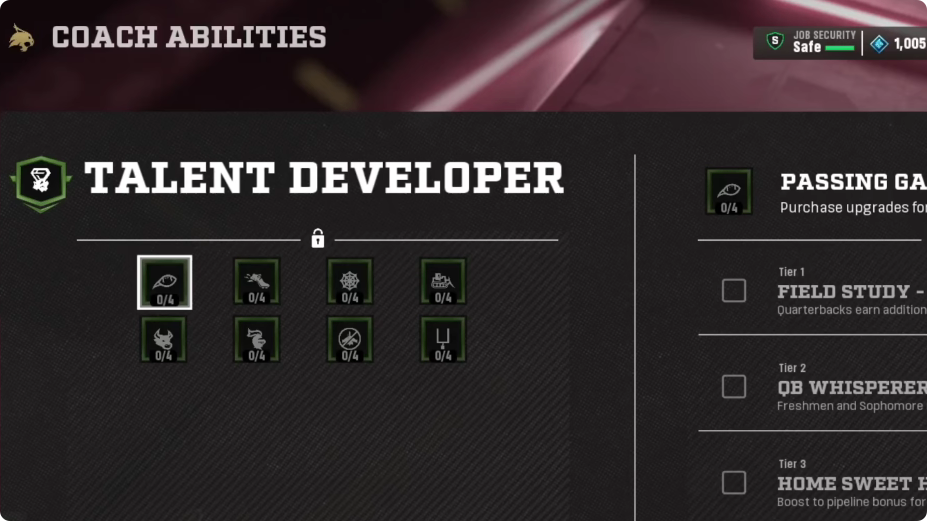
Prioritize Talent Developer
Talent Developer is one of the strongest progression-focused coach paths. Its abilities can provide additional XP from in-game goals, accelerate the development of freshman and sophomore quarterbacks, and improve quarterback recruiting through pipeline bonuses.
The biggest payoff comes from the higher tiers. Pay It Forward gives other quarterbacks in the room an XP bonus when a quarterback is drafted. A highly drafted starter can therefore accelerate the development of your backups, creating a long-term progression cycle.
The downside is the investment required. Unlocking the higher tiers can be expensive, especially for smaller programs.
Master Motivator is another useful option because its higher-tier abilities increase XP gains, particularly for quarterbacks. However, the coach-point cost is substantial, so it should be treated as a long-term investment rather than an early priority.
Upgrade Facilities and Support Staff
Facilities can provide a major progression boost. Moving from Premium to Elite facilities significantly increases progression, making the upgrade worthwhile for most programs.
Support staff can add even more progression bonuses. Combining facility upgrades, staff bonuses, and coach abilities can produce a much larger development boost than relying on any single source.
The key lesson is simple: stack progression bonuses instead of spending everything on one coach ability.
2. Reset Bad Skill Caps With Position Changes
Sometimes a talented player becomes difficult to develop because his skill caps are poorly distributed.
For example, a cornerback with an unusually low Speed cap may become unusable at a high level of competition. Position changes can provide a way to reset those skill caps.
Move the player to another position and then return him to his original position. In some cases, his skill caps will reset, allowing you to invest in attributes that previously had poor limits.
This can be especially valuable for positions where physical attributes are critical, such as cornerback.
Use this technique carefully and primarily to make an otherwise playable prospect viable. It can also be useful when a player's original progression path has become restrictive.
3. Use Archetypes and Position Changes for Auto Progression
Auto progression gives you less control over where players spend their skill points. That makes recruiting the correct archetypes extremely important.
Recruit for Your Defensive Scheme
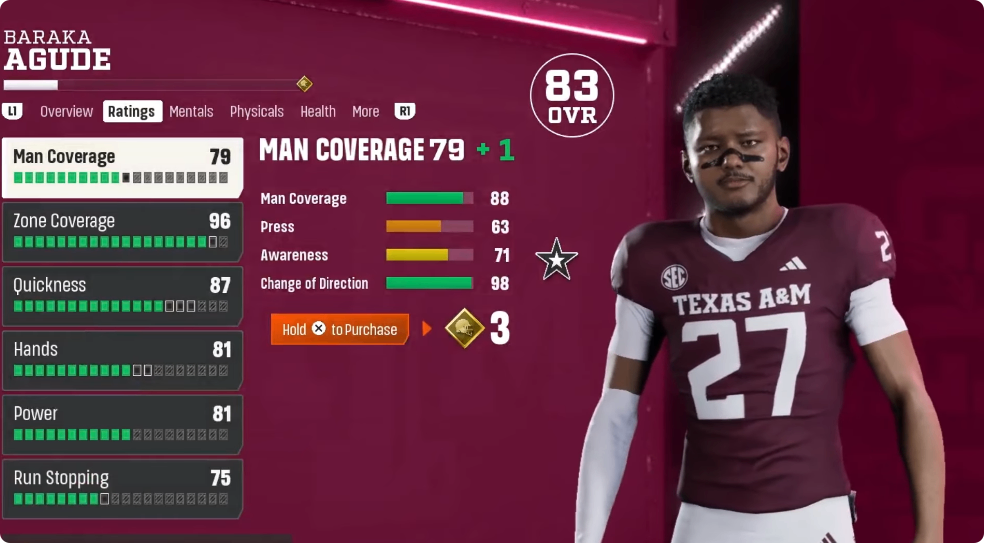
If you primarily run man coverage, prioritize cornerback archetypes that naturally develop man-coverage skills. A zone-focused corner may not develop into the player your scheme requires.
The same principle applies throughout your roster: recruit prospects whose archetypes match the attributes you actually need.
Exploit Position Changes Strategically
Position changes can also solve progression problems.
Tight ends are particularly useful here because they can develop slowly compared with other positions. Converting a larger possession-style receiver into a tight end can give you a more productive player than simply waiting for a traditional tight end recruit to develop.
Running back is another position where position changes can help. Some receivers can become effective running backs while receiving a significant overall increase.
You can also monitor linebackers for players who naturally develop strong pass-rushing attributes. If a linebacker starts developing useful Power or Finesse Moves, moving him to an edge position can unlock a better role for your defense.
The goal is not to abuse position changes—it is to make sure talented players are developing in positions that match their strengths.
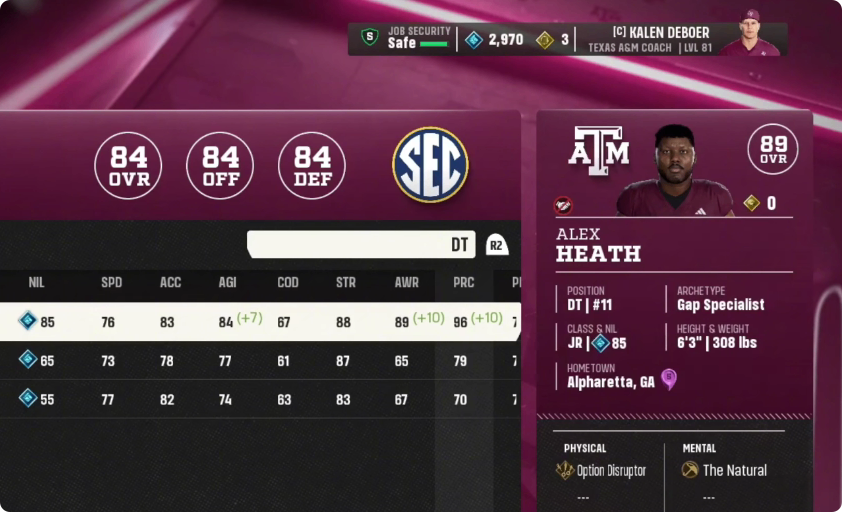
4. Make Manual Progression Work for You
Manual progression is considerably more powerful than CPU-controlled progression because you can determine exactly where each player's skill points go.
If you want a more realistic Dynasty, consider keeping the progression penalty around 25 rather than removing it completely. Lowering the penalty can create a huge talent gap between your roster and CPU-controlled teams.
Spend Expensive Points Early
For freshmen and sophomores, prioritize expensive attributes that define the player's future role.
For example, if a young cornerback has excellent speed potential, invest in Speed early. It may cost more XP, but improving an important physical attribute early gives you more time to benefit from it.
Later in a player's career, shift your focus toward attributes that improve overall rating and draft value.
Prioritize Development Traits
Development traits are extremely important. Players with stronger development traits generally have better long-term potential, while Normal-development players can take considerably longer to improve.
When managing limited XP, identify each player's archetype and determine which attributes have the greatest impact on his overall rating.
For seniors, focus on the attributes that will raise their overall rating and improve their NFL Draft potential.
Do not automatically spend XP on the most obvious skill. A cheaper attribute such as Play Recognition or Awareness may sometimes provide a larger overall-rating increase than an expensive physical or technical attribute.
Don't Overvalue Abilities During Simulation
Abilities are most important when you actually play games or use gameplay-focused simulation modes. If you primarily advance weeks without playing, abilities should not be your first progression priority.
For developing players, focus on attributes and overall growth first. Add abilities when players approach their starting years, usually around the sophomore, junior, or senior seasons.
5. Understand How Archetypes Affect Overall Rating
A player's overall rating is heavily influenced by his archetype.
The same player can have a significantly different overall rating depending on whether he is classified as a Gap Specialist, Speed Rusher, Power Rusher, or another archetype.
Change the Archetype When Necessary
This creates an important progression strategy. If a player develops attributes that fit another archetype better, a position change can sometimes move him into a more appropriate development path.
Quarterbacks are a good example. A quarterback classified as a Backfield Creator may possess attributes that are better suited to a Dual-Threat or Pocket Passer role. Changing his position and returning him can sometimes produce a more appropriate archetype.
This can also improve access to different abilities.
For manual progression, you can intentionally develop a player's important attributes before changing his position to encourage a more desirable archetype.
Bonus Tip: Consider XP Sliders
XP sliders are another way to customize your Dynasty.
If you want faster roster development, increasing position-group XP gains can help produce stronger teams over multiple seasons. Tight end is a particularly reasonable position to adjust because its progression can lag behind other groups.
Increasing in-season XP does not directly increase offseason training progression, so understand what the setting actually affects before changing it.
Ultimately, XP sliders are a sandbox setting. Keep them at default if you want a more traditional experience, or increase them if your goal is to create a Dynasty filled with high-overall players.
Final Thoughts
The best progression strategy in CFB 27 Dynasty is not based on one overpowered mechanic. It comes from combining several systems.
Stack coach abilities, improve facilities, use support staff, recruit the right archetypes, exploit smart position changes, and spend manual XP according to each player's role and development stage.
If you understand how archetypes, skill caps, development traits, and overall ratings interact, you can turn average recruits into reliable starters and build a much stronger Dynasty roster over multiple seasons. To speed up development, CUT 27 Coins unlocks premium coaching and training tools that help you maximize each player's potential.