Weekend Drop -













Summary
Running the football effectively in College Football 27 is less about finding one unstoppable play and more about understanding gaps, numbers, angles, and matchups. Once you understand what each run scheme is trying to accomplish, you can choose the right play based on the defensive front instead of blindly calling the same run. To build a dominant offensive line, buy CUT 27 Coins and unlock premium scouting tools to find and develop the best run-blocking talent.
CFB 27 Run Game Basics
Before breaking down individual schemes, you need to understand a few football terms.
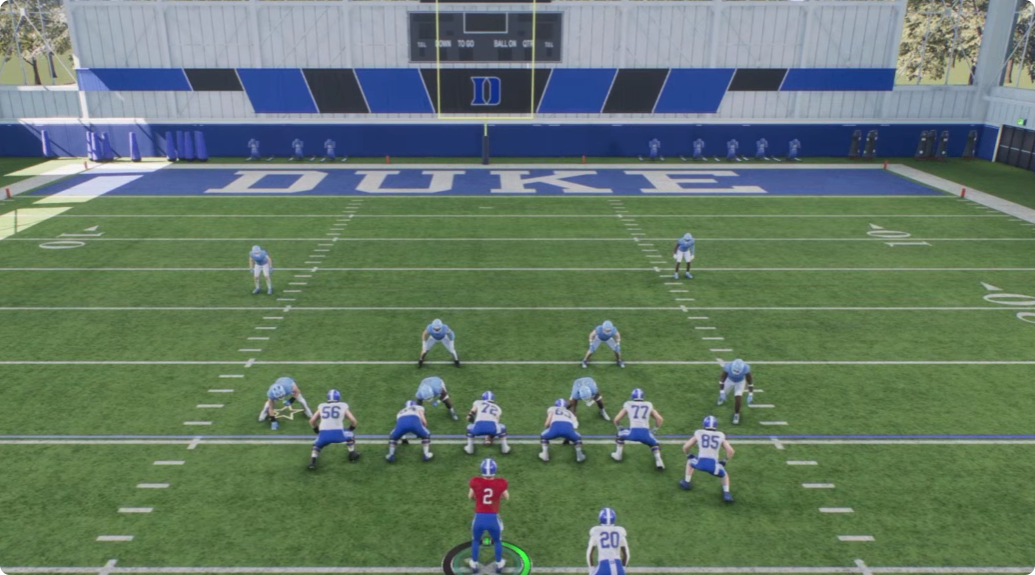
Gaps and Defensive Techniques
A gap is the space between two offensive linemen. The play side is the direction of the run, while the back side is away from it.
Defensive linemen are identified by techniques. Odd numbers generally indicate alignment outside an offensive lineman, even numbers indicate a head-up alignment, and an “I” indicates an inside alignment. For example, a 3-technique lines up outside the offensive guard.
You don't need to memorize every front immediately. Start by identifying where the defensive linemen and linebackers are positioned, then build your understanding from there.
Inside Zone: The Best All-Around Run
Inside zone is one of the most versatile rushing concepts in CFB 27. Rather than attacking one predetermined gap, the offensive line works together to create movement while the running back finds the opening.
Use the Three B's
The running back's basic read is Bang, Bend, Bounce:
Bang: Hit the first available crease on the front side.
Bend: Cut back toward the backside if the front-side lane closes.
Bounce: Get outside if an open lane develops.
The best approach is to read the center's block toward the linebackers and allow the blocking to develop. Don't automatically bounce outside just because the interior looks crowded.
Use the Tight End to Create Better Blocks
Your tight end's alignment can influence the blocking structure.
Against an odd front, putting the tight end on the play side can create additional double-team opportunities. Against an even front, moving the tight end to the backside can help create favorable interior double teams.
Double teams matter because two blockers can generate more movement than a single blocker, potentially creating larger running lanes.
There are exceptions, including 3-3 stacks and under fronts, so don't treat alignment as an absolute rule. If the defense changes its front, adjust your run direction accordingly.
Read Safety Rotation
Don't stop your pre-snap read at the defensive line. Against Cover 3, watch whether the safety rotates toward or away from your tight end.
If a safety rotates down toward the backside of your inside zone, he may become an unblocked defender when you bend the run back. That can make certain run directions much less attractive.
A simple habit is to peek at the backside safety before the snap.
Outside Zone: Stretch the Defense, Then Attack Vertically
Outside zone forces defenders to move horizontally before the running back cuts vertically through a crease.
Read Outside-In
Start your eyes at the tackle or tight end on the play side.
If the edge is available, take it. If the defender is kicked out, move your eyes inside and attack the crease. Don't dance behind the line of scrimmage. Outside zone is designed to create vertical opportunities, not to make you run sideways indefinitely.
You can also use the defender's alignment as a clue. A wide edge defender is more likely to be kicked out, while a tighter alignment can create a reach-block situation.
Check the Numbers
Before running outside zone, determine whether you have enough blockers.
Hold L2/Left Trigger to examine the blocking structure. If a defender is left unblocked, recognize that you're potentially going to have to make him miss.
You can also motion a receiver toward the play side to improve the numbers. From pistol or under center, you can often flip the run direction with the right stick.
Against odd fronts, expect potentially larger cutback lanes. Against even fronts, the outside lane may develop more naturally.
Use Formations to Your Advantage
If your play-side tight end consistently struggles to block the edge defender, move him to the backside and run away from him.
Against man coverage, nub formations can also be useful. With one or two tight ends isolated on one side, defenders assigned to receivers may be positioned away from the run, giving you cleaner blocking.
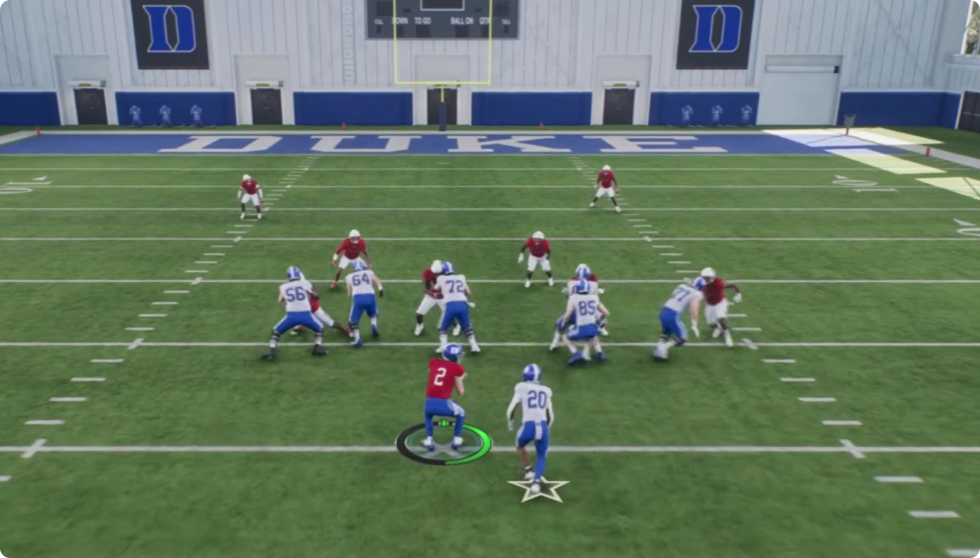
Power and Counter: Your Gap-Scheme Foundation
Unlike zone runs, gap schemes have specific gaps they are designed to attack.
Power and counter share a similar down, kick, wrap structure.
Understand Down, Kick, Wrap
First, the play-side blockers work down toward the inside, creating a wall.
Then comes the kick block, which removes the edge defender. On power, this is commonly performed by the tight end or fullback. On counter, the guard often performs the kick.
Finally, the wrap blocker leads through the newly created crease. On power, this is usually the guard. On counter, it can be the tight end, fullback, tackle, or another pulling lineman depending on the concept.
As the running back, attack the inside of the kick block and stay patient. Let the pulling blocker reach the linebacker before making your final cut.
Find Space Instead of Forcing the Design
Once your lead blocker engages his target, choose the lane with the most space. Don't outrun the blocker.
Use D-pad Left + Right Stick Left to inspect blocking matchups. Green indicates a favorable matchup, yellow is more uncertain, and red is unfavorable.
If the key blocker has a poor matchup, consider another play rather than repeatedly attacking the same defender.
Auxiliary Runs That Solve Specific Problems
Your offense should have a few core runs plus complementary concepts that punish defensive adjustments.
Sweep
Many sweeps use pin-and-pull blocking. Linemen pin defenders inside while pullers work around them.
Treat sweep similarly to outside zone: take the edge when it is available, but cut vertically when the defense creates an interior crease.
Keep your finger off the sprint button until you're ready to make the cut. Sprinting too early can make it harder to react to developing blocks.
ISO and Lead
ISO uses a tight end or fullback to lead directly onto a linebacker. It is particularly useful when overhang defenders are attacking aggressively.
It can be especially effective against odd fronts when your guards and tackles have favorable blocking angles.
Duo
Duo resembles inside zone but gets downhill much faster and relies heavily on double teams. It is an excellent short-yardage option and a strong complement to other interior runs.
Trap
Trap attacks the middle by allowing a defensive lineman to come through before a blocker traps him from the side. It is particularly useful against a 3-technique or wider alignment and can punish an overhang defender who is causing problems for your power game.
The Three Rules: Numbers, Angles, Matchups
Almost every successful run decision in CFB 27 comes back to three things.
1. Numbers
Don't willingly run into an overloaded box if the defense has more defenders than you can account for, audible to a pass, RPO, read option, or another concept that changes the numbers.
2. Angles
Ask yourself: Can my blocker realistically get between the ball carrier and the defender?
If the answer is no, choose another play. Offensive linemen are slower than defenders, so asking a blocker to travel too far is usually a recipe for failure.
3. Matchups
Find the defensive player you can exploit repeatedly. Use the matchup display to identify favorable and unfavorable blocks.
If one defender is consistently impossible to block, use an RPO or option concept that allows you to read him instead of blocking him.
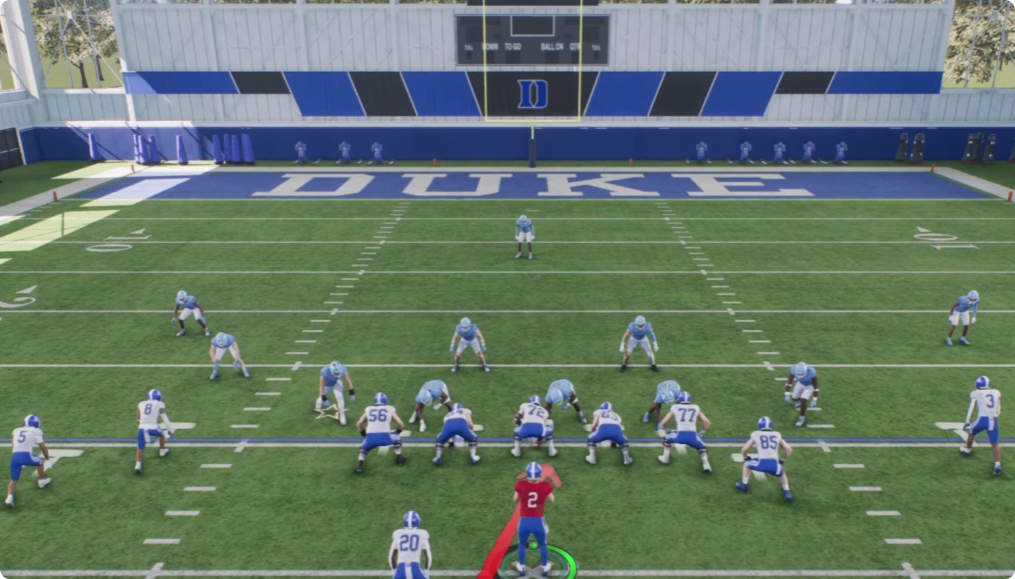
Stop Holding Sprint Too Early
One of the easiest improvements you can make is simply keeping your finger off the sprint button.
Think slow to fast through: approach the line patiently, allow the blocks to develop, identify the gap, and then accelerate through it.
Sprinting immediately can cause you to outrun pulling blockers and miss developing cutback lanes. Staying patient also gives you more time to make sharp cuts.
The key to mastering the CFB 27 run game is to learn one layer at a time. First master your running-back reads. Then learn how tight-end alignment changes blocking. Finally, start reading safety rotation and defensive matchups.
You don't need to understand every football concept at once. Build your reads gradually, and your play calling and rushing efficiency will improve with them. To accelerate progress, CUT 27 Coins unlocks premium coaching and recruiting tools to help you identify and develop the right players for your system.