






Summary:
College Football 27 is making major changes to Dynasty recruiting, adding more realistic player decisions and improving several recruiting systems. From Pro Potential deal breakers and NIL costs to interest rankings and automatic visit management, College Football 27 Coins, these updates could significantly change how players build and maintain a championship roster.
College Football 27 Recruiting Is Getting More Strategic
Recruiting has always been one of the most important parts of Dynasty Mode, but College Football 27 is making the process more dynamic and realistic. EA is changing several recruiting mechanics that can affect how coaches evaluate prospects, manage NIL resources, schedule visits, and prepare for players leaving for the NFL Draft.
Some of these changes may look like small quality-of-life improvements, but they can have a major impact over multiple seasons. Dynasty players will need to think beyond simply signing the highest-rated recruits. Player development, NFL aspirations, NIL retention, school prestige, and recruiting timing can all become important parts of roster management.
Here are the biggest College Football 27 Dynasty recruiting changes players need to know.
Pro Potential Deal Breakers Could Change Dynasty Recruiting
One of the biggest changes involves the Pro Potential deal breaker.
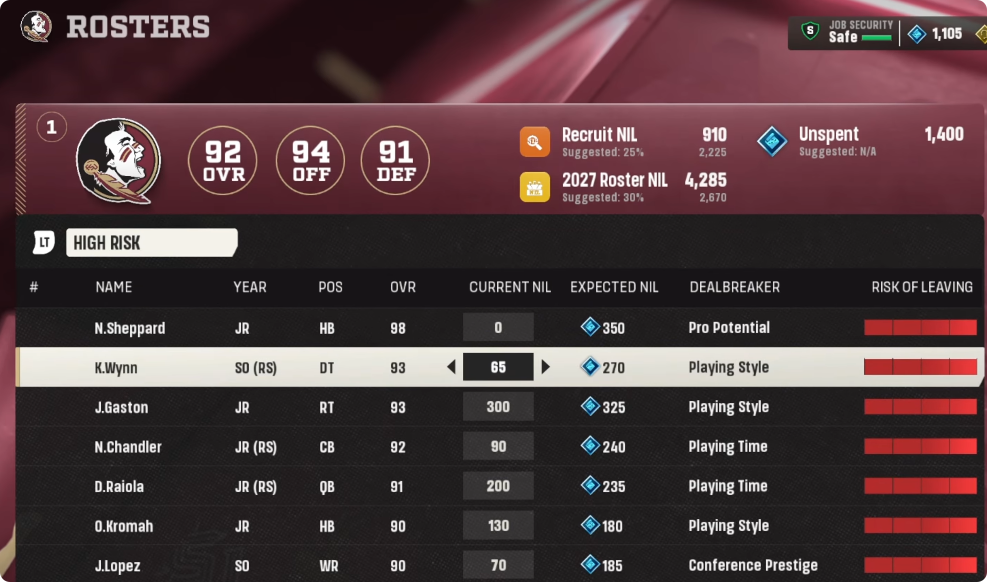
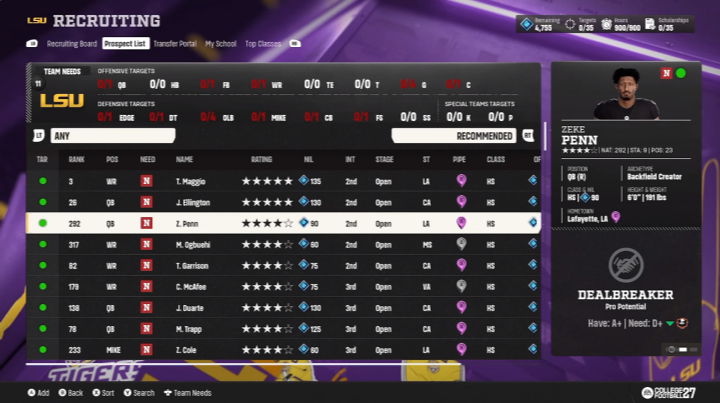
In College Football 27, recruits with a Pro Potential deal breaker are now more likely to leave college and enter the NFL Draft. At first, this sounds like a positive change. After all, developing players into NFL prospects is one of the most satisfying parts of Dynasty Mode.
However, there is an important downside.
A player with strong NFL ambitions may decide to leave earlier in his career instead of remaining at your school for his senior season. For example, imagine recruiting an 87 or 88 overall wide receiver who develops quickly. Rather than staying another season and potentially becoming a higher-round NFL Draft selection, he could decide that he is ready to enter the league.
That creates an interesting strategic problem.
You may successfully develop the player, but you could lose him before reaching his full potential.
Early NFL Departures Can Hurt Player Development
Early departures could be especially frustrating for teams that rely heavily on redshirting and long-term player development.
Imagine redshirting a freshman because he is not ready to contribute. During his sophomore season, he still needs development. By his junior year, however, he finally becomes a major contributor.
Now, instead of enjoying several seasons with that player, you may only have one year before he decides to enter the NFL Draft.
This is particularly important for backup quarterbacks, wide receivers, defensive backs, and other players who might spend multiple seasons developing behind established starters.
The change makes Dynasty Mode feel more like real college football. Players with NFL aspirations are not necessarily interested in staying until their eligibility expires. Once they believe they are ready for the next level, they may leave.
NIL Management Becomes More Important
The Pro Potential change also connects directly to NIL management.
Players who are more likely to leave for the NFL can become expensive to retain. If you want to keep an elite prospect for another season, you may need to spend more NIL resources convincing him to stay.
That means coaches have to think carefully about where their NIL budget goes.
Instead of spending heavily on every talented player, Dynasty players may need to prioritize recruits who fit their long-term roster plans. A highly rated player with a difficult Pro Potential deal breaker could become more expensive than expected.
This does not mean players with Pro Potential should be removed from your recruiting board. In fact, they can still be excellent recruits. The key is understanding the long-term cost.
Strategist Coaches Can Reduce NIL Pressure
Coaching abilities can also become more valuable under the new system.
The Strategist archetype can help reduce the NIL cost associated with retaining certain players. This could make coaching progression more important for programs that regularly recruit players with strong NFL aspirations.
A team with a strong Pro Potential grade may be better positioned to convince players to stay without spending as much NIL.
This creates another layer of Dynasty strategy: recruiting success is no longer just about signing players. Coaches must also build a program capable of keeping those players.
Recruiting Depth Becomes More Important
The Pro Potential changes could also affect how coaches build depth charts.
If your starting quarterback has strong NFL potential, for example, you should not assume he will remain on campus for his entire career. Instead, it may be smart to recruit another quarterback earlier than you normally would.
The same strategy applies to other positions.
If your top wide receiver, running back, or defensive player is likely to leave early, having a talented replacement already developing on the roster can prevent a major drop-off.
This makes recruiting more similar to real college football roster management. Coaches need to plan for transfers, NFL departures, development time, and future depth rather than focusing only on the current season.
College Football 27 Fixes Recruit Interest Rankings
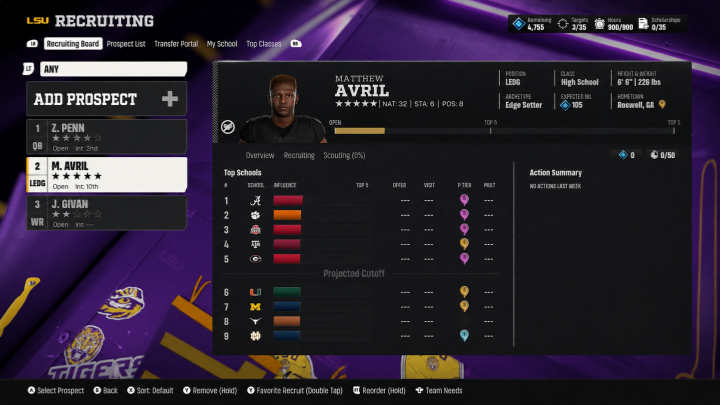
College Football 27 fixes a recruiting issue where schools could appear in a recruit’s interest rankings despite not being on the player’s actual board. This misleading information could cause coaches to waste recruiting hours, visits, offers, and NIL resources chasing unrealistic targets. The updated system should provide more accurate rankings and help coaches make smarter recruiting decisions.
Accurate Interest Information Will Save Recruiting Resources
This change may not be as exciting as a major gameplay feature, but it could have a significant impact on Dynasty Mode.
Recruiting resources are limited. Every offer, recruiting action, visit, and NIL investment matters.
If the game incorrectly tells you that you are close to a recruit, you can waste valuable resources chasing a player who was never realistically available.
With more accurate interest rankings, Dynasty players can make better decisions about which prospects deserve attention.
This is especially useful for smaller programs competing against elite schools.
A school without a Lead Recruiter or powerful recruiting advantages needs to identify realistic targets. Accurate rankings make it easier to recognize opportunities and avoid wasting time.
Recruiting Visits Are Getting a Major Quality-of-Life Fix
Visits are also receiving important improvements in College Football 27.
One previous issue involved competitive visits displaying the wrong color. A visit could appear green even when it should have been red.
For experienced players, this might be easy to recognize. For newer Dynasty players, however, it could lead to serious mistakes.
A player might quickly schedule several visits based on what appears to be positive information without realizing that the visit could actually hurt his recruiting position.
EA is correcting this visual issue, making the recruiting interface easier to understand.
Hard Commitments Will Now Free Visit Slots Automatically
The biggest visit-related change involves recruits who commit to another school.
Previously, you could schedule a visit for a recruit several weeks in advance. If that recruit later committed elsewhere, the visit could remain locked on your schedule.
That created an unnecessary problem.
Imagine having four visits scheduled during Week 6. One of those recruits commits to another school during Week 3. Your Week 6 visit slot could remain occupied even though the recruit was no longer available.
That meant you could lose the opportunity to schedule another important prospect.
College Football 27 fixes this by automatically removing the visit when a recruit makes a hard commitment.
This is a simple change, but it should make recruiting much more flexible.
What These Changes Mean for Dynasty Strategy
Taken together, these updates could significantly change how players approach Dynasty Mode.
The biggest lesson is that recruiting should become more focused on long-term roster management.
Players should consider:
A recruit's Pro Potential deal breaker
Future NIL retention costs
Expected NFL Draft departure timing
Current roster depth
Accurate recruiting interest
Visit availability
Coaching abilities and recruiting grades
The strongest Dynasty programs will not simply sign the most five-star prospects. They will build sustainable pipelines and prepare for inevitable roster turnover.
College Football 27 Could Make Dynasty Mode More Realistic
The most exciting aspect of these recruiting changes is that they introduce more realistic storylines into Dynasty Mode.
College football is not simply about signing talented players and keeping them for four years. Players develop at different speeds, chase NFL opportunities, transfer schools, cheap College Football 27 Coins, and make decisions based on their individual goals.
The new Pro Potential system reflects that reality.
A player leaving early may be frustrating, but it can also create a compelling Dynasty storyline. Losing an 88 overall player before his senior season forces you to adjust your recruiting strategy and find the next star.
That is exactly the kind of unpredictability that can make a long Dynasty save more interesting.
Final Thoughts
College Football 27 Dynasty Mode adds deeper recruiting strategy with Pro Potential deal breakers, NIL management, accurate interest rankings, and improved visit scheduling. Coaches will need to plan ahead, manage player retention, and build for future seasons, making Dynasty more realistic, challenging, and rewarding.