






Summary:
Mastering offense in College Football 27 requires more than knowing a few plays. This complete guide covers pass leading, catch types, passing settings, ball-carrier moves, option plays, RPOs, College Football 27 Coins, and scheme-based play calling to help you score more consistently.
Master Pass Leading in College Football 27
Passing is one of the most important skills to master in College Football 27. Even run-heavy offenses eventually need to throw the football, and understanding pass leading can make the difference between an easy completion and an interception.
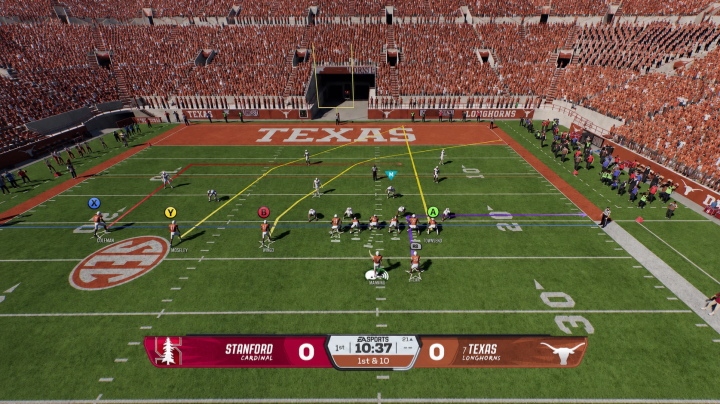
Pass leading is controlled with the left stick on both Xbox and PlayStation. When selecting a receiver, move the left stick toward open space rather than simply throwing directly at the receiver.
The key is to think about where the receiver is going to be when the ball arrives. If a defender is inside the receiver, lead the pass outside. If the defender is behind the receiver, you can lead the ball farther downfield.
There is no single direction that works for every route. Your pass lead should always depend on the receiver's position, the coverage, and the available space.
Bullet Pass vs. Lob Pass
Before deciding how to lead your pass, determine what type of throw you need.
A bullet pass is generally the safest and most consistent option. Hold the receiver's icon and release it when you want to throw a fast pass.
A lob pass is performed by tapping the receiver's icon. Lob passes can be useful when a receiver has beaten a safety or when you want to create a jump-ball opportunity.
However, lob passes can spend too much time in the air, giving defensive backs additional opportunities to make a play. For most situations, bullet passes combined with smart pass leading should be your default approach.
Learn Every Catch Type
Knowing how to throw is only half of passing. College Football 27 gives receivers several different catch options, and choosing the correct one can dramatically improve your offensive consistency.
Possession Catch
The possession catch is designed to secure the football and get the receiver down quickly.
Use it when:
You're catching in traffic.
You need a first down.
You're near the sideline or goal line.
A defender is preparing to deliver a big hit.
You simply need to protect the football.
The possession catch sacrifices potential yards after the catch for security.
RAC Catch
The RAC, or Run After Catch, option is ideal when you have open grass ahead of the receiver.
Use it when there is room to accelerate after the catch and there is no immediate defender threatening to knock the ball loose.
If you don't need to protect the football immediately, RAC catches can turn short passes into significant gains.
Aggressive Catch
Aggressive catches are designed to attack the football. They are especially useful on tightly covered passes, contested catches, comeback routes, and situations where you need your receiver to attack the ball rather than wait for it.
Think of an aggressive catch like going after a contested rebound in basketball. You want the receiver to attack the football at its highest point.
How to Get More Perfect "Green" Catches
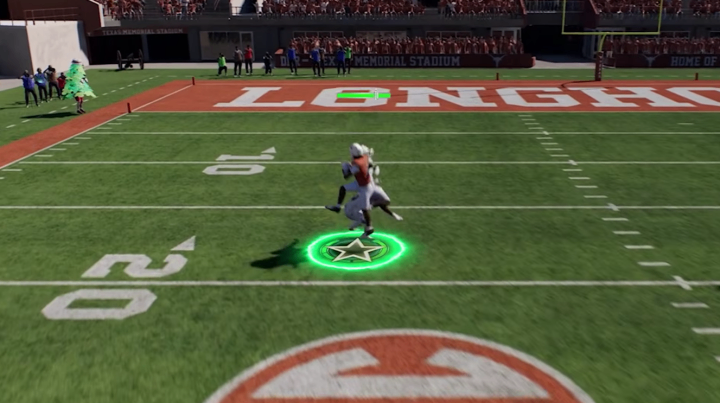
One of the most useful additions to the catching system is catch timing feedback.
The goal is to press the catch button at the correct moment, just before the ball reaches the receiver's hands. A perfectly timed input produces a green catch, which greatly increases the chance of securing the football.
A yellow result is essentially a normal catch situation, while a red result usually indicates poor timing and can lead to a drop.
For players learning the system, tapping the catch button shortly before the ball reaches the receiver can be easier than trying to precisely control the entire meter.
Recommended Passing Settings
For players looking to improve their passing consistency, a solid starting point is:
Pass Placement: Placement Accuracy
Slowdown: Off
Pass Accuracy: Small
Reticle Speed: 7
Reticle Visibility: User Only
Meter Visibility: User Only
These settings give you useful feedback without completely overwhelming the screen. As you become more comfortable, you can experiment with different options.
College Football 27 Running Guide
Passing isn't the only way to dominate. A strong rushing attack forces the defense to respect the entire field.
Before running the ball, use the left trigger to inspect your blocking. This allows you to identify defenders who are unblocked or likely to penetrate the line.
The flame indicator is particularly important. If a defender is marked as a dangerous or unblocked player, you should immediately consider whether your planned running lane is still viable.
Don't blindly follow the original direction of the play. Watch the blocks develop and use the left stick to adjust your running path.
Don't Hold Turbo Too Early
One of the biggest mistakes new players make is holding turbo immediately after receiving the handoff.
Instead, use the left stick first to identify the hole. Once you know where you want to run, activate turbo and burst through the opening.
This approach gives you more control and allows blocks to develop before you commit to a direction.
Fast-developing run plays are generally easier to use online because slow handoffs give defenders more time to penetrate the backfield.
Master Ball Carrier Moves
Once you're in space, making defenders miss can turn an ordinary play into a huge gain.
Useful ball-carrier moves include:
Stiff arm: Useful when a defender approaches from the side.
Spin: Tap the spin button without turbo for a quick change of direction.
Juke: Use the right stick with turbo to make sharp cuts.
Speed burst: Combine directional movement with turbo after identifying your running lane.
However, don't overuse ball-carrier moves. Sometimes the best strategy is simply using the left stick to make a clean cut and accelerate into open space.
Understanding Read Options
Option football is one of the biggest advantages of running a mobile quarterback.
On a standard read option, the defense leaves a specific defender unblocked. That player becomes the read key.
If the defender crashes toward the running back, keep the ball with the quarterback. If the defender stays outside or takes an angle that favors the quarterback, hand the ball off.
The basic concept is simple:
Defender crashes = keep.
Defender stays home = handoff.
Use the left trigger before the snap to identify the read defender and understand the blocking structure.
Be Careful With Speed and Load Options
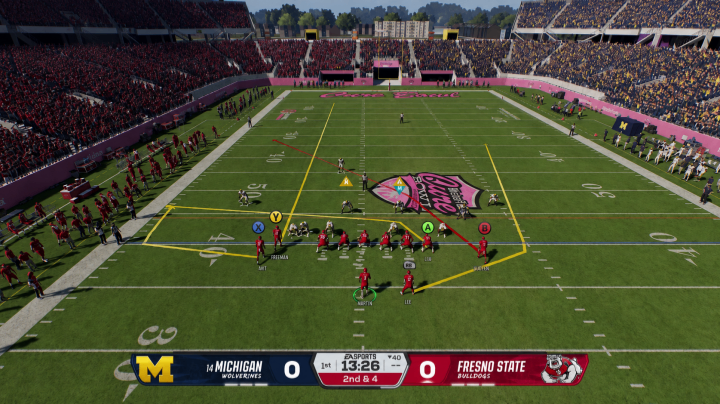
Speed options and load options introduce a pitch defender into the equation.
You can pitch the ball using the left bumper, but these plays carry considerably more risk. A poor pitch decision can result in a fumble, making them less forgiving than standard read options.
They can still be effective in short-yardage and red-zone situations, but they shouldn't necessarily be the foundation of your offense.
Triple options combine multiple reads, while RPO-read concepts combine option football with passing decisions.
RPOs Can Transform Your Offense
RPOs are among the most dangerous offensive tools in College Football 27 because they force defenders to make difficult decisions.
RPO bubbles and RPO flats can be particularly effective when you have multiple receivers aligned on one side of the formation.
Trips and bunch formations are generally more attractive for bubble concepts because they can provide additional blocking support.
Don't automatically throw the RPO. Sometimes the correct decision is simply handing the ball off. In many RPOs, doing nothing after the snap allows the handoff to happen.
Also pay attention to the handoff animation. Some RPO plays develop too slowly, making them vulnerable against aggressive defenses.
Build Your Offense Around Formations
Perhaps the most important offensive lesson is that play calling should be based around a scheme rather than random plays.
Instead of constantly jumping between different formations and relying on coach suggestions, build a package of plays you understand.
For example, you might master five plays from one shotgun formation:
Inside zone
RPO bubble
Flood concept
Mesh concept
Vertical passing play
The defense sees the same formation but doesn't know which play is coming.
This makes your offense much harder to defend because you can attack the same defensive look in multiple ways.
Why Scheme-Based Play Calling Works
Imagine a player who knows 30 plays but barely understands any of them versus a player who has mastered 10 plays and understands exactly when to call each one.
The second player will often be more dangerous.
Your goal should be to understand your formations, route combinations, blocking assignments, reads, and adjustments. Once you master a small core of plays, expand the scheme gradually.
Look for formations that give you simple passing concepts such as Flood, Mesh, Dagger, and Levels, while also offering reliable runs or RPOs.
That combination forces defenders to defend both the run and pass without knowing which one is coming.
Final Thoughts
The key to winning more games in College Football 27 isn't simply finding one overpowered play. Strong offense comes from combining accurate passing, intelligent pass leading, proper catch selection, disciplined running, option reads, effective RPOs, and smart play calling.
Start by mastering the fundamentals. Use bullet passes more frequently, lead receivers into open space, choose the correct catch type, study defensive alignment before running, and avoid turbo until you've identified your running lane.
Most importantly, build an offensive scheme around formations you understand. Once you can confidently execute several plays from the same formation cheap College Football 27 Coins, your opponent has to defend multiple possibilities every time you break the huddle.
That is when College Football 27 offense becomes much more than simply picking plays—it becomes a battle of reads, adjustments, and execution.