

Summary
The College Football 27 recruiting community has been plagued by a persistent myth: that filtering prospects by their Playing Time grade can reliably reveal hidden development traits (Star Dev, Elite Dev). This guide debunks that myth with extensive in-game evidence and explains how the Playing Time grade actually works. The verdict: Playing Time has zero correlation with development traits. It is not a cheese. It is not a shortcut. It is misinformation that has been repeated since CFB 25 and perpetuated into 27—and if you'd rather skip the recruiting grind entirely, you can buy CFB 27 Coins to build your program faster.
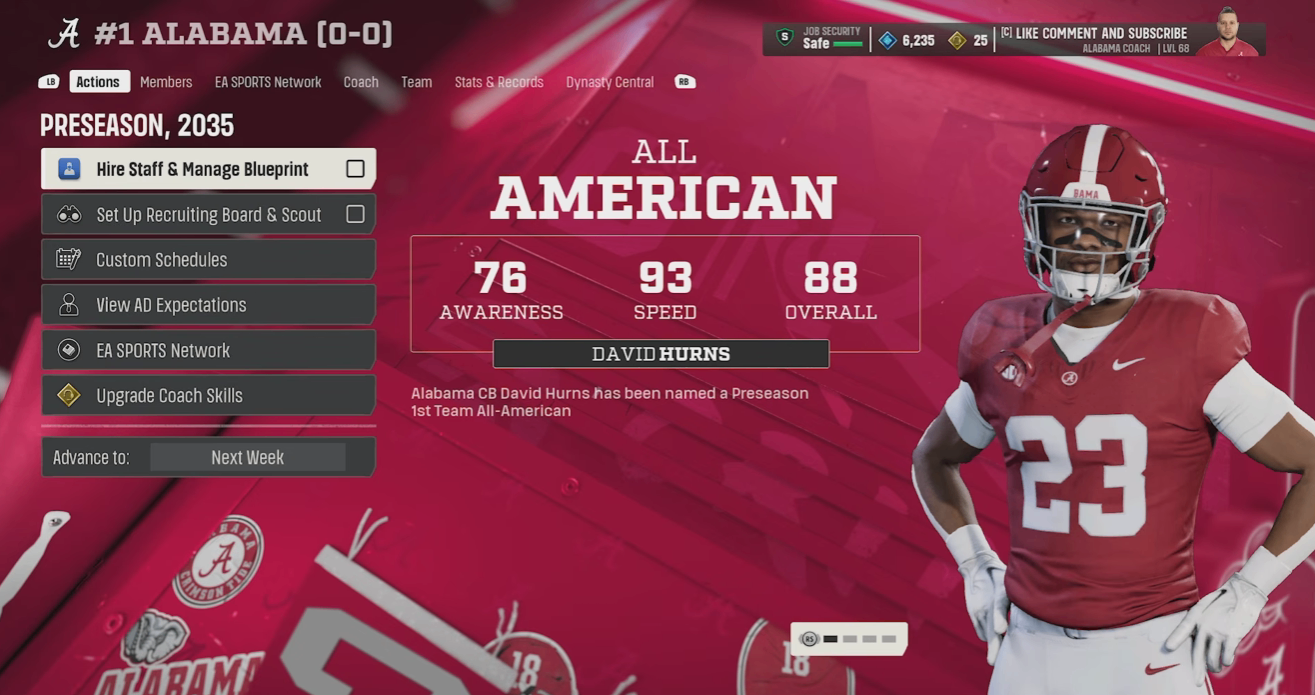
What Is the Playing Time Myth?
The myth claims that if you recruit players based on the Playing Time grade—either as a dealbreaker on the recruit or in the "My School" tab—you can cheese Elite Dev and Star Dev prospects.
Why people believe it:
It sounds like a hidden shortcut
It would save hours of scouting
Content creators promoted it for clicks and engagement
Why it's wrong: Playing Time measures how likely a player is to see the field based on your roster's depth—nothing more.
The Evidence: 30+ Prospects, 3 Dev Traits
Across multiple recruiting classes and over 30 prospects examined, the results are damning:
Class | Prospect | Playing Time Grade | Dev Trait |
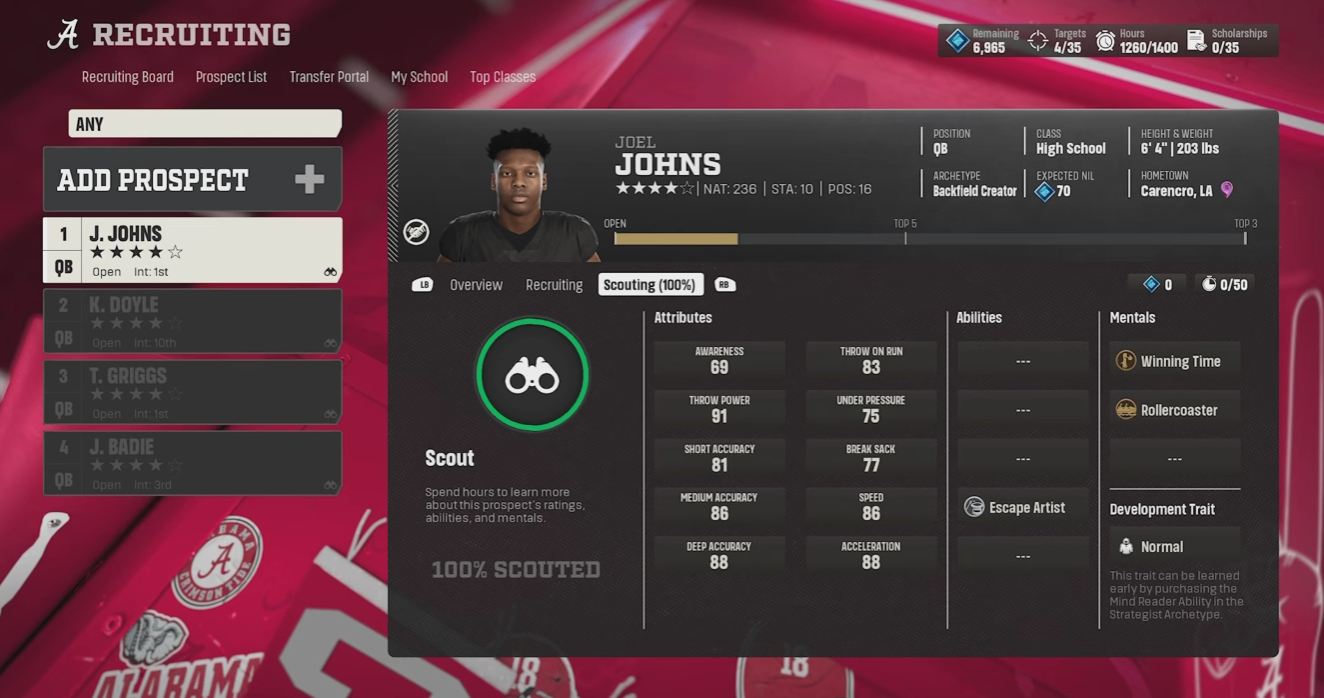
1 | Joel Johns | A+ | Normal |
1 | Titus Briggs | B- | Normal |
1 | Kyle Doyle | B- | Impact |
1 | Jordan Batty | D | Impact |
2 | Frank Cano | A+ | Impact |
2 | Antonio Maguire | A+ | Normal |
2 | Braylon Moses | A+ | Impact |
3 | Jaylen Reuben | A+ | Impact |
3 | Taryn Sharp | (Lowest on board) | Star |
4 | Tremaine Gee | A+ | Normal (Red Gem Bust) |
5 | Jose Steffen | A+ (5-star) | Impact |
5 | Javier Williams | B- | Elite |
5 | Thad Devy | Average | Elite |
6 | Jay Delgado | A+ | Normal |
6 | DeAngelo Higgins | D (5-star) | Normal |
The pattern:
The A+ prospects were overwhelmingly Normal or Impact dev
The only Star and Elite devs appeared at B- or lower grades
The single best dev trait (Elite) appeared on a B- grade and an average grade
A five-star with an A+ grade was still only Impact dev
Bottom line: If you followed the myth, you would have skipped the actual Star and Elite devs and signed Normal/Impact dev players instead.

Why Playing Time Doesn't Work
The game explains it directly in the Playing Time section:
"Playing time measures how likely a specific player would be to get onto the field. It takes into account your depth chart, the players in your roster of a certain position group, and how many snaps a specific player is getting once on your roster."
Key Points
It's about depth, not talent. If you have no backups at a position, every recruit gets an A+. If you're stacked, everyone gets a D.
It does not factor into skill caps. A high grade doesn't mean a high ceiling.
It does not factor into dev traits. There is no hidden correlation.
You can manipulate it easily. Recruit one QB a year and you'll always have an A+ grade. That doesn't make the player good.
The Overall Rating Trap
Playing Time also filters in overall rating. Since high school prospects rarely exceed 81-82 overall, anyone above that threshold makes incoming recruits look worse by comparison. This is why stacked rosters produce D and C grades—not because the recruits are bad, but because your standard is artificially high.
What Actually Works: Scouting and Gems
Instead of chasing the Playing Time myth, use these proven methods:
1. Scout Their Stats
The most reliable way to identify good players is to scout their actual attributes. Look at:
Speed
Acceleration
Position-specific key ratings
Skill caps
2. Look for the Green Gem
The green gem indicates a player with a good development trait and/or high skill caps. It's a visual shortcut for quality.
Warning: A green gem doesn't guarantee Elite dev—it can be Impact or Star. But it's far more reliable than Playing Time.
3. Avoid Red Gems
Red gems indicate busts—players with a higher chance of bad skill caps, even if they have a decent dev trait. Tremaine Gee (A+ Playing Time, Normal Dev, Red Gem) is the perfect example: the "best" player by grade was actually a bust.
4. Use a Draft/Recruiting Guide
Comprehensive recruiting guides break down the numbers and data so you don't have to guess. If you don't want to read numbers, just look for the shiny green rocks.
Common Objections Debunked
"You weren't recruiting five-stars."
Five-stars have a 75-85% chance of having a dev trait regardless. They're not a valid test case. If the myth doesn't work on four-stars, it won't work on three-, two-, or one-stars.
"You just got unlucky."
30+ prospects across 5-7 recruiting classes is not a small sample. The pattern is consistent: Playing Time grades have no predictive power for dev traits.
"But I got a Star Dev from an A+ once."
That's called randomness. You'd have the same hit rate by closing your eyes and picking randomly.
"Maybe it works if you combine it with other filters."
Playing Time has no correlation with dev traits. Combining it with other factors doesn't create a correlation that doesn't exist.
The Real Cost of Following the Myth
If you recruit based on Playing Time, you will:
Sign Normal and Impact dev players who never progress
Miss the actual Star and Elite devs sitting at B- or lower grades
Waste roster spots on players you'll cut after one season
Fail to build a program that competes long-term
The myth doesn't just fail to help—it actively hurts your recruiting.
Summary: What to Do Instead
Don't | Do |
Filter by Playing Time | Scout actual stats |
Chase A+ grades | Look for green gems |
Ignore red gems | Avoid red gem busts |
Trust content creators who promote the myth | Use verified recruiting guides |
Sign players you'll cut after one year | Target Star and Elite dev traits |
Conclusion
The Playing Time dev trait myth is exactly that—a myth. It has no basis in how CFB 27 calculates development traits. The grade measures depth chart need, not player quality, skill caps, or dev traits.
Across 30+ prospects and multiple recruiting classes, the evidence is clear: A+ Playing Time grades produced Normal and Impact devs, while the rare Star and Elite devs appeared at B- and lower grades. If you followed the myth, you'd sign the wrong players every time.
Do yourself a favor: scout the stats, look for green gems, avoid red gems, and use a real recruiting guide. Don't waste your time on Playing Time.
And if you know who started this narrative, leave a comment—because the community deserves to know where the nonsense began. If you'd rather skip the recruiting grind altogether, MMOEXP is a trusted platform to find CFB 27 Coins for sale safely and at competitive prices.