




Summary
This breakdown covers the full college signing experience and freshman year debut in College Football 27's Road to Glory mode, from the final recruitment decisions on Signing Day to stepping onto campus as a first-year player. The journey includes navigating scholarship offers with NIL bonuses, narrowing down a top three, and committing to a program before diving into the weekly agenda system, depth chart battles, and first game action of freshman season. New additions like the Max Potential system, three playable positions, and mental ability perks add depth to the early college experience, while the transition from high school highlights to full college playtests brings fresh challenges. Players who balance academics, fitness, and practice efficiently see the fastest progression through their first year on campus. Managing resources wisely is just as important off the field, and many players also keep an eye on College Football Coins to strengthen their Ultimate Team experience alongside Road to Glory.
The Final Stretch of Recruitment
After working through five high school games and building up tape score across highlight moments, the recruitment process enters its final phase. Schools that have been showing interest throughout the high school portion start extending formal scholarship offers, each with different perks and depth chart projections.
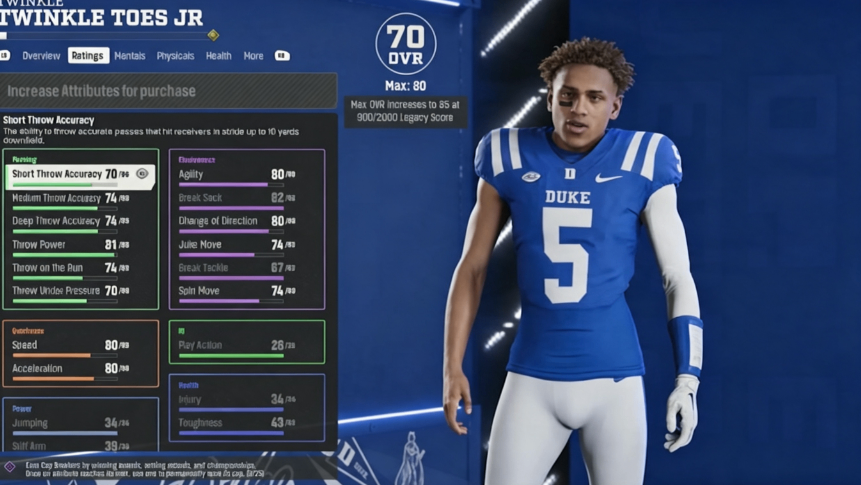
Every offer lays out exactly what a program brings to the table. Academics bonuses, leadership opportunities, brand exposure, fitness facilities, coach trust levels, and skill point rewards are all listed upfront. These bonuses pay out annually rather than as one-time rewards, so the long-term value of each offer matters more than the immediate headline.
The NIL system adds another layer to the decision. A smaller school might offer a starting job right away but with minimal brand exposure — maybe 10,000 followers worth of marketing reach. A bigger program could double that exposure while also providing better facilities and conditioning support, even if the path to playing time takes longer.
Narrowing Down the Top Three
As offers pile up, players narrow their list down to three finalists before making the official commitment. This is where honest communication from coaching staff makes a real difference. Some programs will tell you directly where you stand on the depth chart and how realistic early playing time actually is.
A three-star quarterback prospect might get a blunt assessment from a top program — the roster already has talent at the position, and making the roster as a backup would be an uphill battle. Switch to a position the school actually needs, like edge rusher, and the same coaching staff gets excited about landing a four-star recruit at a position of desperate need.
This transparency helps avoid the frustration of committing to a school only to find yourself buried deep on the depth chart with no clear path to the field. It also makes the recruiting process feel more grounded in real roster logic rather than just filling up a progress bar.
Signing Day and the Commitment
Signing Day is the payoff for all the high school highlights and recruiter conversations. After weighing the scholarship values, NIL potential, depth chart projections, and program prestige, you lock in your decision and officially join the team.
The choice between schools often comes down to what you value most as a player. Do you want immediate playing time at a smaller program, where you can start as a freshman but face stiffer competition for attention? Or do you want to develop for a year or two at a powerhouse program, learning behind veteran players before stepping into a bigger role on a bigger stage?
There's no universally right answer. Both paths can lead to successful college careers and strong draft projections. It depends entirely on what kind of career arc you want to experience.
Freshman Year: The Weekly Agenda
Once on campus, freshman year introduces the full weekly agenda system that drives off-field progression. Every week runs on a limited energy pool that gets distributed across academics, leadership, health, brand exposure, and fitness. Each choice carries tradeoffs — skipping study time to work on your brand might boost NIL opportunities, but it can tank your grades and cost you academic bonuses.
Fitness replaced direct training XP as the core progression driver. Staying in shape improves coach happiness, speeds up skill point gains, and provides temporary stat boosts on game day. Falling out of shape slows growth, drops ratings, and creates a recovery hole that can take multiple weeks to climb out of.
Practice is where most skill development happens outside of games. The mode includes over 50 drills covering both position-specific work and team scenarios — two-minute drills, red zone situations, run-game packages, coverage work, pass rushing reps, and run-after-catch techniques all feed into your player's growth.
Depth Chart and First Game Action
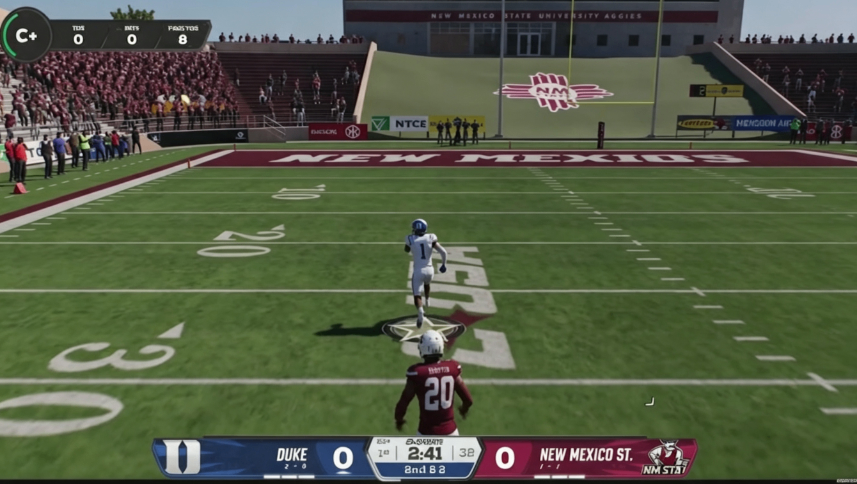
Freshmen rarely walk into a starting job, especially at bigger programs. The depth chart battle is one of the first real challenges of college life. You start wherever your rating and recruiting profile place you — third string, second string, or occasionally higher if the position is thin — and work your way up through practice performance and game day snaps.
Game day grading is built around individual player performance rather than team results. A quarterback gets graded on throw quality and decision-making. A tight end earns credit for blocking assignments. An edge rusher gets recognition for generating pressure even if the sack doesn't come. This means you can still progress and impress coaches even in limited snaps, as long as you make the most of your opportunities.
Dynamic weather can shift mid-game, adding another variable to the freshman debut. A game that starts clear might move into snow or heavy rain, forcing adjustments and testing how well you handle adversity as a first-year player.
New Positions and Build Options
College Football 27 expands the Road to Glory position lineup with three new playable spots: tight end, free safety, and edge rusher. Combined with the five returning positions — quarterback, halfback, wide receiver, middle linebacker, and cornerback — there's much more variety in what kind of career you can build.
The Max Potential system replaces the old archetype selection. Instead of picking a pre-set playstyle from a menu, you allocate potential points across different attributes, and your archetype forms organically based on where you invest. Two players at the same position can end up with completely different profiles depending on how they distribute their budget.
Physique also plays a role. A heavier build raises the ceiling on strength and power moves but limits speed and agility potential. A lighter build flips that tradeoff. These foundational choices follow your player through their entire college career, so the freshman year setup has long-term consequences.
Mental Abilities and Progression
Three starting mental abilities — one each tied to academics, leadership, and brand — add another dimension to the freshman experience. Each starts at bronze tier and can be upgraded as your career progresses. The catch is that each ability only stays active while its linked meter is healthy. Let academics slip, and your academic bonus goes dormant until you recover.
This creates a direct mechanical link between how you manage your weekly schedule and what on-field bonuses you retain. It rewards balanced play rather than min-maxing one stat at the expense of everything else, which fits the college experience the mode is trying to capture.
Skill point progression also got an overhaul. The old system of buying into rating categories is gone, replaced by a token-style system where individual attributes get upgraded one at a time. Cap breakers and overall boosts come from legacy score, driven by milestones like rivalry wins, bowl victories, and awards.
Tips for a Strong Freshman Season
Players who want to hit the ground running as freshmen should prioritize a few key things. First, don't spread your weekly energy too thin. Trying to max out every meter usually means none of them stay healthy, and you lose access to your mental abilities. Pick two or three areas to focus on each week and stick with it.
Second, take practice seriously. The drills give meaningful XP, and consistent practice performance moves you up the depth chart faster than just waiting for game day opportunities. Even limited snaps in games can lead to quick progression if you grade well when you're on the field.
Third, think long term about your school choice. A program that offers immediate playing time might seem appealing as a freshman, but a bigger school with better development resources could pay off more by sophomore and junior year. The right choice depends on your goals, but it's worth considering the full four-year picture before committing on Signing Day.
No matter which school you choose, Road to Glory rewards players who think beyond their freshman season and make smart long-term decisions. Building coach trust, improving through practice, and managing your weekly schedule all contribute to a successful college career that can eventually lead to the NFL Draft. Whether you're focused on becoming a campus legend or exploring every game mode, having the right resources can make progression smoother. Many players also choose to use CFB 27 Coins to strengthen their Ultimate Team roster while enjoying everything College Football 27 has to offer.