

Summary:
Heavy run offenses have become one of the strongest strategies in College Football 27, with many competitive players winning games while barely throwing the football. This guide explains how run fits work, why traditional defenses fail in College Football 27 Coins, and the universal defensive adjustments that can consistently shut down Power I Stretch and other dominant rushing formations.
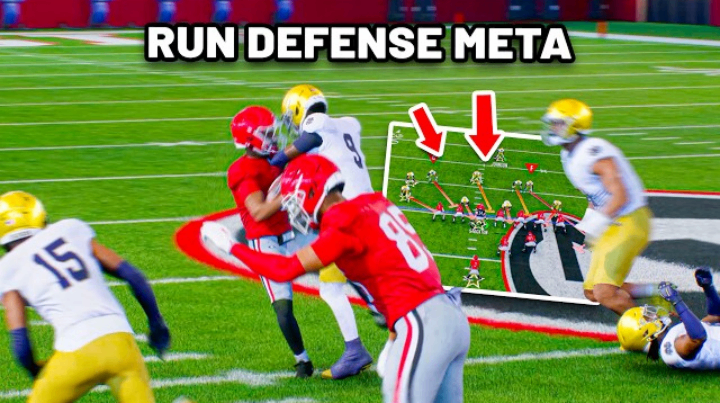
Why Heavy Run Offenses Are Dominating College Football 27
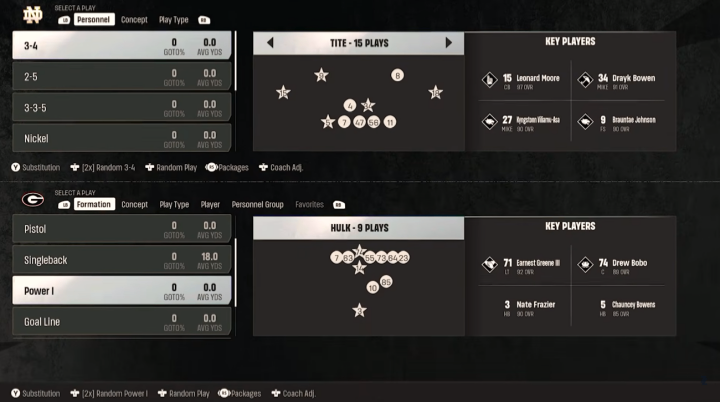
College Football 27's current meta has shifted heavily toward power-running formations. Popular formations like Power I Tight from the West Virginia playbook and Power I Hulk from the Texas San Antonio playbook have become favorites among competitive players because they consistently create favorable blocking angles and punish aggressive defensive users.
Many online players continue relying on man coverage combined with Texas stunts, expecting their user-controlled defender to make every tackle. Unfortunately, this strategy often creates massive running lanes by sacrificing gap integrity.
Instead of depending on elite user skills, the better solution is understanding how the game's run fit system actually works.
Understanding Run Fits
Before making any defensive adjustment, it's important to understand run fits.
Run fits determine which defenders are assigned to attack specific rushing lanes. When every gap has a defender responsible for it, running lanes disappear quickly.
However, different coverages assign run responsibilities differently.
Cover 2
In Cover 2:
Linebackers participate in run support.
Defensive linemen fill their assigned gaps.
Cornerbacks help on the perimeter.
Safeties are generally not part of the primary run fit.
Because safeties stay deeper, stretch plays often reach the outside before help arrives.
Cover 3
Cover 3 changes things significantly.
In this coverage:
Box defenders remain active in run support.
Outside corners stay deep.
The free safety remains out of the run fit.
This leaves multiple defenders reacting slowly to outside runs unless adjustments are made.
Cover 4
Historically, Cover 4 has been one of the strongest run defenses.
In College Football 27, however, the run-side safety doesn't always attack downhill aggressively enough.
The result is another defender arriving late, allowing stretch runs to develop.
Universal Defensive Adjustment That Works Everywhere
The beauty of this strategy is that it works in nearly every defensive formation.
Instead of changing your entire defensive playbook, you only need a few simple adjustments.
Step 1: Set Zone Drops to Ultra Aggressive
The first adjustment is making every zone defender play aggressively against the run.
This causes defenders to react downhill immediately instead of retreating into deep coverage.
Against heavy run formations that rarely throw deep, this adjustment dramatically improves pursuit.
Although you become slightly more vulnerable to play-action, forcing opponents to throw is already a defensive victory against these run-heavy schemes.
Step 2: Turn Non-Run Fit Defenders into Purple Zones
The next adjustment is the real game changer.
Identify defenders who are not currently participating in the run fit.
Instead of leaving them in their default assignments:
Convert them into purple hook/curl zones.
Keep the defense on ultra-aggressive settings.
This causes those defenders to trigger downhill immediately after the snap.
Rather than sitting idle in coverage, they become delayed run defenders.
This extra body often disrupts blocking assignments and creates unexpected tackles near the sideline.
Why Purple Zones Improve Run Defense
One of the smartest discoveries is how purple zones influence offensive blocking logic.
When a defender drops into a purple zone before attacking downhill:
Offensive blockers often fail to identify him correctly.
The defender arrives later.
He frequently slips through unblocked.
Stretch runs lose their clean edge.
Instead of defenders crashing inside too early, they maintain outside leverage and force runners back toward pursuing linebackers.
This creates excellent perimeter containment.
Back Up Your Play-Side Linebacker
Perhaps the most underrated adjustment involves the play-side inside linebacker.
Normally, offensive linemen immediately target him.
That means:
He gets engaged quickly.
His pursuit stops.
Cutback lanes open.
Instead, manually back him away from the line of scrimmage before the snap.
Although he remains responsible for his run gap, he now starts outside the offensive line's block-targeting radius.
The result is dramatic.
He flows downhill untouched, arriving cleanly to make tackles.
Understanding Block Targeting
College Football 27 features advanced blocking AI.
Offensive linemen automatically identify nearby defenders before climbing to the second level.
When linebackers align too close:
Guards peel off.
Tackles reach them quickly.
Pursuit disappears.
By backing linebackers away slightly:
Offensive linemen ignore them initially.
Defensive linemen occupy blockers.
Linebackers remain free.
Think of it as creating an extra safety who attacks downhill without being blocked.
Applying the Strategy in Cover 3
The same philosophy applies in Cover 3.
Since outside corners aren't naturally involved in run support:
Put both corners into purple zones.
Set the defense to ultra aggressive.
Back up the play-side linebacker.
Now the corners immediately attack outside runs while the linebacker flows downhill untouched.
This creates excellent pursuit from both the perimeter and the interior.
Instead of chasing the running back yourself, your AI defenders begin funneling him exactly where you want.
Focus on the C Gap
Among all defensive responsibilities, the C gap defender may be the most important against stretch plays.
The A gaps sit between the center and guards.
The B gaps lie between the guards and tackles.
The C gap, located outside the tackle, is where many stretch runs are designed to win.
Improving this defender's angle often eliminates explosive runs before they reach the sideline.
Experiment with linebacker alignment and defensive line shifts until your C gap player consistently attacks downhill without getting caught by blockers.
Experiment with Defensive Line Crashes
Another useful adjustment is crashing the defensive line.
Shifting the front can alter run fits and create even cleaner pursuit paths.
For example:
Crashing left may move your linebacker into a more favorable gap.
Crashing right may improve outside containment.
Different formations respond differently.
Spend time in practice mode experimenting with line shifts to see which combinations produce the strongest run defense.
Why Zone Defense Beats Man Coverage
Many players still recommend running heavy man coverage with aggressive stunts.
Unfortunately, this approach introduces several problems:
Defensive ends leave their natural gaps.
User defenders must cover too much ground.
Blockers easily seal the edge.
Missed tackles become touchdowns.
Zone defenses preserve gap integrity.
Every defender understands his responsibility.
Adding non-run-fit defenders into purple zones simply strengthens that structure without sacrificing discipline.
User Control Becomes Much Easier
Perhaps the biggest advantage of this system is reducing pressure on the user.
Instead of sprinting sideline to sideline trying to save broken plays, you can stay patient.
Your job becomes:
Read the running back.
Stay over the top.
Clean up whichever lane opens.
Since your AI defenders already protect the perimeter and fill interior gaps, you rarely need perfect stick skills to stop the run.
This makes the defense effective for players of every skill level.
Practice Different Formations
The concept isn't limited to one defensive playbook.
Whether you're using:
4-3
3-4
Nickel
Big Nickel
Dime
Three-down fronts
Four-down fronts
The same principles apply.
Simply identify:
Which defenders are outside the run fit.
Convert them into purple zones.
Use ultra-aggressive zone reactions.
Back up the play-side linebacker.
Once you recognize each formation's run responsibilities, you'll quickly build a defense capable of shutting down nearly every heavy rushing attack.
Final Thoughts
Stopping elite rushing attacks in College Football 27 isn't about calling endless blitzes or relying on perfect user control. It's about understanding the game's run-fit mechanics and making smart pre-snap adjustments. By setting your defense to ultra-aggressive, converting non-run-fit defenders into purple zones, backing up your play-side linebacker, and preserving gap integrity cheap College Football 27 Coins, you can consistently bottle up even the most popular Power I Stretch offenses. Master these universal concepts, practice them across different formations, and you'll transform your defense into one that forces opponents to abandon the run and beat you through the air.