






Why Farm the Countess? The Queen of Consistent Rune Drops
The Countess, found at the end of the Forgotten Tower in Act 1 Nightmare and Hell, remains one of Diablo 2 Resurrected’s most reliable rune-farming targets. Her special rune drop table gives players a dependable chance to collect crafting materials, mid-runes, and Tower Keys.
The biggest advantage is consistency. Unlike hunting random elite packs across large areas, Countess runs have a clear objective: enter the Black Marsh, find the Forgotten Tower, reach Level 5, defeat Countess, collect runes and keys, reset, repeat.
Key benefits of Countess farming:
- Reliable low and mid-rune supply
- Tower Keys for Uber event preparation
- Fast runs with teleport-capable characters
- Useful crafting materials through rune and gem accumulation
- A simple, measurable challenge for players who enjoy long-term progression
Countess runs are not about one lucky jackpot. They are about building value one drop at a time.
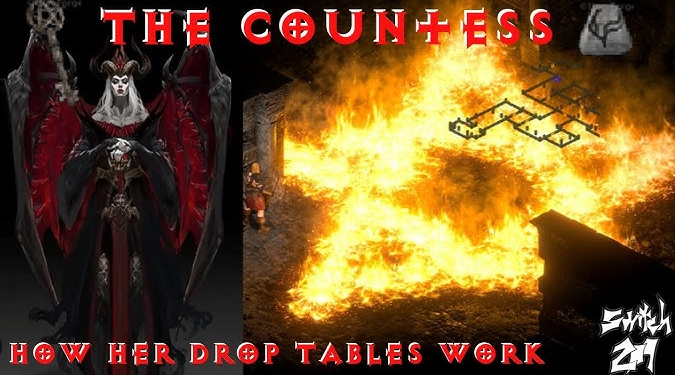
The Countess-to-Zod Challenge: A Marathon, Not a Shortcut
Cubing runes all the way toward a Zod rune is an extreme Diablo 2 Resurrected challenge. Each upgrade requires multiple copies of the previous rune plus the right chipped, flawed, standard, or higher-quality gems depending on the rune tier.
That means the real challenge is not only getting runes. It is managing the massive material requirement.
A Countess-only Zod project demands:
- Thousands of runs over time
- Careful rune tracking
- Large amounts of stash space
- Chipped gems, especially chipped amethysts and chipped topazes
- Patience during brutal stretches of key drops and low runes
The Countess is not the optimal direct source for a Zod rune. Hell cows, Chaos Sanctuary, Travincal, Terror Zones, and high-player-count farming areas can offer better high-rune potential. But for players who want a controlled experiment with clear rules, Countess farming creates a satisfying progression loop.

How to Farm Countess Efficiently in Hell Difficulty
Speed matters. A run that takes three minutes instead of one minute may not feel dramatic, but over hundreds of attempts, it destroys your overall efficiency.
Follow this Countess farming routine:
1. Create a Hell game.
2. Travel to the Black Marsh in Act 1.
3. Locate the Forgotten Tower.
4. Descend to Tower Cellar Level 5.
5. Defeat Countess quickly.
6. Pick up runes, keys, valuable items, and needed gems.
7. Leave and create a new game.
For the best results, focus on a character with strong mobility and safe boss damage. Teleport is the biggest quality-of-life advantage because it cuts out most of the Tower maze.
Do not over-clear every floor unless your goal includes experience, champion packs, or general loot. For a strict Countess rune challenge, killing Countess herself and resetting is the cleanest way to maintain consistent data and faster runs.
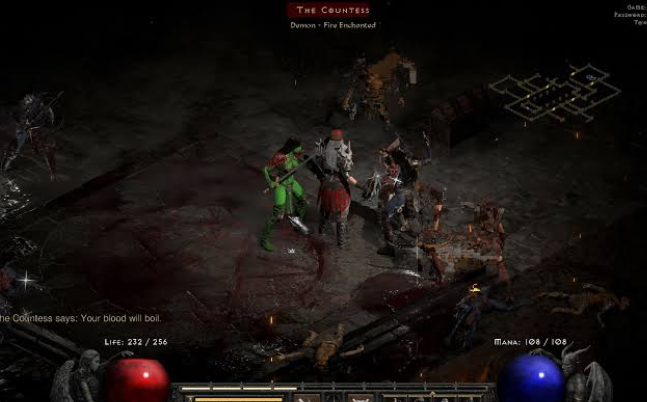
Hydra Sorceress Build: A Safe and Powerful Countess Farmer
A Hydra Sorceress is an excellent choice for players who want safe, steady Countess farming without needing to stand directly in danger. Hydras provide ranged pressure, allowing you to cast from a safer position while your summons burn down enemies.
A strong endgame Hydra Sorceress setup can include:
- Flickering Flame helm
- Phoenix shield
- Chains of Honor armor
- Magefist gloves
- Crafted caster amulet and rings
- Fire skill grand charms
- Faster Cast Rate and resistance-focused accessories
Skill priorities usually include Hydra, Fire Mastery, Fire Ball or a supporting fire skill, and enough Warmth to improve mana sustain. Warmth becomes especially useful during long farming sessions, where constant teleporting and spellcasting can drain mana quickly.
This setup is comfortable, safe, and powerful for single-target farming. It also lets you stay focused when Countess drops another pile of keys instead of the rune you actually wanted.
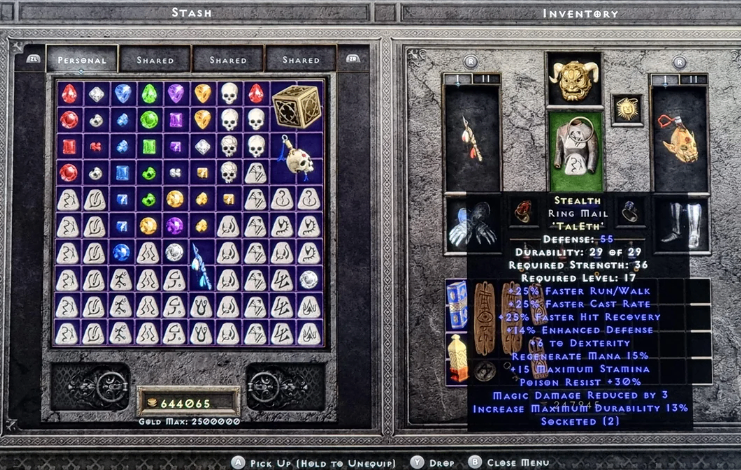
Rune Cubing Strategy: Do Not Ignore Your Gems
Many players start a rune-cubing project and realize too late that their rune supply is not the only bottleneck. Gems can become the real wall.
Chipped amethysts and chipped topazes are especially important for lower-level rune upgrades. Keep them whenever possible, even if they look insignificant at first. A serious long-term cubing project can consume huge numbers of gems.
Use these storage rules:
- Keep all chipped amethysts.
- Keep all chipped topazes.
- Store runes in labeled mule characters or organized stash tabs.
- Separate crafting materials from trade items.
- Track rune totals after each farming session.
- Avoid cubing impulsively if you may need certain runes for runewords or trading.
Organization saves time, reduces mistakes, and makes the grind feel like progress instead of chaos.
Keys, Keys, and More Keys: Turn Bad Luck Into Value
One of the funniest and most frustrating parts of Countess farming is the mountain of Tower Keys. When runes refuse to drop, it can feel like Countess is personally trolling you.
Still, Tower Keys are not worthless. They are part of the three-key set needed to access the Pandemonium Event:
- Key of Terror from The Countess
- Key of Hate from The Summoner
- Key of Destruction from Nihlathak
If you are collecting too many Tower Keys, use them to build full key sets, trade them, or prepare for Uber Tristram runs. This turns an unlucky rune session into useful endgame currency.
If your goal is faster access to premium gear rather than a self-imposed farming marathon, buy coins at mmoexp, save your sanity, and enjoy the real endgame.
Is Countess Farming the Best Way to Find High Runes?
For direct high-rune hunting, no. Countess farming is best for lower runes, mid-runes, Tower Keys, and steady progression. Her special rune drop pool has limits, so expecting Ber, Jah, Cham, or Zod to rain from her is a recipe for disappointment.
Better high-rune locations include:
- Hell Cows for dense monster packs
- Travincal for fast repeated council runs
- Chaos Sanctuary for elite enemies and broad loot potential
- Terror Zones for boosted monster levels and improved rewards
- Arcane Sanctuary for ghost farming
- Lower Kurast for organized single-player chest runs
But Countess remains valuable because she supplies the building blocks. She can help you create runewords, fuel crafting, accumulate trade value, and maintain a steady flow of materials between larger farming sessions.
The Mental Game: How to Survive a Long Rune Grind
The hardest part of Countess farming is often not the combat. It is the mental fatigue. After dozens of poor drops, every key can feel like an insult. After hundreds of runs, even a useful Fal or Lem can feel underwhelming.
Set realistic mini-goals:
- Farm 25 or 50 runs per session.
- Track total runes instead of judging one run.
- Build key sets as a secondary reward.
- Collect chipped gems as progress toward future cubing.
- Rotate in other farming zones when boredom hits.
- Celebrate useful mid-runes, crafting materials, and gear upgrades.
A challenge becomes much more enjoyable when every run has a purpose. You may not see Zod today, but your stash, crafting supplies, key collection, and game knowledge are all growing.
For players who want to skip the long economic climb and focus on powerful builds, buy coins at mmoexp, save your sanity, and enjoy the real endgame.
Who Should Farm Countess?
Countess farming is ideal for:
- New Hell players needing early runewords and basic rune supplies
- Sorceress players with teleport access
- Uber event players collecting Tower Keys
- Crafters needing rune and gem materials
- Solo players who enjoy repeatable, trackable progression
- Challenge runners attempting rune-cubing milestones
- Players building Hydra Sorceress, Hammerdin, Mosaic Assassin, or other gear-dependent setups
It is less ideal for players whose only goal is to find the highest possible rune in the shortest time. Those players should combine Countess runs with Travincal, Cows, Chaos Sanctuary, or Terror Zones.
Final Takeaway: Make Every Countess Run Count
Countess farming in Diablo 2 Resurrected is not glamorous every run. Sometimes you get a valuable rune. Sometimes you get another key. Sometimes you get several keys and wonder whether the Tower has become a locksmith business.
But the real strength of Countess farming is reliable long-term value. She provides runes, keys, gems, crafting resources, and a structured farming loop.