






Summary
The Diablo Capstone feels confusing on first clears, but it is not longer than the other capstones. Memorize one identifying feature per floor and a full run takes roughly two and a half minutes, on par with a Baal run. The reason to farm it is the Terror Splinter: you need dedicated splinters from Diablo, Mephisto, and Baal before opening Uber Tristram. This guide covers every level, the boss phases that punish dot builds, and the real time investment for players farming Diablo 4 Items.
Why the Diablo Capstone Matters in Season 15
Every Season 15 player chasing the torch loop lands here eventually. The reward is not gear — it is a Terror Splinter, the token that feeds the Uber Tristram summon.
You cannot shortcut the set. Rumor says splinters drop from any boss, but that does not hold up: plan on earning each from its designated boss. Random splinters occasionally appear in Hell Tide ambushes and seasonal caches — treat those as bonuses.
One hard rule: you cannot hold more than one copy of the same splinter. The moment one drops, switch to farming the other two. A spare means the next one will not pick up, and when a splinter can take hours to drop, that waste hurts.
Level 1 — The Butcher: Take the Straight Line
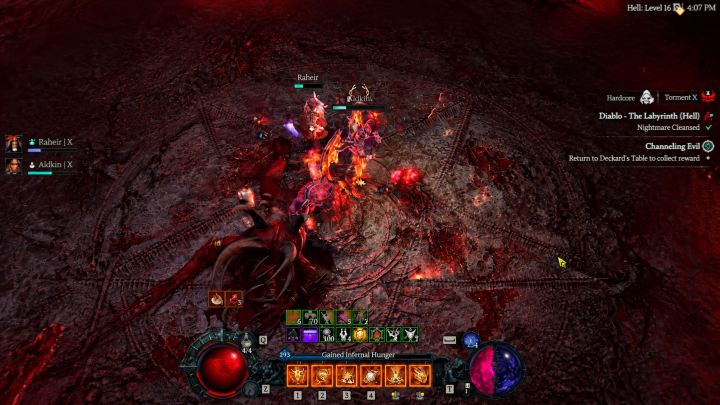
The first floor drops you into a large open arena with three exits. Ignore every exit that bends or corners — you want the lane that is a dead-straight shot from the big room to the Butcher. The other exits look plausible until you notice the bend; the second you see a corner, write that lane off and check the next. The correct exit is always the unobstructed straight corridor.
Level 2 — Blood Raven: Head for the Far Side
Blood Raven sits at the far end of the map, usually opposite your entry. Take a few turns, but keep pushing toward the furthest exit. Do not clear side rooms — this floor is faster than the others, and the shortest path is almost always the exit pointing away from where you stand.
Level 3 — The Summoner: Find the Big Square
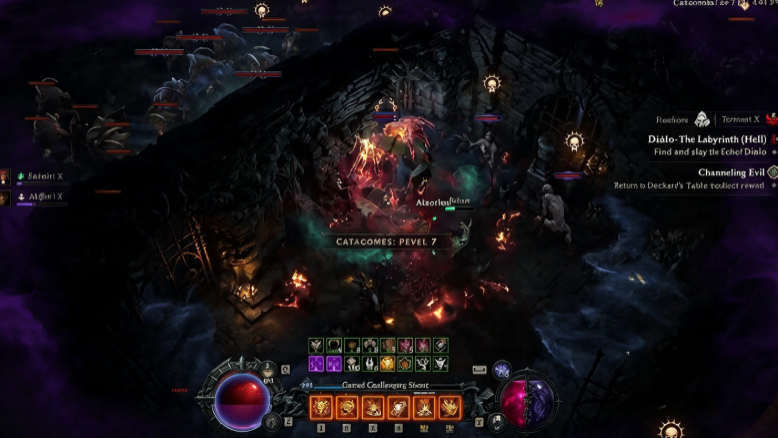
This is the hardest floor to navigate, and the one that eats run time while you learn. The Summoner always waits inside a large square — a diamond-shaped rock formation with an open center. Traverse diagonally, cutting straight across rather than following walls; that square usually sits on one edge — top, left, or right. Once you know the look, you can pull the Summoner's tail from the two converging approach lines, thinning the pack before you commit.
Level 4 — The Hell Lever Room: Avoid the Long Road
The final floor before Diablo is about finding four levers, almost always in the first half: two sit together, the other two isolated. The classic mistake is running down a very long, straight corridor — that is the road to the Diablo portal, deliberately long. The moment you realize you have run in one direction too long, turn around; the levers are behind you.
A useful tell: every lever room has straight, diamond-shaped wall segments visible through the fog from across the map, so scan the horizon as you move.
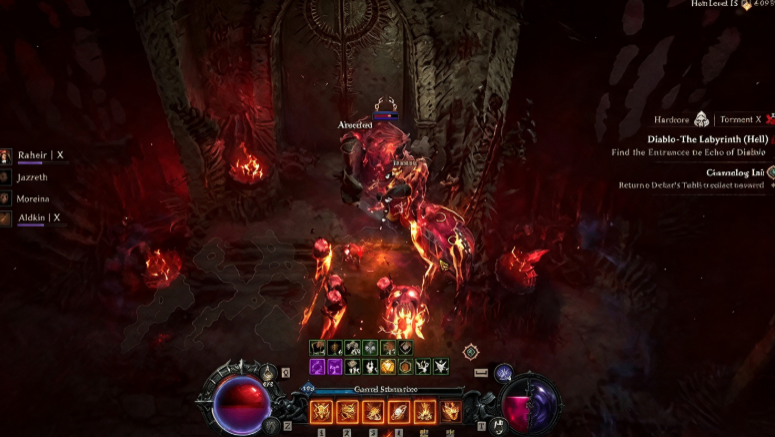
The Diablo Fight: Dot Builds Get Punished
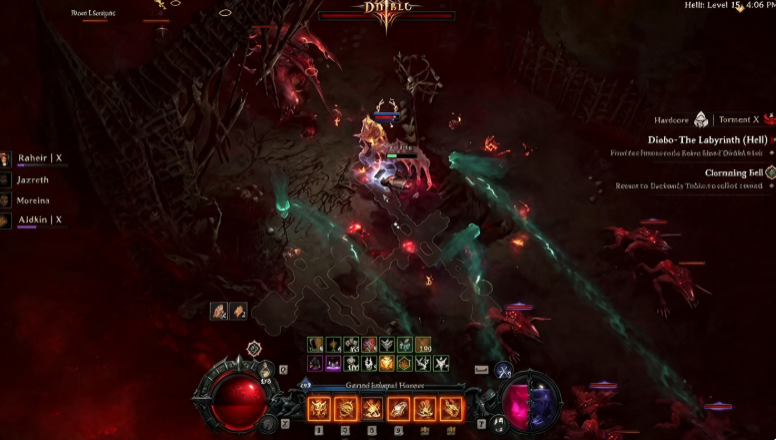
Diablo has one mechanic that defines the encounter: at 50% health, he cleanses all damage-over-time effects. If your build relies on poison, burn, or bleed stacks, you cannot burn him down in one phase — plan for the cleanse window and reapply.
Portal phases follow a pattern: the first wave places one portal on each side of the arena, then the rest spawn below. Ranged builds can pre-fire into those positions when the phase triggers, which is how optimized runs compress the fight into seconds.
Drop Rates and the Real Farming Loop
Set expectations before you commit. The average is roughly thirty runs per boss to see a splinter drop. At about three minutes per run including loading screens, that is around ninety minutes per splinter.
RNG swings hard around that average. Some see the drop on the first try; others go dry for over a hundred kills — the longest Mephisto streak ran to 130. Treat the average as planning math, not a guarantee.
Because you need splinters from three different bosses before Uber Tristram unlocks, the loop is a rotating rotation, not a single grind. Once you clear Tristram, plan on roughly five torch runs before you get one with the affix set your build wants.
Player Recommendations
Memorize the four tells, not the maps. Straight exit, far-side exit, diamond square, diamond lever walls. Layouts randomize; landmarks do not.
Never run the long corridor on the lever floor. It is the Diablo portal, and going early wastes minutes.
Switch bosses the moment a splinter drops. Duplicates cannot be held; the next run toward it is time lost.
Dot builds, adjust your rotation. Save bleed, poison, and burn for after the 50% cleanse rather than opening with them.
Use Hell Tide ambushes and seasonal caches as side income. Unreliable, but a free splinter cuts the rotation short.
Final Verdict
The Diablo Capstone is not the slog it looks like. Two full runs finished in about five minutes, matching the Baal-run pace players already farm. The dungeon is a navigation puzzle that rewards pattern recognition over gear checks — the real time cost lives in splinter RNG, not the clear.
If you are gearing toward Uber Tristram, treat the three-boss rotation as a ninety-minute-per-splinter block, bring a build that does not hinge on dots surviving the 50% cleanse, and learn the four landmarks. Do that, and the Capstone stops feeling like a wall and starts feeling like the fastest route to the torches your build needs. For players looking to buy Diablo 4 Items alongside their farming, this can also help reduce the time spent gearing between runs.