Weekend Drop -














Start the Diablo 4 Season 16 PTR with Mrak's Level 70 and Paragon 200 boosts, then choose a goal: explore Horadric set combinations, try the two-Reaper encounter, or refine your farming through War Plans Tactics. Your first session can go straight to a working build and the systems you want to explore.
The 3.3.0 PTR runs from October 27 to November 3, 2026. Active players can compare builds and farming routes; returning players can explore equipment or encounters. Choose one goal for your visit.

Season 16 PTR Dates and Access
Diablo IV's Season 16 PTR is a PC-only test accessed through Battle.net. PC Game Pass and Game Pass Ultimate users can also participate through the Xbox App's Battle.net access flow.
Detail | PTR Information |
Starts | October 27, 2026, at 10 a.m. PDT |
Ends | November 3, 2026, at 10 a.m. PST |
Platform | PC |
Client | Battle.net Public Test Realm |
Character setup | Create a new test character |
Seasonal systems | Create a Seasonal character |
The Pacific time labels reflect the daylight saving change. These are test dates, not Season 16's live launch schedule.
Choose a Seasonal character for Tyrael's Boons and Horadric Items. Eternal is an option for testing permanent changes, including War Plans Tactics, but it will not provide the same seasonal testing scope.
Expansion Access
Tyrael's Boons is explicitly open to all Seasonal players without Lord of Hatred. In the live game, Talisman, War Plans, and the Horadric Cube are Lord of Hatred features. The 3.3.0 announcement lists grants for those systems but does not explicitly confirm an expansion-access override for non-owners.
Do not assume Mrak's boosts remove ownership requirements. Without confirmed access, begin with Tyrael's Boons and Helltide changes; choose Horadric/Talisman and War Plans tests once the relevant systems are available to your account.
Install the PTR and Create a Character
Use the following Battle.net installation path:
1. Open Battle.net and select Diablo IV.
2. Open the game-version selector above the Play button.
3. Select Public Test Realm.
4. Install the separate PTR client.
5. When the test opens, launch it and choose an available test server.
6. Create a new test character, selecting Seasonal for seasonal-theme testing.
If you use PC Game Pass or Game Pass Ultimate, access Battle.net through the Xbox App, then follow the same version-selection process.
Updating the normal client alone does not install the PTR. If seasonal options are missing in the test, check your character's realm before rebuilding its equipment.
Prepare Your Character with Mrak
Unlock the Progression You Need
Find Mrak beside the main Waypoint in a major city. For a Diablo 4 endgame build test, start with the progression options that set your character to Level 70 and Paragon 200, grant Skill and Paragon point rewards, and unlock the map and Torment tiers.
Mrak also offers campaign and Stronghold completion, Glyph upgrades, and an option to unlock and max War Plans. Use relevant unlocks before activities.
For an S15 comparison, keep screenshots of your skills, gear, Talisman, and Paragon setup, plus your usual difficulty. Existing notes are enough. This is an optional reference for rebuilding your Diablo IV character; if you are trying something different, start directly with Mrak's grants.
Choose boosts according to your goal. Leave progression unfinished if that is what you want to assess; accelerate it for equipment experiments.
Collect Equipment after Leveling
Mrak can provide crafting materials, Diablo 4 Gold, Obols, Runes, Uniques, random Legendaries, and Talisman Items. Seasonal options include Horadric Items and a Tyrael's Boons boost. Activity supplies include Lair Keys, Infernal Compasses, and Nightmare Escalation Sigils.
Level before requesting equipment. The PTR equipment grants require at least Level 7 for Helms and Level 15 for Amulets. If either slot is missing after an early grant, reach the required level and request the equipment again.
After assembling your gear, check your skill bar, Aspects, Glyphs, and Talisman bonuses before raising the difficulty. Access to every Torment tier does not mean your first equipment arrangement is ready for the highest one.
Choose Your First PTR Test
For a fresh experience in Diablo IV, prioritize Horadric combinations and the Reapers. For farming efficiency, start with War Plans and Tyrael's Boons. To choose an S16 main, check the class table first, then rebuild through Mrak. Build experiments and farming improvements serve different goals; neither needs to come first for everyone.
Your Goal | Start Here | Main Focus | What to Look For |
Try a different build combination | Horadric Items and Talisman sets | Build options | Useful bonuses that fit together with fewer charms |
Experience a different boss fight | Two-Reaper encounter | Combat encounter | Combined abilities and positioning demands |
Refine your current farming route | War Plans Tactics | Farming choices | More suitable activity and reward offers |
Improve gearing or crafting | Tyrael's Boons | Progression efficiency | Whether the selected perks help your progression |
Reassess familiar content | Endgame changes and Helltides | Activity changes and convenience | Encounter flow and fewer interruptions between events |
For a 30-minute session after installation and login, use Mrak, assemble a build, and try a matching Horadric jewelry-and-charm combination if you have Talisman access. Check the bonus in a short fight; setup time varies. If Talisman is unavailable to your account, start with Tyrael's Boons or test the Helltide changes instead.
With an hour, establish that combination first, check your defenses, then attempt the Reapers if the encounter is accessible. If setup takes longer, save the boss for another visit. For a farming-focused hour, choose War Plans preferences and run the offered activities instead.
To assess a potential S16 main, rebuild its core skills and supporting gear, check altered class interactions, then add Horadric bonuses. Use familiar content to judge rotation, resource stability, and survival before comparing farming rewards. One session can expose problems, but cannot establish full-season staying power.
Build Tests for All Eight Classes
Choose one Diablo 4 class direction to assess your main or revisit a neglected skill.
Class | Possible Change to Explore |
Druid | Rework the supporting Paragon choices around your skill tags and defenses |
Necromancer | Revisit Bone Spear or Blood Surge after their damage increases |
Paladin | Check Zealot Oath defenses at maximum Fervor and Fortify generation on Zealot casts |
Spiritborn | Try Razor Wings with Focus and Ultimate skills restoring charges |
Barbarian | Try Double Swing as an alternative, or reassess your Charge setup |
Sorcerer | Compare Ring of Fire's changed timing or revisit Ball Lightning |
Rogue | See how repeated Shadow Imbuement applications affect your rotation |
Warlock | Assess Nether Step's responsiveness alongside your damage setup |
Druid needs particular attention because Nature Magic and Shapeshifting tags are tied to base skills instead of being added by upgrades and variants. An old Paragon route may therefore need revision even when your main skill looks familiar.
For Sorcerer, Ring of Fire's shorter cooldown and longer duration give you a timing change to assess alongside its reduced damage. For Rogue, Shadow Imbuement applications now stack instead of refreshing. These are concrete changes to examine without assuming either build becomes stronger overall.
Check skills available to your account. Use the table to pick one direction; these are testing suggestions, not an eight-class ranking.
Five Changes to Explore
Horadric Items and Talisman Combinations
Horadric Items offer a new equipment-combination problem within familiar combat. Jewelry with a Horadric affix adds one to the set count of its specified Talisman set. Reaching a threshold with fewer charms can free space for another set bonus, giving you a different combination to explore.
For an initial check, equip one charm from a set and a corresponding Horadric jewelry item, then inspect whether the two-piece bonus activates. Then try a higher threshold or a second set. Check whether its effect changes a skill choice or rotation, or simply increases existing damage.
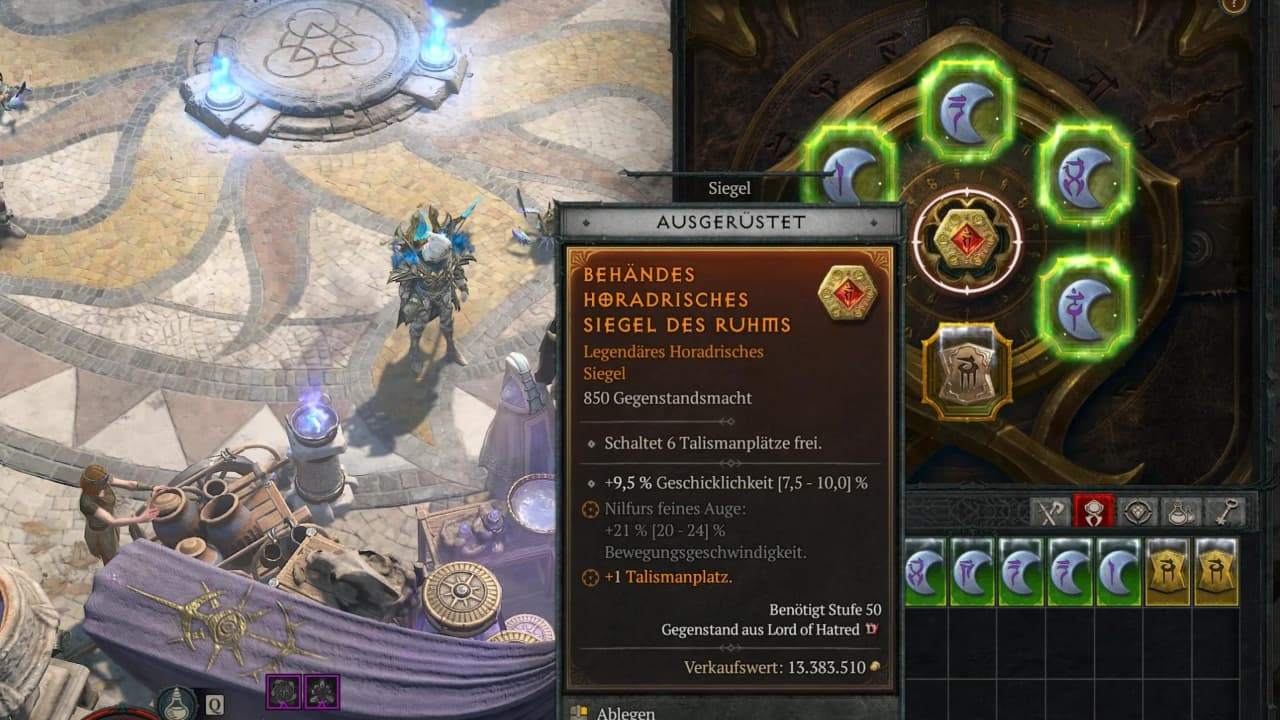
Armor and weapons work differently. Their Horadric effects require at least the two-piece bonus of the defined set and can add benefits such as damage, skill ranks, or defenses. Read that condition before replacing an existing item.
Choose a second set bonus that supports a skill or defensive need, then check what you give up to fit it. Active players can refine an existing setup; returning players can use Mrak's grants to start a different one. Track active bonuses as you change pieces.
Seal of the Diamond Mind combinations deserve further testing, but double five-piece setups should remain build experiments until their interactions and practical costs are checked. Avoid discarding a reliable Unique solely because a new arrangement activates more set bonuses.
War Plans Tactics and Reward Targeting
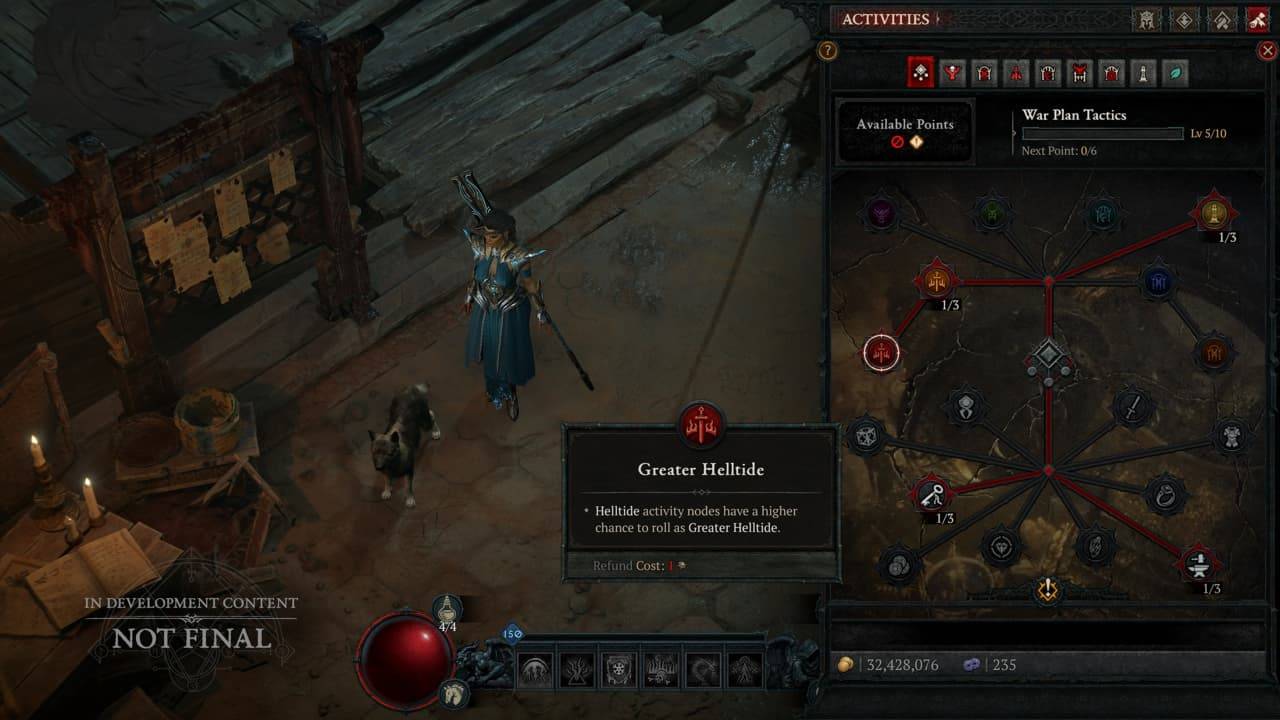
War Plans Tactics lets you invest points to increase the likelihood of preferred activities and rewards appearing in Diablo IV. If unsuitable activity offers interrupt your farming, this is worth checking first. Its main change is control over the farming itinerary and reward mix. The activities themselves remain familiar; test whether better offers make that loop more appealing to you.
For equipment experiments, favor Jewelry or Talisman Items; for crafting, examine Obducite or Horadric Cube Materials. These preferences do not guarantee an item or dictate every activity in a plan.
Complete several plans to assess the offers. One plan cannot establish the strength of a probability adjustment.
Completed War Plans award Marks of Wisdom, which replace Diablo 4 Gold as the cost for changing Tactics and individual Activity-tree nodes. The PTR caps these Marks at 20. Plan your comparisons before repeatedly changing nodes, and check your balance when switching farming setups.
Tyrael's Boons and Seasonal Rewards
Tyrael's Boons adds a seasonal tree. All Seasonal players can access it without owning Lord of Hatred, although that statement does not establish access to every expansion feature discussed elsewhere.
Path | Useful First Test |
Curious Addition | Compare Obol costs and item quality at the Purveyor |
Merchant of Mystery | Examine cache options and their material costs at Torment difficulty |
Scent of Gold | Compare experience, Gold, and material rewards in a familiar activity |
Trash for Treasure | Explore transmuting, salvage rewards, and Greater Temper |
These paths adjust rewards, spending, and crafting. Match one to your activity; easier progression may leave the combat loop unchanged.
Keep the reset rules separate: removing Tyrael's Boons points costs 5 million Diablo 4 Gold per point. Marks of Wisdom handle the other War Plans trees. Before spending resources, check which tree you are editing.
Trash for Treasure also opens Greater Temper, a Horadric Cube recipe that upgrades an item's Tempered Affix to a Greater Affix for 30 Scrolls of Restoration and 1,000 Obducite. Test it on an item whose Tempered Affix already suits your build, then check the resulting affix. Its live-season value will depend on how readily you obtain those materials.
Endgame Activities and Persistent Cinders
If you want to compare farming routes, revisit the Pit, Infernal Hordes, or Lair Boss activities. Blizzard identifies these as reworked testing areas. Choose one you care about and assess its flow and rewards; revisiting every familiar activity is optional.
Helltides have a more specific convenience change: base-game zones start on the hour, while expansion zones start at the half-hour. Aberrant Cinders no longer reset between Helltides.
Check your Cinder total across a Helltide transition to see whether that continuity suits shorter sessions. This is a convenience improvement to familiar farming. The announcement does not establish every other circumstance in which Cinders are retained.
The Two-Reaper Encounter
The Corrupted Reaper returns alongside the Fractured Reaper, combining their abilities. The 3.3.0 announcement does not specify the entry location, unlock prerequisites, required materials, or concrete rewards. Keep this as a conditional test until the entry process is confirmed. Once accessible, assess whether combined attacks demand different positioning or damage windows from your usual bosses.
Start with working damage and defenses. Check whether long animations leave you exposed; identify what killed you before changing equipment.
Adjust your equipment through Mrak and try again. Reward efficiency and live difficulty still need testing.
Season 15 Features Missing from Testing
Blizzard has confirmed that some Season of Hell's Legacy features will continue into Diablo 4 Season 16. Those returning features are excluded from this PTR, with the detailed carryover announcement still pending.
Players interested in Uber Tristram, Hellfire Torch, or Runewords should wait for the specific retention details before assuming their current setup will survive intact. A feature's absence from this test does not establish its removal from the live season.
If an unavailable S15 mechanic supported your build, account for that missing effect when judging its PTR performance.
First-Day PTR Checklist
Launch Diablo IV's Public Test Realm version in Battle.net.
Create a Seasonal character for seasonal-system tests.
Use Mrak's progression boosts before requesting equipment.
Assemble a working build and check its active bonuses.
Choose one test that fits your time and account access.
Configure War Plans and Tyrael's Boons if they support that goal.
Add matching Horadric equipment for set experiments.
Use familiar content for optional comparisons or a quick build check.
When you find an interaction that appears broken, record the items, skill variant, active set bonuses, and steps needed to reproduce it. Use the PTR's in-game feedback tool through the Escape menu's Report a Bug options so the report includes a clear, repeatable case.