




Diablo II's item duplication problem grew out of the trade window's need to temporarily preserve inventory data, and by the mid-2000s dupes were common enough to reshape the entire economy. Players often ask how duplication actually worked mechanically, and why methods that once created endless high runes and duplicated Enigmas no longer function today. This article breaks down the trade-window exploits, NPC state tricks, and packet manipulation that defined the 1.11 era, based on historical, technical accounts rather than speculation. It is written for veteran players, returning players curious about old-economy lore, and anyone researching Diablo II's exploit history rather than current gameplay.
Why Trade Windows Broke
Temporary Copies Created Risk
The trade window created temporary copies of inventory data so a canceled trade would not delete items. That safety feature became the foundation for nearly every documented method of duplication. Exploiters focused on interrupting the "busy" state a trade normally enforced, since clearing that state while the trade window stayed open let items exist in two places at once. This matters most for players trying to understand why so many old high-value items were treated as suspect rather than authentic.
From Waypoints To Garren
NPC Timing Replaced Simple Tricks
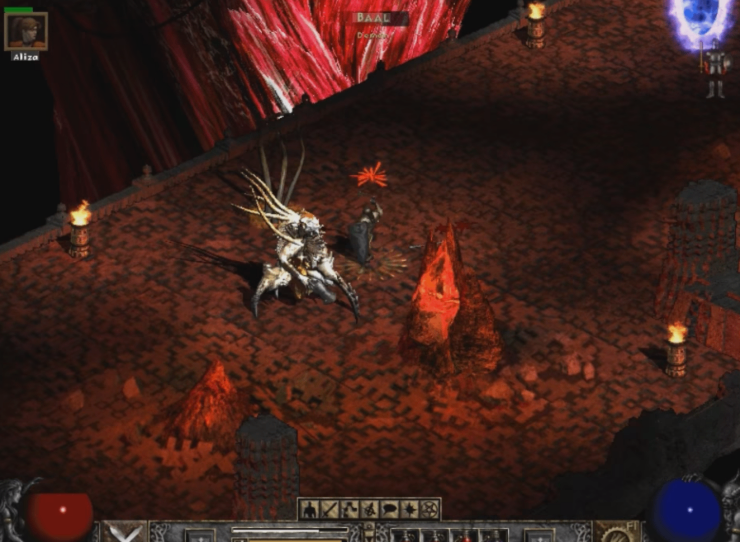
Waypoint duplication was reportedly one of the earliest verified methods, exploiting the gap between sending a trade request and confirming a waypoint before the server finished processing. After that path was patched, exploiters shifted to NPC quest interactions with characters like Anya, Larzuk, Charsi, and Garren. The Garren method used the NPC's position change after a quest advanced to reset the busy flag while trade stayed active, letting items drop to the ground. Returning players will recognize this pattern as the technical root of many "legendary" old dupe stories.
Making Duplicates Permanent
A duplicated item was not automatically safe, since the game deletes copies sharing an identical item ID and keeps only the most recent timestamp, a failure state known as "pofing." True permanence required generating a new item ID, typically by crafting a new item or completing a runeword. Turning two Sur runes into a Ber, or finishing a runeword after duplicating its base, produced items the game treated as genuinely distinct rather than temporary. This distinction explains why some old high runes vanished on logout while others survived for years.
Packet 44 Explained
Blocked Messages, Broken State
More advanced methods relied on manipulating network packets directly, including blocking packet 30 to keep the server believing a player was still speaking to an NPC. The Nihlathak-related exploit reportedly combined this with packet 44, originally tied to Horadric Staff functions, applied to unrelated objects like shrines to trigger unintended state changes. Side effects, such as unexplained mana shifts, show how fragile the underlying validation was. This history is most relevant to players researching how automation and multi-account botting scaled these exploits further.
Hybrid Runewords Explained
Some of the strangest reported outcomes were hybrid runewords, created by exploiting item transfer or sale mechanics to insert additional D2R Runes into an already-completed runeword. An item like Enigma reportedly could be altered into a mixed variant carrying properties from more than one runeword. The source material treats any link between these methods and real item-selling sites as a plausible inference, not a confirmed fact, which is an important distinction for anyone citing this history.
A quick comparison of the main exploit categories helps clarify how they escalated in complexity.
Method | Core Trigger | Persistence Result | Complexity |
Waypoint dupe | Trade + waypoint timing | Temporary, often pofed | Low |
NPC quest exploit (Garren) | Quest-triggered NPC reset | Temporary unless stabilized | Medium |
Cube recipe/runeword completion | New item ID generation | Permanent | Medium |
Packet 44 (Nihlathak) | Blocked/misused packets | Permanent, unstable side effects | High |
Hybrid runeword creation | Transfer exploit + reinsertion | Permanent, non-standard item | High |
The clearest takeaway is that persistence, not just duplication, determined whether an exploited item survived long-term.
Does Item Duplication Still Work In Diablo II Resurrected?
No, these trade-window and packet-based methods are documented as historical and do not function in Diablo II Resurrected or later patched versions. Server-side validation closed the state and identity gaps these exploits relied on.
Why Were High Runes Called "HR" Instead Of Named Individually?
Because duplication made authenticity uncertain, many high runes were traded as a general "HR" category rather than as individually trusted items, reflecting economic distrust more than rarity.
What Is The Difference Between A Temporary Dupe And A Permanent One?
A temporary dupe shares its original item ID and can be deleted through "pofing," while a permanent one gains a new ID through a recipe or completed runeword, making it stable long-term.
Quick Tips
· Treat any claim about "how dupes work today" with skepticism, since these methods are patched.
· Understand item ID generation before assuming any duplicated item is truly permanent.
· Use this history as economic context, not as a functional guide.
· Cross-reference community claims about hybrid runewords carefully, since some links remain unproven.
Who Benefits Most?
Returning players gain context for why old-economy prices—such as those for cheap D2R Runes—and rare items behaved unpredictably. Collectors and historians get a clearer technical explanation behind legendary trade stories. Advanced players researching game design can see how partial client trust and thin server validation created a lasting exploit ecosystem. Together, this history clarifies why Diablo II's economy diverged so sharply from its intended rarity systems, and why modern versions closed these gaps for good.