




Diablo II's magic comes from meaningful progression, flexible itemization, dangerous combat, rewarding power spikes, and a world that respects the player's time. From eliminating level scaling to keeping loot valuable across every rarity, these systems create choices that remain relevant from the opening hours through the endgame. For players looking to strengthen their journey, D2R Items from MMOexp can provide another option to help level up their game.
Forget Level Scaling: Let Players Become Powerful
One of Diablo II's defining features is that zones don't simply scale to match the player's level. This creates genuine progression.
If an area destroys your character early on, you can leave, gain experience, improve your equipment, and return later. Suddenly, enemies that once seemed terrifying become manageable. That transformation creates a powerful feeling of accomplishment.
Level scaling can remove that contrast. If enemies become stronger whenever the player levels, progression can feel less meaningful because the challenge constantly follows you.
Key takeaway: Fixed-area difficulty gives players control over when to challenge difficult content and makes character growth easier to feel.
Skills and Items Should Work Together, Not Compete
Diablo II allows characters to succeed through different combinations of skills and equipment. A skilled player can make impressive progress with weak gear, while strong equipment can compensate for weaknesses in a build.
The important part is that neither system completely replaces the other.
When equipment becomes responsible for an overwhelming percentage of a character's power, finding one missing item can suddenly make a build feel dramatically weaker. A healthier system lets skills provide meaningful power while equipment enhances and specializes that power.
Key takeaway: Skills should define a character's capabilities while equipment adds depth, customization, and optimization.
Why Diablo II's Itemization Still Matters
Itemization is arguably the biggest reason Diablo II remains memorable. White, blue, rare, set, unique, and crafted items can all have legitimate uses.
A pair of 40% Faster Run/Walk boots might not be endgame best-in-slot, but they can transform a leveling character. A rare ring with excellent resistances can remain useful for dozens of levels. Even unusual blue items can become extraordinarily valuable when their affixes match a particular build.
This creates a loot system where players actually inspect what drops instead of automatically replacing everything with a higher item-power number.
Key takeaway: Every item category should have situations where it can become valuable.
Gear Shouldn't Automatically Become Obsolete
Diablo II doesn't make every item worthless simply because your character gained another level. A fantastic rare ring found early can potentially remain equipped deep into Hell difficulty.
That uncertainty makes every drop exciting. You might find something useful now-or something that eventually becomes part of another character's build.
This is one reason players have such strong emotional connections to individual pieces of gear.
Key takeaway: Good loot should have the potential to remain relevant rather than being automatically replaced by the next higher-level drop.
Build Variety Comes From Meaningful Choices
Best-in-slot equipment isn't always obvious. Players must consider Faster Cast Rate, Faster Hit Recovery, Faster Run/Walk, resistances, attack rating, life, mana, leech, block chance, Magic Find, and various breakpoints.
The correct choice depends on the character and objective.
A PvE Magic Find build might prioritize completely different statistics from a PvP setup. Hardcore players may sacrifice damage for survivability, while speed-focused farmers might accept lower Magic Find for faster clears.
Key takeaway: Good itemization makes players think about trade-offs instead of simply equipping the highest-numbered item.
Open Trading and Unexpected Builds
Another major strength is that loot isn't heavily restricted to the character who finds it. Trading creates an additional gameplay system where unwanted items can become valuable resources.
A player might find a unique item for another class and decide to create an entirely new character around it. That can lead to a chain reaction: one item creates a new build, that build farms different content, and those rewards eventually inspire another character.
Key takeaway: Open loot and trading can turn individual discoveries into reasons to explore completely different builds.
Sockets, Runes, Gems, and Jewels Add Another LayerSockets provide another important customization system. Runes, gems, and jewels can change how an item functions and allow players to solve specific weaknesses.
Instead of having one universally correct upgrade, players can ask whether they need more resistance, attack speed, life, damage, or another breakpoint.
That flexibility gives even basic socketed equipment long-term value.
Key takeaway: Customization works best when players have multiple useful solutions rather than one mandatory answer.
Combat Should Be Dangerous Again
The transcript also emphasizes meaningful combat. Monsters shouldn't disappear instantly before players can recognize what they're fighting.
Positioning, terrain, monster abilities, resistances, hit recovery, and attack patterns should matter. A doorway can become a defensive position. A wall can block projectiles. A dangerous monster pack can force players to retreat instead of simply charging forward.
When enemies are threatening, players remember them.
Key takeaway: Slower, more readable combat creates tension and makes monster design matter.
Power Spikes Need to Feel Like Power Spikes
Finding a powerful unique, unlocking a major skill, completing a runeword, or reaching a new breakpoint can dramatically change a character's performance.
Those moments feel rewarding precisely because progression isn't perfectly linear. There are periods of struggle followed by sudden breakthroughs.
That contrast makes upgrades memorable.
Key takeaway: Meaningful jumps in power are often more satisfying than endless tiny statistical increases.
Keep the World Dark, Clear, and Readable
Visual clarity is another important lesson. A dark fantasy world can still use bright colors, but spells, monsters, environments, and effects should feel like they belong together.
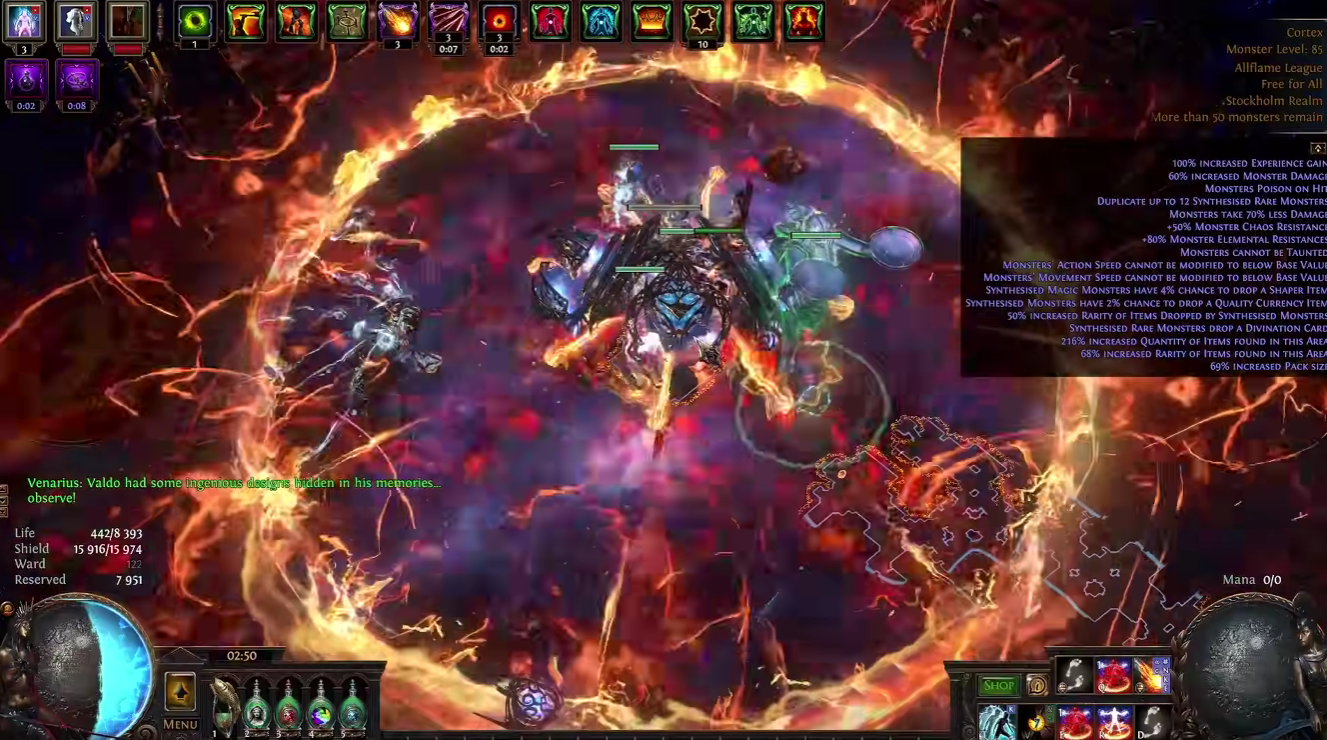
Combat should also remain readable. When explosions, numbers, projectiles, and effects cover the entire screen, players lose track of positioning and enemy behavior.
Key takeaway: Strong visual identity and combat readability are more important than maximum visual spectacle.
Stop the Endless Damage Multiplication
Finally, the transcript argues against extreme damage inflation. When characters progress from thousands of damage to millions, billions, and beyond, balancing enemies becomes increasingly difficult.
Smaller numerical ranges make differences easier to understand and allow defensive statistics and equipment choices to remain meaningful.
The goal isn't simply bigger numbers. It's meaningful decisions.
Key takeaway: Controlled power growth creates more room for challenging content and thoughtful character building.
Final Takeaway
A successful return to Diablo II isn't simply about copying its visual style or adding a few nostalgic mechanics. Its identity comes from interconnected systems: fixed-area progression, meaningful itemization, open-ended builds, dangerous combat, valuable loot, trading, customization, and satisfying power spikes. For players who want to spend less time chasing every resource manually, buy D2R Items at MMOexp to level up your game and focus more on the builds and content they enjoy.