

Secure checkout · Trusted site

- WEEKEND DROP - EXTRA GOLD BONUS ON SELECTED MMORPG SERVICES -

- WEEKEND DROP - EXTRA GOLD BONUS ON SELECTED MMORPG SERVICES -

  • light
    dark
  • Log In/ Sign Up
    Access your order center
Sign up to get Coupon with a
Shopping Cart
SECURE CHECKOUT orContinue Shopping
List of Contents

PoE 2 Farming Strategy: More Divines Than FPS – High-Risk Mapping, Rituals and Insane RNG

Anouk de Vries

Anouk de Vries

Created: September 17,2026 | POE2 |550 views

Summary:

This PoE 2 farming strategy turns extreme map investment, dangerous encounters, Ritual rewards, unique relics, and high-risk crafting into huge Divine Orb opportunities. While the strategy can generate valuable drops, brutal RNG, lag, POE2 Currency, and expensive failures make every run a serious gamble.
POE2 Currency

The PoE 2 Farming Strategy That Can Make You Rich

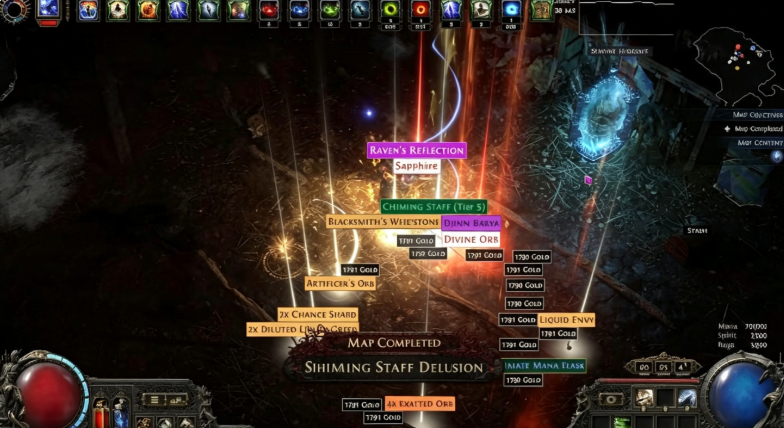
Path of Exile 2 farming can become extremely profitable when players are willing to invest heavily into their maps and mechanics. The strategy showcased in this run focuses on maximizing valuable rewards rather than simply completing maps as quickly as possible.

The core idea is simple: spend currency to increase the potential value of each encounter, then rely on rare drops, unique items, relics, and valuable crafting outcomes to recover the investment.

However, this is not a low-budget farming method. Some attempts can cost dozens or even hundreds of Divine Orbs, meaning players need enough capital to survive unlucky streaks.


High Investment Means High Risk

One of the biggest lessons from this farming session is that expensive strategies do not automatically produce profit.

At one point, around 30 Divine Orbs were spent during an unlucky sequence. Later, the investment became even more extreme, with a potential loss of roughly 170 Divines on a failed high-value attempt.

This perfectly represents the risk-reward nature of PoE 2's endgame economy. A single exceptional drop can completely change the outcome of a run, but several unlucky results can quickly turn a profitable-looking strategy into a massive currency sink.

For players with limited farming time, this distinction is important. High-investment strategies may offer enormous upside, but consistent lower-risk farming can sometimes be easier to manage.


Unique Relics Can Multiply Your Reward Potential

One of the most interesting mechanics in the strategy is the ability to generate multiple unique relic opportunities.

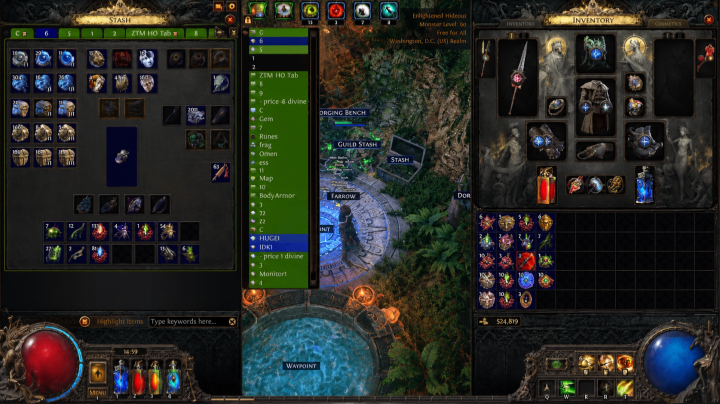
The showcased setup can potentially produce four unique relics, increasing the number of chances to hit an extremely valuable reward such as a rare Last Flame-related outcome.

This creates a classic PoE 2 gambling loop: increase the number of reward opportunities, accept higher costs, and hope one of the drops becomes valuable enough to pay for the entire run.

The problem is that more chances do not guarantee success. RNG remains the deciding factor, which is why players should calculate their expected return before committing large amounts of currency.
POE2 Currency

Bosses and Depth Rewards

Boss encounters are another important part of the strategy.

The farming approach takes advantage of encounters where defeating more enemies can improve the eventual reward quality. This creates an interesting decision for players: spend additional time clearing the entire area, or move through it quickly and focus on the final boss and reward chest.

For efficient farmers, skipping unnecessary enemies can dramatically improve clear speed. However, if monster kills directly increase the quality or quantity of rewards, completely ignoring them may reduce the potential value of the run.

This creates an important balance between currency per run and currency per hour.

A half-Divine reward from one encounter may not look impressive by itself, but another drop can suddenly pay for the entire run. That variance is one reason high-end PoE 2 farming can feel unpredictable.


Rituals and Valuable Item Drops

Ritual mechanics can also play an important role in this type of farming strategy.

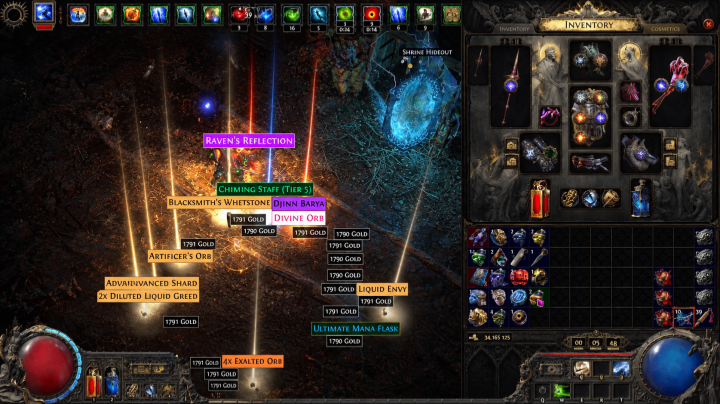
The session demonstrates why players continue running Ritual content even after several mediocre outcomes. A sequence of normal rewards can suddenly be followed by a valuable item that changes the economics of the entire run.

The same principle applies to item identification. High-value modifiers such as additional skill levels, critical strike bonuses, or powerful minion-related stats can transform an otherwise ordinary item into something worth keeping or selling.

For example, an item featuring +1 to all Minion Skills alongside useful offensive modifiers could become particularly interesting for players building around minion skills.


Crafting Can Be More Expensive Than Farming

Perhaps the biggest warning from this session involves crafting.

Instead of purchasing a finished item, the player repeatedly invested Chaos Orbs and other resources into crafting specific gear. One amulet reportedly required thousands of Chaos Orbs before producing the desired result.

This highlights one of the most important PoE 2 economy lessons: crafting is not automatically cheaper than buying.

Self-crafting can create enormous profits when you hit a rare combination of desirable modifiers. But when RNG goes against you, the final cost can exceed the market value of an already-finished item.

Before starting an expensive crafting project, players should compare:

Expected crafting cost

Current market price

Probability of hitting the desired modifiers

Resale value

Currency available for future farming

This approach can prevent a single crafting project from destroying an entire farming budget.

POE2 Currency

Build Investment Matters

The showcased gameplay also highlights another important factor: expensive builds can require enormous upfront investment.

A build may perform exceptionally well when properly geared, but showcasing an unfinished or incorrectly optimized setup can make the character look far weaker than its actual potential.

Defensive mechanics are also critical. During dangerous encounters, mechanics such as Ward can sometimes prevent an unexpected death and allow the player to recover.

In high-investment farming, surviving is part of profitability. Losing a character, failing an encounter, or wasting expensive map investment can erase the value of several successful runs.


The Real Lesson: Farm for Efficiency, Not Just Big Drops

The most important takeaway from this PoE 2 farming strategy is that profitability is not determined by the biggest individual drop.

A successful farmer needs to consider the entire loop: map cost, clear speed, monster density, reward mechanics, boss encounters, crafting expenses, and resale value.

A strategy that produces one incredible item but takes too long or requires massive investment may not be ideal for every player.

For players with limited time, consistent farming with strong currency-per-hour performance can be more practical than repeatedly gambling hundreds of Divines on a single jackpot.


Final Thoughts

PoE 2's endgame economy continues to reward players who understand risk, investment, and RNG. The farming strategy showcased here demonstrates both sides of that system: enormous potential rewards and equally enormous losses.

From unique relics and Ritual rewards to expensive crafting and high-value item identification, cheap Path of Exile 2 Currency, every decision can dramatically change the final profit.

The phrase “more Divines than FPS” may sound like a joke, but it captures the reality of extreme PoE 2 farming perfectly. When the strategy works, one drop can justify an entire session. When RNG turns against you, hundreds of Divines can disappear surprisingly quickly.

For experienced players with sufficient capital, this kind of high-risk farming can be an exciting endgame experiment. For everyone else, the smarter approach is to start with a strategy that matches their budget, build strength, and available farming time.

About the Author
Anouk de Vries
Anouk de Vries
A strategy and simulation game obsessive who has logged thousands of hours across the Paradox and Civilization catalogs. Approaches content planning like a grand strategy campaign: long-term vision, multiple parallel tracks, and contingency plans for every patch. Speaks four languages and writes game content in three of them.