




Summary
Astrolabe farming combined with boss rushing offers one of the most consistent baseline profit strategies in Path of Exile right now. Thanks to the new Atlas anomalies, you can layer jackpot drops on top of steady POE currency gains—all with a setup that works on virtually any build. In a recent 4-hour test run, this strategy pulled in around 40 divines per hour, excluding the single biggest drop. This guide breaks down the full setup, Atlas tree, map selection, and profit breakdown so you can run it yourself.
Core Concept
The strategy revolves around two things: maps and Astrolabes.
Complete maps as fast as possible to spawn Atlas anomalies and memory rewards.
Templar Astrolabes get a successful completion on boss kill, and anomalies have a chance to spawn from that too.
The boss gets slightly harder with each map inside an Astrolabe.
At current prices, Templar Astrolabes go for around 100k chaos or less. One Astrolabe requires roughly 6 maps on average to complete, so you'll need a large map supply.
Map Selection
White vs. Rare Maps
White T16 maps are faster to set up, but map quantity increases the chance to spawn anomalies. For maximum profit, run rare maps with quantity.
Best Atlas Region: Bottom Left
The bottom-left quadrant is the recommended area for three reasons:
Winter Storm boxes — drop divines, wilder boxes, and rally query keys frequently.
Kadira Atlas anomalies — shows a selection of 8 uniques, getting rarer toward the end.
Most consistent memory rewards — rewards currency only. You'll consistently find divines and sometimes fracturing orbs, welder boxes, or reflecting mists.
Both Winter Storm and Kadira mechanics work in exchange for gold.
The third mechanic in this quadrant is Planned Highest, but it can be skipped. It's free, so there's no advantage to leaving it up. You cannot block these anomalies—they have independent spawn chances, so you can get multiple from one map completion.
Other Quadrants
Top right: Can drop Crrike, worth around 18 divines.
Bottom right: Offers wild boxes, cooldown recovery support, and good scarabs—but with Atlas anomalies in play, it's less competitive.
If Atlas anomalies are ever removed, you can use Runic Astrolabes instead, which only require blowing up half the remnants before leaving.
Best Maps: Mesa and City Square
Mesa is the fastest map—5 to 9 seconds consistently if you only kill the boss. It's a straight line from the start. City Square works too if it's faster for your build, since it's in the same quadrant.
You can scry the Crate Wolf card (going for a lot right now) or the classic Damnation from Graveyard, or any other stable currency divination card. You won't kill much either way, so it doesn't matter as much.
Atlas Tree Setup
Mandatory
Synthesized Stability — 100% required to run only one map to complete an Astrolabe.
Recommended
Map drops from bosses — generic map sustain.
Quantity nodes — more anomalies.
Some scarabs — generic profit.
Exact with the Double Progress node — great for invitations, which are almost 1 divine right now.
Boss autos — click when you see them on the way.
Memory tier chance — Memory of Trauma goes for over 100 chaos. Take memory tier chance and reduce the chance of the other two at the very top of the Atlas.
Heist nodes + Chest Open mastery — in case you get caches on the way to the boss, ideally multiple at once. There are two enchanted blueprints right now worth multiple divines.
Map effect nodes — if you go for rare maps for more anomalies.
How to Run the Strategy
Step 1: Apply Your Astrolabe
Always make sure an Astrolabe is applied—otherwise you won't make progress toward the memory world. Store Astrolabes and maps in the left pocket of the Atlas device.
Step 2: Run Maps Fast
If there's no distraction, each map should take just a few seconds. Take heist caches when there are many at once. Check mercenaries and grab memory tears if they're on the way.
Step 3: Complete the Astrolabe
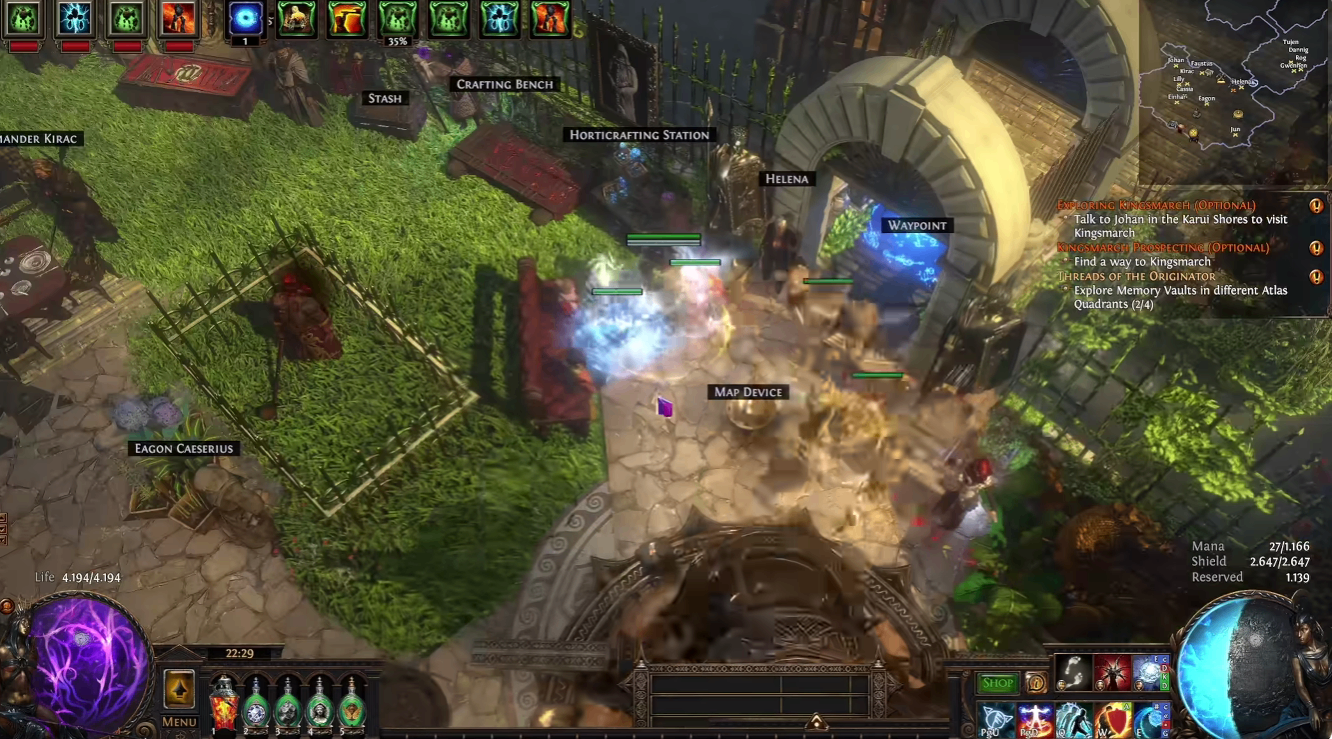
When you're done with the cluster and an exclamation mark appears over Egan, click him, open the memory ward, and take the most valuable reward.
Step 4: Handle Anomalies
Winter Storm Box:
Open it, but keep an eye on the gold cost—it multiplies each time you open it.
If it gets too high (over 200k), use the lockpick option at the bottom to destroy it and get a 25% chance at another reward.
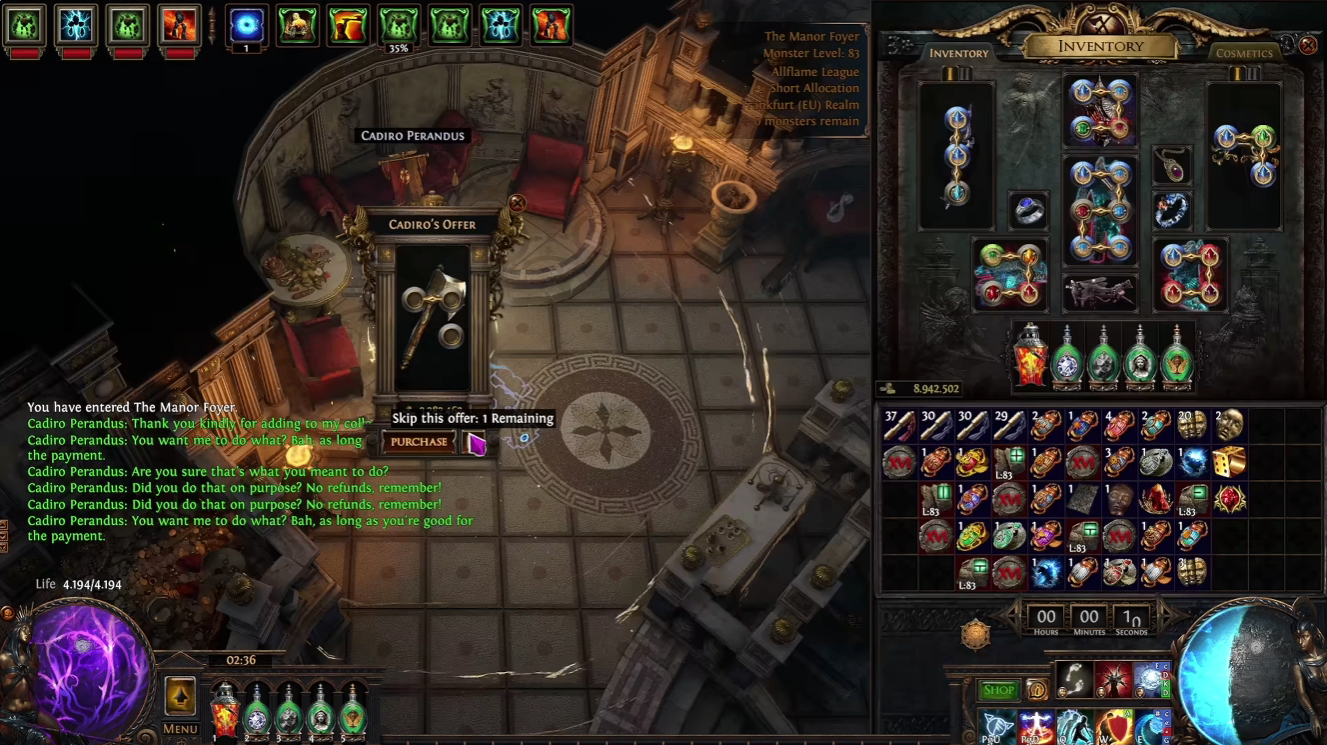
Kadira (Mana Foyer):
Shows 8 uniques. Only take ones worth a lot—really rare ones can cost millions of gold.
If you can't afford them, come back later.
If there's nothing good, reject the last offer so the instance can reset.
Gambling District:
Open it on the Atlas. You don't need a map for this.
Step 5: Vendor's Strong Box
Complete the encounter by using the lockpick or opening all of them. If you don't take an offer, the instance stays there so you can return later.
Profit Breakdown: 4-Hour Test Run
Stats
534 maps run
85 Astrolabes completed
19-20 anomalies done
Costs
Maps: 2 chaos each × 534 = 1,068 chaos
Astrolabes: 104 chaos each × 85 = 8,840 chaos
Total cost: roughly 9,908 chaos
Revenue
158 divines plus a stack of chaos (excluding Soul Taker, which was a lucky drop)
Flasks, charts, and memory maps were added back in since wealthy exile doesn't include them at the time
Soul Taker was removed from the calculation since it made up a large portion of profits
Results
38.71 divines per hour at recording time
Slightly over 40 divines per hour with current Astrolabe prices
Over 50 divines per hour if you count the Soul Taker drop
Gold Cost
Winter Storm box alone: 1.64 million gold
Buying Soul Taker: bumps total gold cost to almost 5 million gold
You can lower gold costs by using the lockpick as soon as the cost approaches 100k.
Key Tips
Map count per Astrolabe: The lowest was 5 maps (if it hits all four connecting maps and then Mesa when no other is left). The worst case is 9 maps.
Anomaly spawns: They have independent spawn chances, so you can get multiple from one map completion.
Gold management: If you can't afford something from Kadira or the strong box, come back later—but you won't get a new anomaly of that type as a consequence.
Memory rewards: The bottom-left quadrant has the most consistent currency-only rewards.
Map quantity: Rare maps with quantity increase anomaly spawn chance.
Final Thoughts
This Astrolabe + boss rushing strategy is one of the most reliable currency farms in PoE right now. It works on any build, requires minimal Atlas investment beyond Synthesized Stability, and scales with map quantity. The Atlas anomalies add a jackpot layer that can push your hourly rate well past 40 divines.
If you're looking for a consistent, low-effort farm that doesn't require a specialized build, this is it. Just keep an eye on your gold costs, use the lockpick when prices get too high, and always have an Astrolabe applied. And if you'd rather skip the grind and just buy POE currency to fund your next build, MMOEXP is a trusted marketplace worth checking out.