




Summary
College Football 27 Dynasty has changed significantly after recent updates. With the instant-commit recruiting glitch removed, player progression and NIL management are becoming more important. Here’s how saving development points can reshape recruiting, roster building, player retention, College Football 27 Coins, and draft strategy.
College Football 27 Dynasty Has Changed
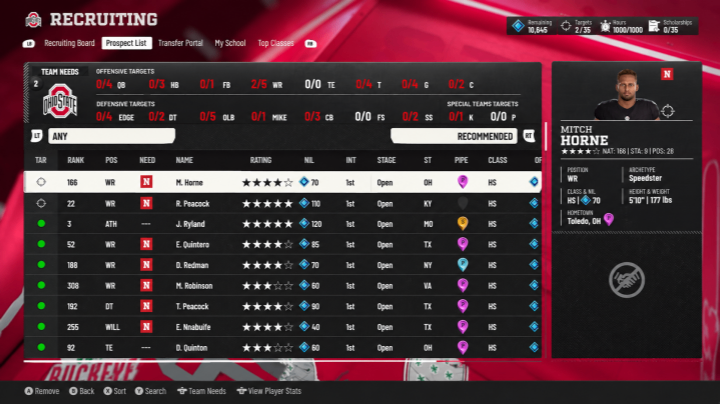
Recent updates have quietly changed the way players should approach College Football 27 Dynasty. One of the biggest changes is the removal of the infamous recruit instant-commit glitch, which previously allowed users to manipulate scholarships and repeatedly trigger instant commitments.
With that strategy gone, Dynasty players need to think more carefully about recruiting, player development, NIL spending, and roster management. The good news is that another progression mechanic can provide much more control over how your roster develops.
The Instant-Commit Recruiting Glitch Is Gone
For a period of time, players could repeatedly add a recruit to their board, remove the player, and re-offer a scholarship. By repeating the process, users could eventually trigger an instant commitment.
This created a major imbalance in recruiting. Larger programs with more highly rated prospects on their boards could potentially build enormous recruiting classes almost immediately.
The mechanic was especially problematic in online Dynasty leagues because one player exploiting it could dramatically affect the recruiting landscape for everyone else. Smaller programs also had fewer opportunities to take advantage of the mechanic because they generally had fewer elite prospects available.
Recent updates have removed this behavior. That means Dynasty players can no longer rely on repeated scholarship offers to fill their recruiting classes instantly.
As a result, traditional recruiting strategy once again matters more.
Player Progression Is Now a Major Dynasty Tool
One of the most interesting mechanics discussed in the recent Dynasty update involves training points and player progression.
When automatic player progression is handled differently around the training-results period, players can retain development points rather than having them automatically spent on upgrades they may not want.
This can be extremely useful because the game normally decides how available points are distributed when a player reaches the training stage.
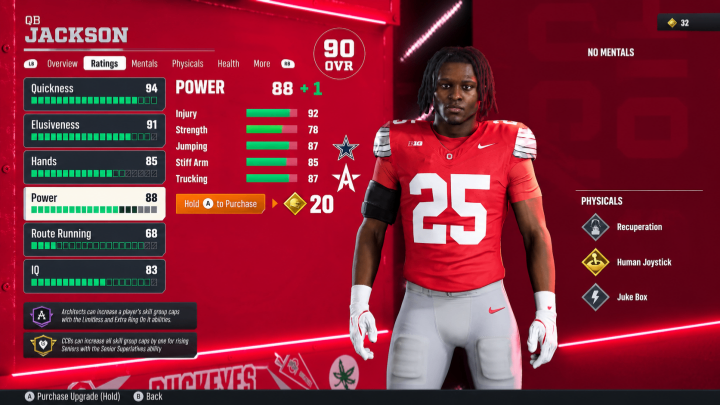
Imagine a running back who needs 20 points for a major speed upgrade. If he reaches the progression period with only 18 points, those points may be automatically spent on attributes such as route running, awareness, or other upgrades.
Those upgrades could improve his overall rating without necessarily improving the specific traits you actually need.
Saving progression points gives you more control.
Why Hoarding Progression Points Matters
The biggest advantage is simple: you can save points for the upgrades that actually matter.
Instead of allowing a player to receive several smaller upgrades, you can potentially accumulate enough points for a significant attribute increase later.
For example, a young quarterback may not need to become a starter immediately. Rather than rapidly increasing his overall rating, you can preserve his progression points while allowing him to develop behind an established starter.
The result can be a much more controlled roster-development system.
This is particularly valuable for Dynasty players who recruit several talented freshmen every year but don't expect most of them to become immediate starters.
NIL Management Could Be the Biggest Advantage
The progression strategy becomes even more interesting when combined with the NIL system.
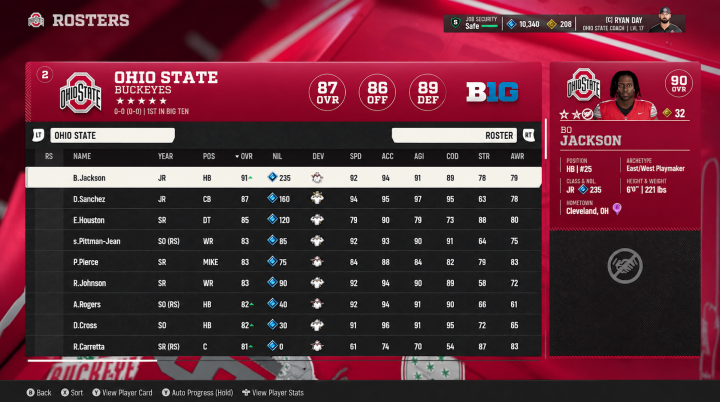
A player's overall rating, development, and role can affect how expensive it is to retain him. Rapidly increasing a young player's overall rating can therefore create additional roster-management pressure.
Instead, keeping a player at a lower overall rating while accumulating development points can potentially help control those costs.
Consider a freshman quarterback who enters your program as a backup. You may not need him to jump dramatically in overall rating during his first season.
By preserving his progression points, you can potentially keep his rating relatively stable while he develops behind the scenes. Later, when he is finally ready to become your starter, those saved points can be used to make a much larger improvement.
This creates a different approach to Dynasty development: develop players strategically rather than automatically.
Build Your Roster Around Timing
This strategy also highlights an important Dynasty principle: not every highly rated recruit needs to play immediately.
A freshman may spend one or two seasons as a backup before becoming a starter. During that time, his development can be managed around your roster's needs.
Instead of spending every available point immediately, you can think several seasons ahead.
For example:
Freshman: Recruit and preserve development points.
Sophomore: Continue development while remaining behind a veteran.
Junior: Prepare the player for a starting role.
Senior: Spend accumulated points and maximize production.
This approach can help create a more sustainable roster while reducing the pressure created by NIL management.
Draft Strategy Can Also Change
Player progression can influence more than just NIL. It can also affect how players move toward the NFL Draft.
Increasing a player's overall rating can make him more likely to become a draft candidate. That sounds positive, but it can also create a problem if you wanted to keep the player for another season.
A player who receives unnecessary upgrades may become more valuable to the draft system before you're ready to lose him.
By controlling when development points are spent, Dynasty players can potentially delay major overall increases until the appropriate stage of the player's career.
Then, when the player is ready to leave, accumulated points can be used to make a significant final jump.
Why This Matters for Dynasty Leagues
The removal of the recruiting glitch changes the competitive environment, but the progression system could make Dynasty management even more strategic.
Recruiting is no longer simply about finding the best prospects. Players also have to consider when those recruits should develop, when they should become starters, how much NIL they will require, and when they should enter the draft.
That makes roster management an important part of long-term Dynasty success.
Offline players can use these mechanics to gain more control over their programs. Online leagues may need to establish their own rules regarding progression strategies, especially if certain mechanics are considered exploits by league members.
Final Thoughts
The latest College Football 27 Dynasty changes make recruiting less dependent on the old instant-commit glitch and put more emphasis on long-term roster management.
For players looking to build a sustainable Dynasty, progression points, NIL costs, player development, cheap College Football 27 Coins, and draft timing are becoming increasingly interconnected. Instead of automatically upgrading every player as soon as possible, think about when each player actually needs those upgrades.
The biggest lesson is that Dynasty is not just about recruiting five-star prospects. It is about managing those players for multiple seasons and deciding exactly when their development should accelerate.
If EA continues adjusting these systems, Dynasty players should also keep an eye on future updates, because progression, recruiting, and NIL mechanics could continue to change the optimal way to build a championship roster.