




Summary
EA Sports released a surprise Week 1 roster update for College Football 27 in mid-September 2026, marking a pivotal shift in the franchise’s live-season support model. Unlike previous series entries with sparse mid-season tuning, CFB 27 now delivers consecutive early-season rating adjustments tied directly to real-game college football performances. This update features star player overall boosts, double-digit attribute jumps for breakout freshmen, targeted minor downgrades, and position-specific meta shifts. Though a roster-only patch separate from the September 3 gameplay title update, this live tuning keeps in-game rosters fresh, refines dynasty mode depth charts, and creates new viable team builds for casual and competitive players looking to maximize their College Football 27 Coins for roster development and progression.
Update Context: New Live Season Support Model
This Week 1 patch follows two major pre-season updates that reshaped the game’s launch roster foundation. A pre-Week Zero overhaul added over 1,900 missing players, corrected jersey numbers, and fixed inaccurate depth charts for all programs.
The September 3 title update focused purely on gameplay quality of life, including improved receiver separation, refined man coverage mechanics, new Road to Glory legend templates, and expanded Dynasty mode features.
The latest Week 1 release is exclusively a performance-based roster refresh. For the first time in recent College Football franchise history, EA is deploying consistent early-season live tuning, mirroring Madden’s established weekly rating update system. While official weekly updates are not confirmed long-term, back-to-back early-season patches signal a new commitment to seasonal accuracy.
Star Player Major Rating Upgrades
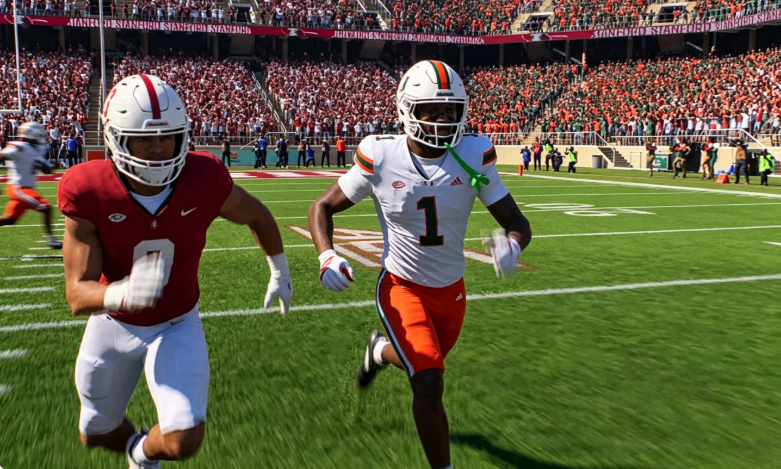
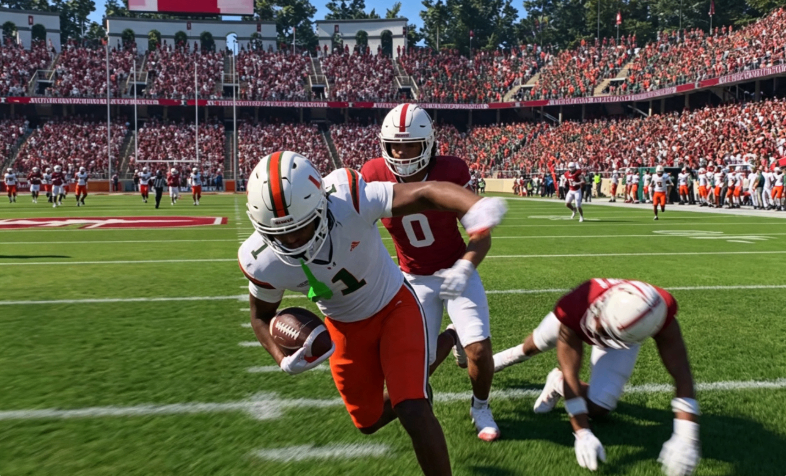
Top collegiate performers received well-deserved overall and attribute boosts that shift the game’s elite meta. Miami wide receiver Malachi Tony leads all upgrades, climbing from 96 to 97 overall after a dominant Week 1 showing.
Tony gains +2 awareness (87), +4 catching (84), and improved route running and traffic catching stats, placing him just two points away from a 99 overall rating. His teammate Darian Mensah also rises from 91 to 92 overall, forming one of the game’s most dangerous QB-WR duos.
Texas football sees multiple key upgrades. Cam Coleman jumps to 93 overall, linebacker Raheem Bowles hits 93, and Ryan Wingo climbs to 88 overall. Standout receiver AJ Duff also reaches 93 overall, making wide receiver the most improved position group in this patch.
Breakout Prospect Double-Digit Attribute Jumps
The most impactful changes target underrated breakout players, with several low-rated athletes earning massive stat corrections based on real Week 1 production. UMass quarterback William Pap Watson III secures the largest overall jump, rising five points to 75 overall.
Watson’s elite in-game improvement is reflected in double-digit attribute gains: +6 awareness, +11 break sack, and +10 break tackle ratings. These adjustments transform him from a backup placeholder to a viable developmental dynasty quarterback.
Pittsburgh’s quarterback earns a three-point upgrade to 85 overall with improved deep accuracy and pressure-throwing stats. Michigan receiver J.J. McCarthy jumps from 78 to 81 overall, highlighted by a +4 spectacular catch boost to 91 and upgraded jumping and deep route ratings.
Position-Specific & Secondary Player Changes
Multiple skill-position and defensive players received meaningful tweaks that alter team depth and in-game viability. Navy guard Cam Nichols rises three points to 89 overall, bolstering mid-tier offensive line meta options.
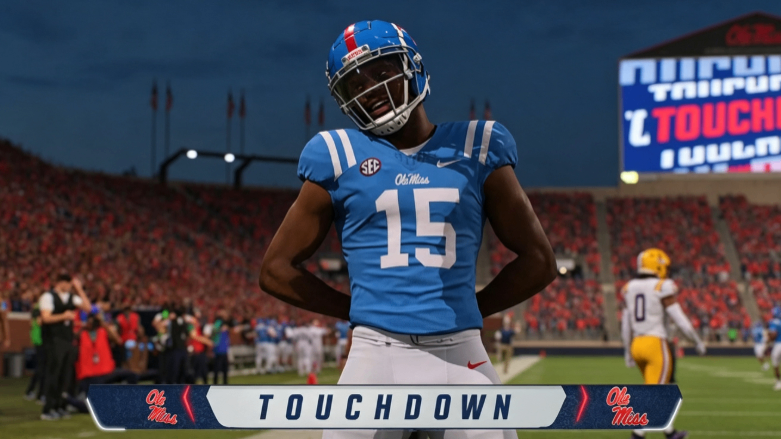
Ole Miss receiver Deuce Alexander gains two overall points and a critical +2 speed boost to 94, drastically improving his deep-threat effectiveness. Florida running back Jaden Baugh climbs to 92 overall with enhanced juke and change-of-direction stats, while Duke’s Nate Shepherd reaches 91 overall.
Notable defensive upgrades include Notre Dame corner D.J. McKinley and LSU edge rusher Princewill hitting 90 overall. Speed and agility adjustments prove far more gameplay-altering than minor overall rating bumps, reshaping on-field player performance.
Measured Player Downgrades & Balancing Logic
EA implemented conservative, performance-based downgrades for underperforming stars, prioritizing cautious tuning to avoid overcorrection from single-game results. Oklahoma State QB Drew Allar drops one point to 88 after a quiet Week 1, though his strong Week 2 performance sets him up for a quick rebound in future patches.
Clemson receivers T.J. Moore (88) and Brian Wesko Jr. (87) receive minor downgrades following the team’s offensive struggles versus LSU. Colorado defensive back Bo Carter and Alabama lineman Michael Carroll also see slight rating reductions.
LSU’s running back room features mixed changes, with one back upgraded for increased snap count while Harlem Berry and Kaden Durham drop slightly due to limited Week 1 usage. EA’s balanced approach avoids harsh penalties for game-plan limited or injury-affected performances.
Player Recommendations & Dynasty Strategy Shifts
Dynasty mode players should restart saves with updated Week 1 rosters to capitalize on corrected breakout prospect ratings. Low-rated players with double-digit attribute jumps offer elite long-term developmental value.
Casual Play Now users should prioritize upgraded Miami and Texas offensive units for dominant modern meta gameplay. Monitor downgraded players closely for rebound performances likely to trigger quick rating reversals in future updates.
Focus on speed and agility boosted players over minor overall rating increases, as these athletic attributes directly impact in-game movement and playmaking consistency.
Final Verdict
The College Football 27 Week 1 roster update represents a landmark improvement for the franchise’s live-season support model. By tying in-game ratings directly to real-week collegiate performance, EA eliminates the roster stagnation that plagued previous series titles. Measured star upgrades, transformative breakout prospect buffs, and conservative downgrades create a balanced, authentic gameplay experience. If continued throughout the 2026 season, these regular roster refreshes will keep College Football 27 fresh, dynamic, and far more accurate than any prior entry in the franchise. Players looking to optimize their rosters and support ongoing team progression can also buy College Football 27 Coins for additional in-game resources.