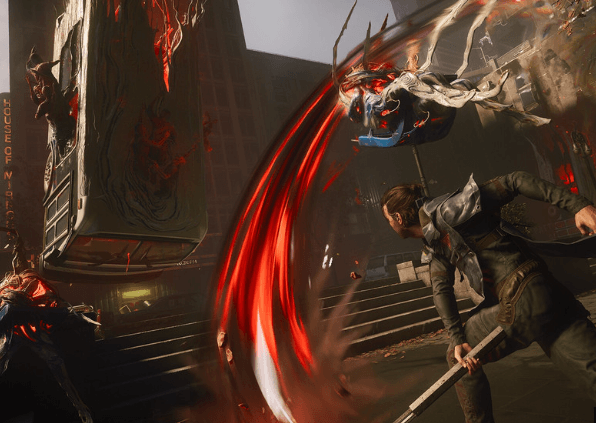










In the endgame of Path of Exile, challenges are far more than optional tasks—they are a structured test of knowledge, efficiency, and adaptability. Each new league introduces around 40 challenges that push players across nearly every system the game has to offer. Completing them rewards exclusive cosmetics and a progressively evolving trophy that visually represents a player’s dedication and mastery of the league.
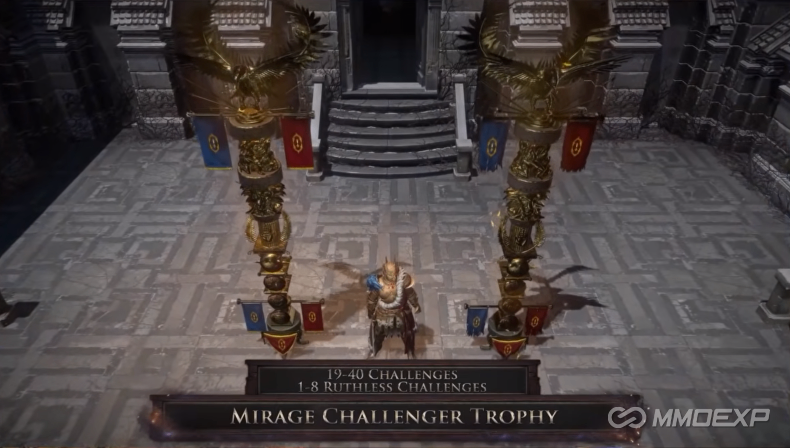
But while most players experience these challenges in standard or POE currency, there is a much harsher version of the system hidden inside Ruthless mode. And there, the concept of “challenge” takes on an entirely different meaning.
The Philosophy of Challenges in Path of Exile
In a standard league, challenges are designed as a guided tour through the ecosystem of Path of Exile. Players are encouraged to interact with mechanics like mapping, league encounters, bossing, crafting, and currency systems. Even casual progression naturally completes many objectives.
However, the deeper design purpose is learning. By completing challenges, players are forced to engage with systems they might otherwise ignore—forcing build adaptation, economic understanding, and mechanical skill development.
But Ruthless mode strips away much of the comfort that makes this process gradual.
Ruthless Mode: Where 8 Challenges Feel Like 80
Ruthless mode redefines progression entirely. Instead of 40 challenges, players are given only eight. On paper, this sounds significantly easier. In reality, it is the opposite.
Every challenge is deliberately tuned to be extreme. Even something as simple as reaching level 90 becomes a major endurance test due to reduced loot, harsher progression curves, and limited resources. Other objectives, such as defeating multiple Uber bosses, push even experienced players into territory that most softcore players never attempt.
In this environment, completing even half of the challenges is considered a serious achievement. It is less about efficiency and more about deep system mastery.
At the center of this journey is a progression arc that often looks something like this: gradual mapping improvement, targeted farming strategies, extreme economic discipline, and eventually boss-focused optimization.
Scarabs, Breach, and the Economy of Efficiency
One of the more accessible Ruthless challenges involves the use of scarabs—consumable modifiers that enhance maps. In practice, using 150 scarabs sounds simple, but scarcity in Ruthless makes even basic resources meaningful.
Scarabs naturally push players into efficient mapping loops. Many players gravitate toward mechanics like Breach, which remains one of the most consistent sources of value. Breach encounters provide dense monster packs, strong loot conversion, and high currency potential relative to time investment.
Within this system, players often begin shaping their entire build and atlas strategy around a single goal: maximizing returns from limited resources. Scarabs become less of a modifier and more of a pacing mechanic, controlling how often meaningful reward spikes occur.
The Hidden Complexity of Map Quantity
The sixth challenge, Astral Aggression, introduces one of the most misunderstood systems in Path of Exile: item quantity scaling in maps.
At a surface level, quantity determines how many items drop. But under the hood, it is influenced by multiple overlapping systems:
Map modifiers (up to six or more in corrupted maps)
Atlas completion bonuses
Fragment usage
Corruption outcomes
Special mechanics like Alva rooms and temple rewards
In standard leagues, sacrifice fragments can provide significant boosts. In Ruthless, however, their effectiveness is heavily reduced, making optimization far more punishing.
Even map corruption, which can add additional quantity bonuses, becomes a gamble rather than a reliable strategy.
The result is a constant balancing act: players must push map difficulty high enough to reach required thresholds while still maintaining survivability and clear speed.
Alva, Incursion, and Fragment Scarcity
A major bottleneck in Ruthless progression comes from fragment acquisition. Without standard side mechanics providing consistent supply, players must rely heavily on Incursion content through Alva.
Upgrading rooms in the Temple of Atzoatl becomes critical, especially tier-three reward rooms that can contain valuable fragments. Additional sources like corrupted spirit encounters or rare strongboxes exist, but they are unreliable at best.
This scarcity turns what would normally be supplementary systems into core progression paths. Entire farming strategies can revolve around sustaining fragment generation just to meet challenge requirements.
Astral Aggression: Breaking the 50% Barrier
The sixth challenge requires completing maps with at least 50% quantity while breaking astral chains—a requirement that forces players into extreme optimization.
In Ruthless, the problem is simple but brutal: even high-rolled maps rarely reach sufficient quantity on their own. A typical rare map might sit between 16% and 30% quantity depending on modifiers. Hitting 50% requires stacking every available source:
High-tier map mods
Fragment bonuses
Corruption implicits
Atlas passives
Occasional rare item modifiers
Reaching consistency is the real difficulty. It is not enough to achieve 50% once; players must repeatedly construct maps that meet or exceed the threshold while still being completable.
This turns Astral Aggression into a long-term resource planning challenge rather than a mechanical one.
The Final Push: 70% Quant Nightmare Maps
The seventh challenge escalates everything further. Now, players must complete 30 Nightmare or Originator maps with 70% quantity or higher.
This requirement pushes the system beyond normal optimization into near-perfect stacking territory. Not only must maps be heavily rolled, but players must also ensure survivability in some of the most dangerous content available.
At this stage, gearing becomes just as important as mapping strategy. Defensive layers like suppression caps, chaos resistance, and physical mitigation are no longer optional—they are mandatory.
Upgrading equipment often becomes a parallel progression track. Even small improvements in boots, body armour, or weapons can determine whether a build is capable of surviving consistent high-quant content.
Gear, Economy, and the Final Weapon Problem
Weapon upgrades in Ruthless often define entire progression phases. In many cases, players discover that earlier “high-value” purchases end up being inefficient compared to more specialized drops.
Linking items becomes another major bottleneck. Without reliable crafting tools, players must rely on farming fusings through strongboxes, trading buy Path of exile currency, or rare omen effects that guarantee links.
Even something as simple as a six-link weapon can become the defining milestone between failing and completing late-game challenges.
Uber Bosses: The Final Wall
The final challenge—defeating five out of ten Uber bosses—is where everything converges.
Uber bosses in Path of Exile represent the peak of mechanical and statistical difficulty. They require:
Fully optimized builds
High survivability thresholds
Deep fight knowledge
Consistent execution under pressure
In Ruthless, this becomes even more extreme due to limited access to gear, crafting, and currency.
For many players, this final challenge is where progression ends—not because of lack of skill, but because of resource constraints.
Conclusion: Why Ruthless Challenges Matter
The Ruthless challenge system is not just harder—it is fundamentally redesigned to test mastery in its purest form. Every system in Path of Exile becomes interconnected: mapping, crafting, economy, bossing, and resource management all collapse into a single progression loop.
Where standard leagues teach efficiency, Ruthless demands perfection under scarcity.
And that is what makes completing even a fraction of these challenges meaningful. It is not about rewards or cosmetics—it is about proving that every system in the game has been understood, optimized, and ultimately survived.
For those who push all the way to the final Uber boss challenge, the accomplishment is less about finishing content—and more about mastering one of the most punishing ARPG experiences ever designed.