




Summary
Expedition is a powerful currency farming strategy in Path of Exile 2 because it combines guaranteed rewards from Remnants and Chests with valuable monster drops. The key is to use a fast setup for Travel Maps, then choose between a budget or high-end strategy for Grand Expeditions based on your character's strength.
This guide covers the recommended Expedition setup, tablet priorities, Atlas Master choices, and the best ways to approach Travel Maps, Grand Expeditions, and bosses. To fund the tablets needed to sustain strategy, buy POE2 Currency and keep your Expedition runs efficient.
How PoE 2 Expedition Works
First, progress through the King's March content to unlock access to the ocean. You can then use Expedition Logbooks on uncharted waters to explore deeper and unlock additional Expedition encounters.
Use Sagas for Guaranteed Bosses
Sagas can guarantee specific Expedition boss encounters. The Olroth Saga is particularly useful because it costs less than half a Divine Orb while guaranteeing an Olroth fight.
Olroth can drop expensive Lineage Gems, making the Saga a relatively low-cost way to access potentially valuable rewards.
You should also watch for strong Expedition destinations such as Cold as Ice, Origin of the Fallroth, and Starrinker Secluded Temple. Cold as Ice is particularly useful because it provides a strong Expedition encounter and a large number of Remnants.
Travel Map Farming Setup
Travel Maps should be completed as quickly as possible. Instead of adding a mechanic that requires you to stop and wait for extra monsters, use content that fits naturally into your normal map route.
Delirium Setup
Delirium works well for this purpose. Open the Delirium Mirror, run through the map normally, reach the boss, kill it, and end the Delirium encounter.
The advantage is that you gain additional Simulacrum Splinters without significantly changing how you clear the map. The source estimates roughly one-third of a Divine Orb in additional value per map.
For tablets, prioritize modifiers such as:
Rarity
Effectiveness
Monster rarity
Rare monsters
Increased Fracturing Mirrors
Increased Simulacrum Splinters
Increased Unique Monsters
These modifiers increase the amount of valuable loot and Simulacrum Splinters generated during your normal map clear.
Six-mod maps are sufficient for this setup. You don't need to heavily invest in Travel Maps because the main objective is to move through them quickly.
Atlas Master Setup
Use the following Atlas Master setup:
Unexpected Missions
Eastern Knowledge
Partial Translations
Keen Appraisal
Eastern Knowledge improves Arisium Remnants, while Partial Translations provides additional tablet modifier effectiveness. Unexpected Missions adds more map modifiers.
For Delirium, prioritize the node that enables Simulacrum Splinter drops. The remaining Delirium nodes are useful but aren't mandatory for this farming setup.
Grand Expedition Farming
Grand Expeditions are where you can substantially increase your currency output. Your main investment should go into Radiate Tablets, map quality, and Remnant selection.
Tablet and Map Preparation
For Radiate Tablets, prioritize combinations of:
Rarity
Effectiveness
Rare monsters
Monster rarity
The source describes these tablets as relatively inexpensive when spread across multiple maps, keeping the effective cost per map low.
You can use normal six-mod maps, or roll them with Chaotic Quantity. This removes pack size from the possible map modifiers, allowing you to focus on more useful modifiers. Roll several maps at once to make preparation faster.
Keep the same Atlas Master setup:
Unexpected Missions
Eastern Knowledge
Partial Translations
Keen Appraisal
Tier 16 maps are especially valuable because the setup can provide item level 82 bases, which can be crafted or sold.
Budget and High-end Variations
The most important choice for Grand Expeditions is deciding how much you want to invest and how much difficulty your build can handle.
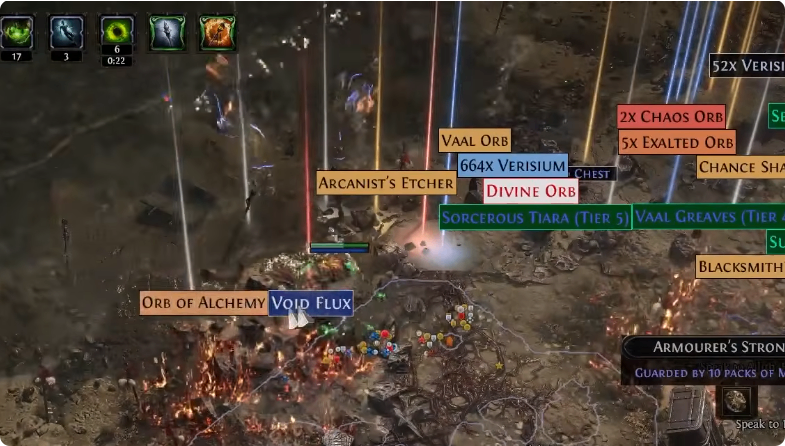
Budget Variation: Chest-Focused Expedition
The budget strategy is designed for characters that aren't strong enough to comfortably handle maximum Expedition juice.
Instead of trying to stack numerous dangerous Remnant modifiers, focus on valuable Chests and good Remnants.
Prioritize:
1. Currency Chests
2. Golden Chests
3. Valuable Remnants
4. Easy-to-reach rewards
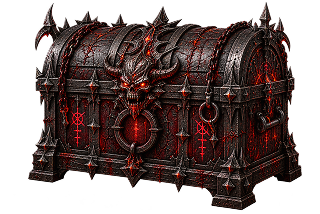
Currency Chests provide increased currency rewards, while golden gear Chests can guarantee Exceptional items.
For each Remnant, check the available rewards. If the Remnant is valuable, take it. If it is poor, reroll or skip it and move toward the next valuable Chest.
The basic rule is simple:
Good Remnant = take it.
Bad Remnant = skip it.
Valuable Chest = prioritize it.
This was the approach used during the early part of the source strategy and provides a straightforward way to generate currency without creating extremely dangerous monsters.