









Summary
High investment does not automatically guarantee success in Path of Exile 2. Even builds worth thousands of Divine Orbs can fail against specific rare monster modifiers or encounter mechanics if their defensive layers are incomplete. This guide explains why expensive characters still die, how dangerous rare monsters work, and what practical adjustments can improve both survivability and efficiency without relying solely on higher gear investment.

Expensive Gear Cannot Replace Defensive Fundamentals
One of the most common misconceptions in Path of Exile 2 is that continuously upgrading equipment will eventually eliminate most gameplay risks. While stronger weapons and premium unique items greatly increase damage output, they do not automatically solve weaknesses in defense.
Many high-budget builds focus heavily on maximizing offensive scaling, leaving little room for defensive redundancy. When such characters encounter rare enemies with multiple dangerous modifiers, they can be defeated surprisingly quickly despite their enormous investment.
A balanced build should include several defensive layers rather than depending on a single source of mitigation.
Why Rare Monsters Can Be More Dangerous Than Bosses
Rare monsters are among the most unpredictable enemies in PoE 2 because their modifiers can combine into highly lethal encounters.
Certain modifier combinations may provide:
Extremely high elemental resistance
Increased maximum elemental resistance
Immunity to critical strikes
Defensive shields that limit ranged damage
Powerful supporting minions
High mobility or teleportation abilities
Individually, these modifiers may be manageable. However, several appearing together can dramatically increase encounter difficulty, sometimes exceeding that of map bosses.
Instead of assuming every rare enemy can be defeated through raw damage alone, players should evaluate dangerous modifiers before committing to a fight.
Understand Encounter Mechanics Before Forcing Damage
Some encounters require understanding mechanics rather than simply increasing DPS.
For example, enemies protected by invulnerability phases often require supporting monsters to be defeated first before damage can be applied to the primary target. Other encounters may demand precise positioning or timing windows instead of continuous attacks.
Attempting to ignore these mechanics frequently results in unnecessary deaths, regardless of character investment.
Learning encounter rules usually provides greater consistency than adding another expensive equipment upgrade.
Build Around Reliable Defense Instead of Maximum Damage
Players often prioritize offensive statistics because they produce faster map clear speeds. However, sacrificing survivability eventually reduces overall efficiency through repeated deaths and failed encounters.

A reliable endgame build should balance multiple defensive systems, including:
Elemental resistance caps
Maximum resistance improvements
Physical damage mitigation
Crowd control avoidance
Recovery through regeneration or leech
Mobility for repositioning
These defensive layers work together to reduce the impact of dangerous rare monster combinations while maintaining stable mapping performance.
Efficient Progression Is More Valuable Than Extreme Investment
The showcased high-cost build demonstrates that spending thousands of Divine Orbs does not necessarily produce proportional improvements in real gameplay performance.
Many moderately priced builds are capable of clearing endgame content efficiently because they allocate resources more evenly between offense, defense, and utility.
For most players, improving gameplay knowledge, encounter awareness, and defensive planning provides a much greater return than chasing the most expensive equipment available.
Managing POE 2 Currency carefully allows players to strengthen multiple areas of a build instead of investing nearly all available resources into a few premium items that offer diminishing practical benefits.
Exploits and Farming Methods Should Be Evaluated Carefully
The discussion also references farming strategies, encounter manipulation, and various community-discovered methods for increasing rewards.
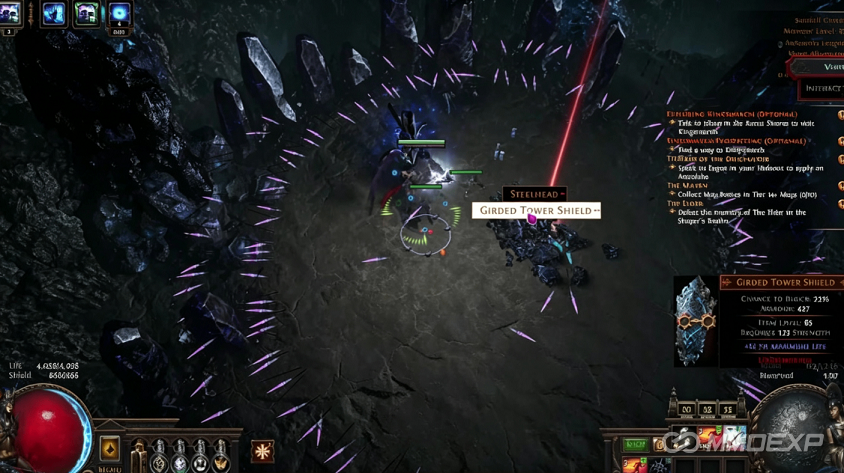
While some techniques may temporarily improve farming efficiency, they can depend on unintended game behavior or mechanics that may later be adjusted by future updates.
Players looking for long-term progression should prioritize repeatable farming strategies built around stable mechanics rather than relying on temporary exploits.
Continuous Build Optimization Produces Better Results
Successful Path of Exile 2 players frequently refine their characters instead of treating a build as finished after acquiring expensive gear.
Regular optimization may include:
Replacing inefficient passive choices
Adjusting skill gems
Improving defensive statistics
Optimizing attack speed and recovery
Testing alternative equipment combinations
Small improvements across multiple systems often provide greater overall performance than a single expensive upgrade.
Conclusion
Path of Exile 2 rewards balanced character design more than raw equipment value. Expensive builds can still struggle against dangerous rare monster combinations when defensive layers or encounter knowledge are lacking. By understanding enemy mechanics, investing resources efficiently, and continuously optimizing both offense and defense, players can achieve more reliable endgame progression while making better use of their overall investment.