






Summary:
PoE 3.29 makes Breach Fortresses one of the strongest low-effort farming strategies, offering huge amounts of Blood, Womb Gifts, raw currency, valuable Foul uniques, and crafting bases with a cheap Scarab setup.
Why Breach Fortresses Are So Strong in PoE 3.29
Path of Exile 3.29 has changed the Breach farming meta, especially after the significant nerfs to Unstable Breaches. While Unstable Breaches have lost much of their previous power, Breach Fortresses remain extremely rewarding and surprisingly easy to farm.
The biggest advantage is consistency. A Breach Fortress produces wave after wave of monsters, giving you plenty of opportunities to collect Hive Blood, Womb Gifts, POE currency, rare items, and valuable crafting bases. Unlike some complicated farming strategies, Breach Fortresses can also be played with relatively little attention once the encounter starts.
This makes the strategy particularly attractive for players who want strong currency generation without constantly micromanaging mechanics.
Breach Fortress vs. Unstable Breach
The most important reason to consider this strategy in PoE 3.29 is the difference between Fortresses and Unstable Breaches.
Unstable Breaches were heavily affected by the 3.29 balance changes, while Fortresses largely escaped the same level of nerfs. As a result, the value proposition has shifted heavily toward Fortresses.
Fortresses also have a very cheap entry cost. The core strategy requires only one essential Breach Scarab, allowing players to invest their remaining Atlas resources into generic juice such as monster pack size, quantity, currency, and scarab modifiers.
For players farming the current Flame League economy, Breach Fortresses are therefore an excellent source of both league-specific rewards and general currency.
The Core Breach Scarab Setup
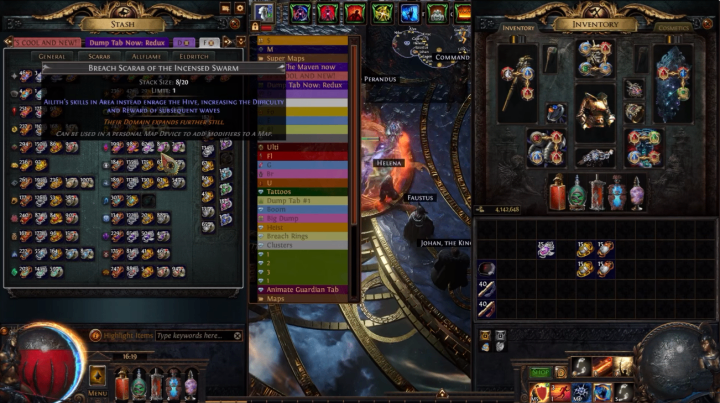
The most important Scarab is the Breach Scarab of the Marshal. Its primary purpose is to guarantee that your Breach Hives become Fortresses.
That is essentially the foundation of the entire strategy.
Many other Breach Scarabs are designed primarily around Unstable Breaches, meaning they provide little value when your goal is specifically to farm Fortresses. Resonant Cascade, Astrolabes, and several other mechanics are therefore not mandatory for this setup.
Instead, the remaining Scarab slots can be used for generic map juicing.
Two Monstrous Lineage Scarabs are particularly useful because they increase Magic Monster pack size. Since Fortresses already contain huge numbers of enemies, adding even more monsters can dramatically increase the final loot explosion.
Scarab of Wisps is another strong option. It adds additional power and rewards to monsters throughout the map. However, Wildwood and Wisps do not stack together effectively, so players should choose between them rather than attempting to combine both mechanics.
Alternative Eight-Mod Map Farming Setup
If Wisp Scarabs become too expensive, or your build struggles with the additional difficulty, there is an excellent alternative.
Use Cartography Scarab of Escalation together with a Corruption Scarab and focus on eight-mod maps.
This approach turns Breach Fortress farming into a strong source of high-quality maps while still allowing you to profit from the Breach encounter itself.
Eight-mod maps naturally provide more quantity and pack size, making them particularly valuable for Fortresses. Players who are not interested in maximizing every possible currency modifier can therefore use the strategy as a reliable map-farming engine.
Choosing the Best Maps
Breach Fortresses are flexible because the actual Fortress encounter remains largely the same regardless of which map you choose.
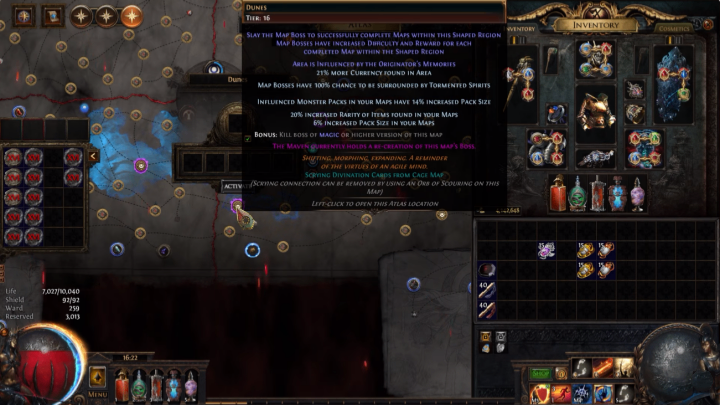
Fast maps such as Dunes can be excellent if you want to rush the map boss and reach the Fortress quickly. Longer maps can also work if you prefer more exploration and additional opportunities for map-based rewards.
The basic rule is simple: more map quantity, pack size, and rewarding modifiers generally means more profit.
Six-mod maps can work for weaker characters, but eight-mod maps are much better once your build is strong enough. Delirious eight-mod maps can push the strategy even further.
Tier 16.5 maps are particularly attractive because their increased pack size and other modifiers can significantly improve the number of monsters and rewards generated during the run.
One unusual advantage of Fortresses is that certain dangerous map modifiers may not function normally inside the Fortress itself. You can still benefit from the map's quantity and pack-size bonuses while some particularly annoying ground effects effectively become irrelevant during the main encounter.
Atlas Passive Tree Strategy
The Atlas Tree should focus heavily on Breach nodes that improve Fortresses, Hive Blood, Womb Gifts, monster numbers, and overall rewards.
You do not necessarily need 100% Breach chance from the Atlas Tree. The basic mechanic already provides a baseline chance, so you can use mechanic-blocking nodes to eliminate unwanted mechanics and reach the required Breach spawn rate more efficiently.
One important choice is Dimensional Foothold, which helps guarantee the Fortress-focused setup.
You should also prioritize nodes that increase the number of monsters and rewards inside Fortresses. Protracted Siege is especially interesting because its beneficial wave-related effect also improves Fortresses, despite its wording appearing to focus on Hives.
The goal is straightforward: maximize the number of enemies, increase Hive Blood and Womb Gifts, and improve the value of the final loot explosion.
Using Eldritch Altars and Mercenaries
Eldritch Altars provide another inexpensive layer of map juice. Quantity and duplication effects can apply to rewards generated inside the Breach encounter, making them particularly valuable.
Currency and Scarab duplication are especially useful because the rewards are gathered together at the end of the Fortress rather than requiring you to pick up every item during the encounter.
Mercenaries are another optional part of the strategy. You do not need them to make Breach Fortresses profitable, but they can contribute considerable damage during the final stages.
For players pursuing the Luminary Mercenary setup, investing in Mercenary Atlas nodes can also provide additional value. However, if you have no interest in Mercenaries, simply replace those points with Scarab or other generic farming nodes.
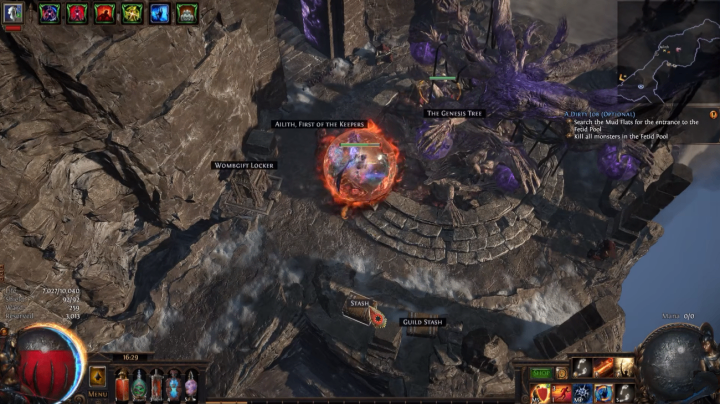
Genesis Tree: Where the Extra Profit Comes From
The Genesis Tree adds another layer of profitability to the strategy.
There are several major reward categories, including Womb Gifts, Unique items, and Currency. The Ancient and Unique categories generally offer some of the highest potential payouts.
For Womb Gifts, Ancient Gifts are particularly attractive. Some of the common Provisioning Gifts are less valuable individually, but they can be used to craft items such as boots and search for powerful fractured bases.
The ideal target is a high-end fractured movement-speed base. A good item with the right fracture can potentially sell for several Divine Orbs.
Farming Valuable Foul Uniques
The Unique section of the Genesis Tree is one of the most exciting parts of the mechanic.
Foul belts can potentially produce extremely valuable outcomes, while Foul jewels and shields can also have significant market value.
A strong setup can focus on two item categories at a time, such as Jewels + Belts or Jewels + Shields. This allows you to specialize your rewards instead of spreading your chances across too many item types.
Nodes that increase the chance of Foul items and provide lucky Unique outcomes are especially valuable. Extremely Foul can also create the possibility of multiple Foul modifiers, although these results are extremely rare.
This is essentially a high-risk, high-reward system where an exceptional result can potentially reach enormous values.
The Best Genesis Currency Setup
Currency Gifts are arguably the easiest Genesis reward type to convert into consistent value.
Fertile Genesis is one of the most important choices because it makes currency outcomes lucky, improving your chances of receiving the rarer result from each roll.
Prodigal Offspring provides additional opportunities for currency rewards, increasing the overall number of items generated.
The final choice involves deciding between a jackpot-oriented setup and Foul currency rewards. A jackpot strategy offers a chance at a massive payout, while Foul currency can provide a more specialized form of high-value RNG.
For most players, the lucky currency setup remains the safer and more attractive choice unless the market price of specific Foul currencies rises dramatically.
Final Verdict: Is Breach Fortress Farming Worth It in PoE 3.29?
Absolutely. Breach Fortresses have become one of the most appealing farming mechanics in PoE 3.29 because they combine low setup costs, massive monster density, reliable league rewards, raw currency, Genesis Tree profits, and flexible map choices.
The strategy works especially well on powerful builds capable of running eight-mod or Tier 16.5 maps, buy Path of exile currency, but it can also be scaled down for weaker characters.
If you want a farming method that is profitable without requiring constant mechanical attention, Breach Fortresses are one of the strongest options available in PoE 3.29. With the right Atlas setup, cheap Scarabs, strong map juice, and a focused Genesis Tree, every run can produce a large amount of Blood, Gifts, currency, and potentially extremely valuable Foul items.