





Summary
Path of Exile 3.29 end-league gameplay often revolves around high-stakes currency gambling to liquidate surplus assets before league termination. This in-depth analysis covers a massive 2,336 Divine gamble experiment, split between 1,000+ Message in a Bottle openings and high-value Mageblood double corruption. The full session reveals clear profitability gaps, hidden grind pitfalls, realistic drop expectations, and moderate net losses after two mirror-level investments. This article breaks down exact input and output values, compares the two gambling methods, and delivers practical end-league strategies for players looking to safely convert POE Currency without unnecessary risk.
Full Gamble Session Investment Breakdown
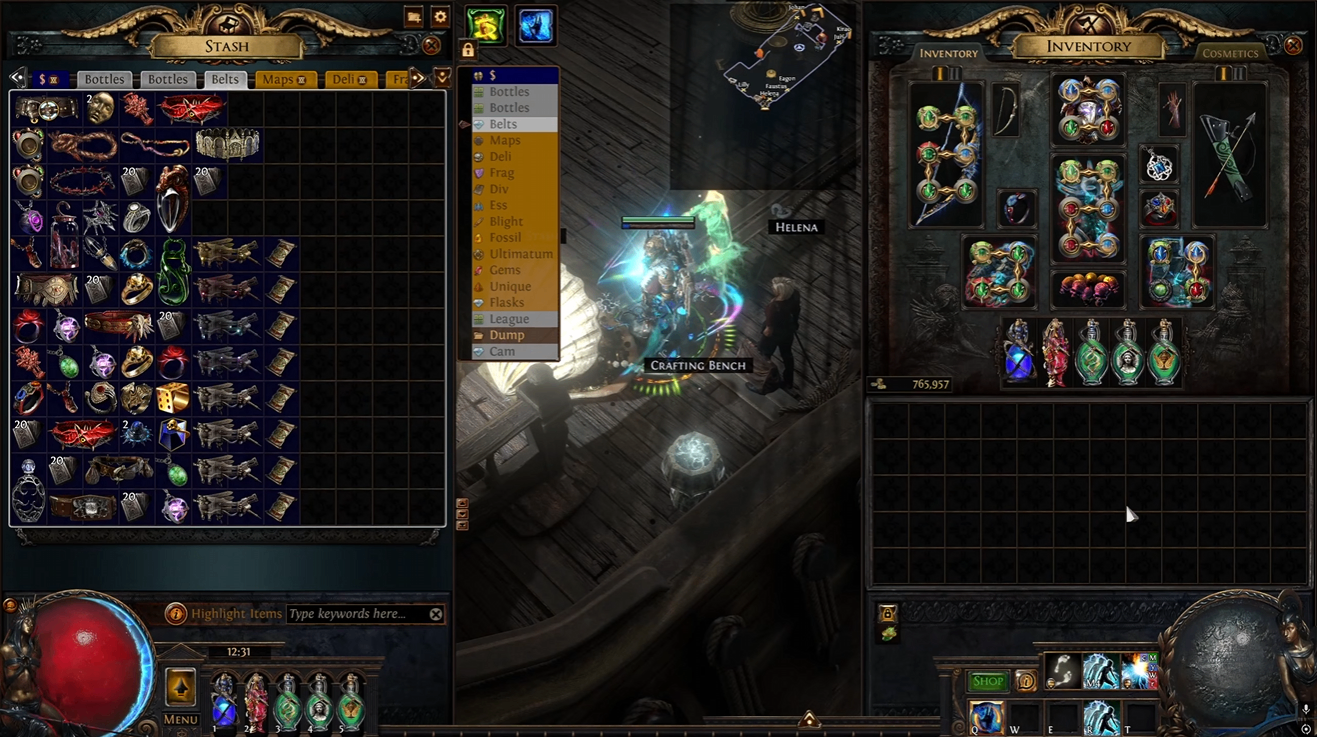
This end-league experiment utilized over two mirrors’ worth of in-game currency, totaling 2,336 Divines. The budget was split into two distinct high-risk activities to test two popular end-league gambling methods.
First, 400 Divines were allocated to opening more than 1000 Message in a Bottle consumables. Second, 1,936 Divines funded the purchase and double corruption of multiple Mageblood belts, eventually expanding to 10 total corrupted belts for consistent sample results. All capital originated from league-long gear liquidation, creating a realistic endgame player scenario for asset conversion testing.
The core goal was to validate whether mass bottle opening or Mageblood double corruption offers superior risk-to-reward ratios for players dumping end-league surplus currency before standard league wipe progression.
Message in a Bottle Opening: Exact Profit & Pitfalls
Mass Message in a Bottle openings represent a common casual end-league gambling method, favored for its constant small-drop excitement and frequent currency returns. However, the 3.29 bulk test proved consistently unprofitable for large-scale investments.
After opening the full batch of over 1000 bottles, the total return calculated to 267.5 Divines. Key loot included 133 raw Divines, 3181 Stacked Decks (valued at 48 Divines), 11 Reflecting Mists, 12 Fracturing Orbs, and two Colandre’s Touch rare unique items. Minor rare drops such as the Badge of the Brotherhood also appeared but offered negligible market value.
With a 400 Divine initial investment, this method resulted in a clear net loss of 132.5 Divines. Beyond financial loss, the process revealed a major practical downside: extremely time-consuming opening mechanics. Bulk bottle opening demands repetitive manual input, making it inefficient for players seeking fast end-league asset conversion.
Mid-session results showed promise with multiple high-value single drops ranging from 5 to 12 Divines, but consistent low-tier junk unique drops diluted overall profits and guaranteed a negative final margin.
Mageblood Double Corruption: High Risk, Moderate Loss Margin
Mageblood double corruption serves as the high-roller alternative to bottle opening, relying on rare double-implicit rolls for massive windfalls while accepting frequent total item destruction. The 3.29 test started with nine Magebloods and expanded to 10 total belts by selling low-value uncorrupted variants mid-session.
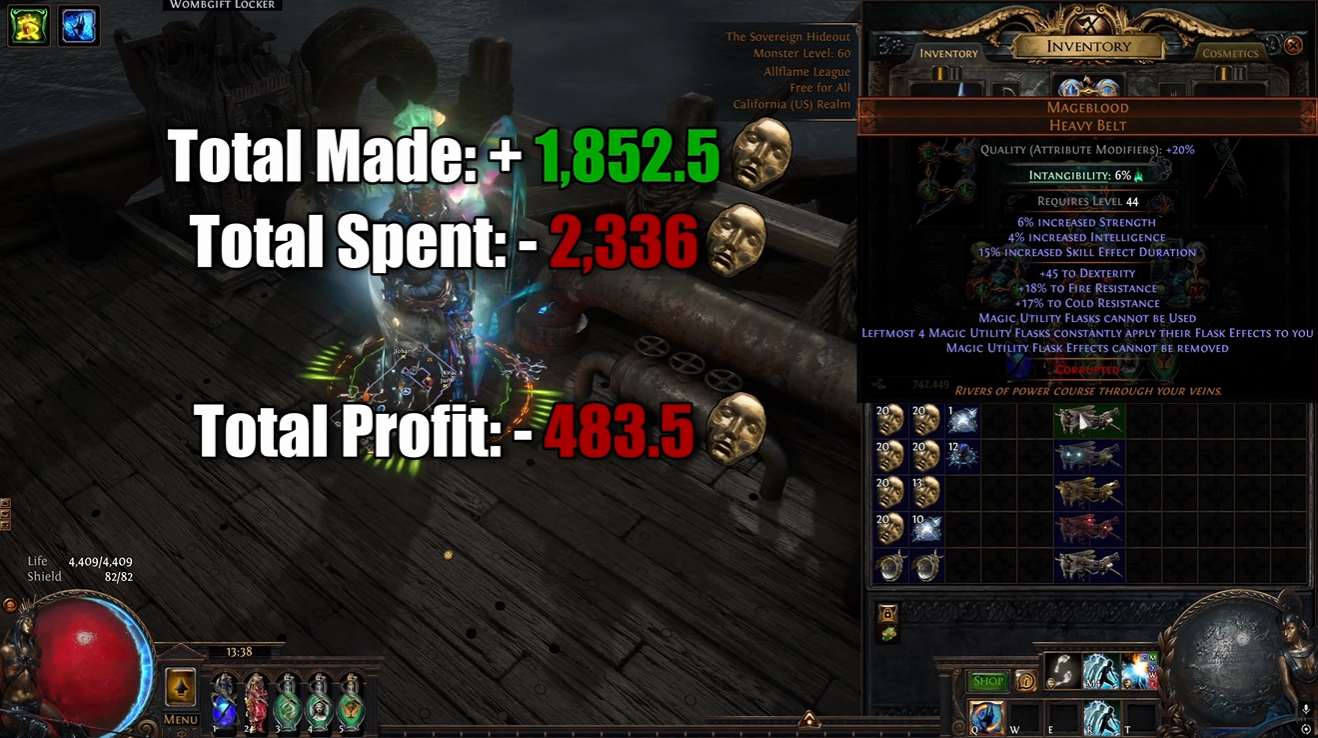
Most corruption rolls resulted in destroyed items or negligible stat changes. However, one standout elite roll delivered Strength, Intelligence, and Skill Effect Duration implicits, a top-tier variant valued at approximately 600 Divines. Other successful rolls included All Resistance and Cast Speed combinations, creating moderately sellable belts.
After full evaluation, the corrupted Mageblood inventory yielded 1,585 Divines in resale value. Against the 1,936 Divine investment, the method only lost 351 Divines. Compared to bottle opening’s proportional loss rate, Mageblood corruption proved far more forgiving for large end-league budgets.
Crucially, the session retained five viable sellable Magebloods after all corruptions, confirming that high-value unique gambling preserves more residual asset value than consumable-based bottle farming.
Total Session Verdict & League Comparison
Combining both gambling methods, the total 2,336 Divine investment returned roughly 1,852 Divines, resulting in an overall net loss of 484 Divines. While a definite loss, the result is far more favorable than previous league high-stakes gamble sessions, avoiding catastrophic total asset wipe scenarios.
The data clearly ranks Mageblood double corruption above mass Message in a Bottle openings for 3.29 end-league play. Consumable bottle gambling delivers steady small thrills but guaranteed proportional losses and excessive time costs. Unique corruption gambling carries higher individual risk but offers elite jackpot potential and better residual value retention.

Pro Player End-League Gambling Recommendations
Avoid bulk Message in a Bottle investments for end-league asset conversion. The low ceiling, high time cost, and consistent net loss make it inefficient for large currency pools.
Opt for controlled Mageblood corruption with a capped budget. Limit total unique purchases to avoid overexposure, and retain low-roll uncorrupted belts to offset losses from destroyed items.
Reserve small bottle batches only for casual fun, not profit-focused farming. Use stacked decks and rare incidental drops as supplementary income rather than core revenue sources.
Final Verdict
POE 3.29’s end-league high-stakes gamble meta proves that selective unique corruption outperforms traditional mass consumable opening by a significant margin. While both methods result in net losses, Mageblood double corruption offers better value retention, elite jackpot potential, and less repetitive grind. Players looking to liquidate end-league assets should prioritize controlled unique gambling and avoid bulk bottle openings to minimize losses while chasing rare high-value rolls before league conclusion. For players who need additional resources to support their end-league strategies, buy POE Currency can also help accelerate item preparation and experimentation.