







Summary
Quarterback run RPOs (Run-Pass Options) are among the most difficult plays to defend in College Football 27. Whether you're facing a scrambling dual-threat quarterback or a designed power run out of spread formations, these plays can carve up both man and zone coverage if you don't have a plan. This guide breaks down why these plays are so effective and, more importantly, how to shut them down consistently—so you won't need to look for College Football 27 Coins for sale just to recover from losses.
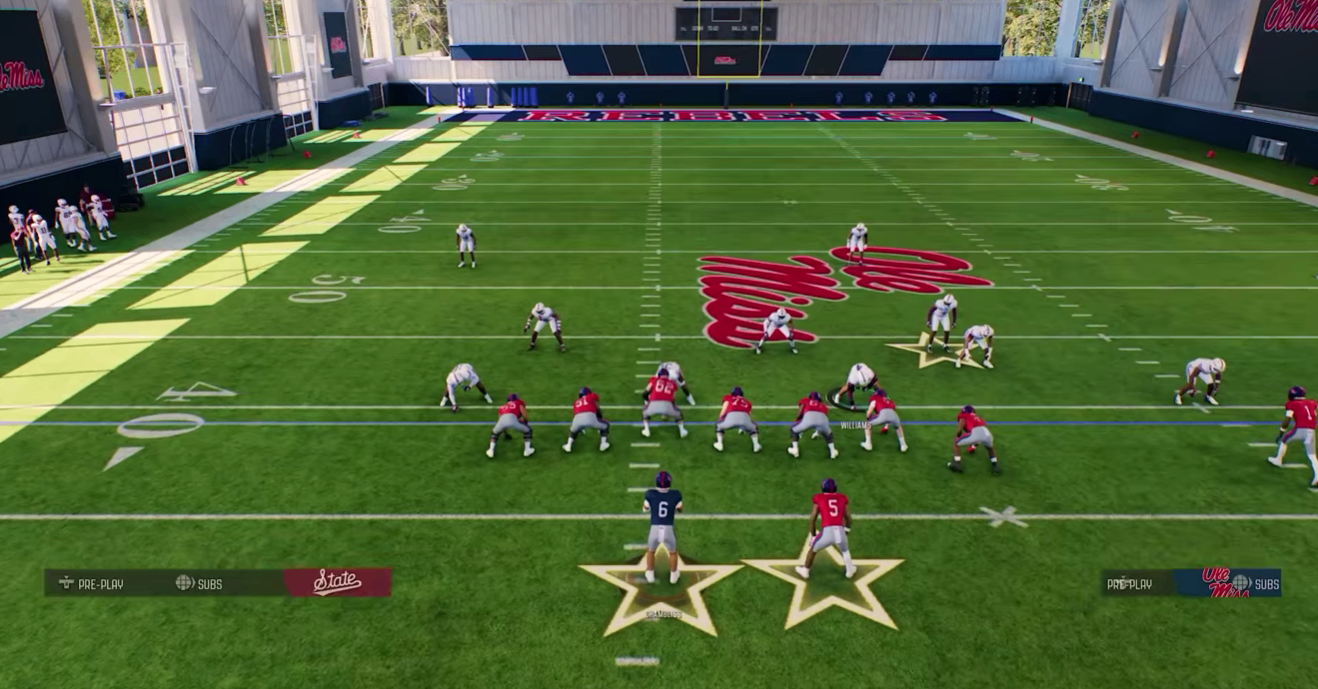
Why QB Run RPOs Are So Effective
Before we dive into the solution, it's important to understand the problem. Quarterback run RPOs exploit defensive tendencies in two key ways:
Man Coverage Weakness
In man-to-man coverage, defenders have their backs turned or are locked onto specific receivers. They have no idea the quarterback is keeping the ball. By the time they react, the QB is already 5-10 yards downfield.
Zone Coverage Weakness
Zone defense is inherently passive. Defenders drop to their landmarks, allowing the quarterback to find running lanes up the middle or bounce outside. Without a dedicated spy, zone simply gives the QB too much space to operate.
Blitzing Isn't the Answer
Many players try to blitz their way out of this problem. The issue? Blitzes often get picked up by the offensive line, leaving you with no one in the second level to contain the QB. The result is a long, uncontested run to the outside.
The Formations You Need to Know
Wing Slot Over – Central Michigan Playbook
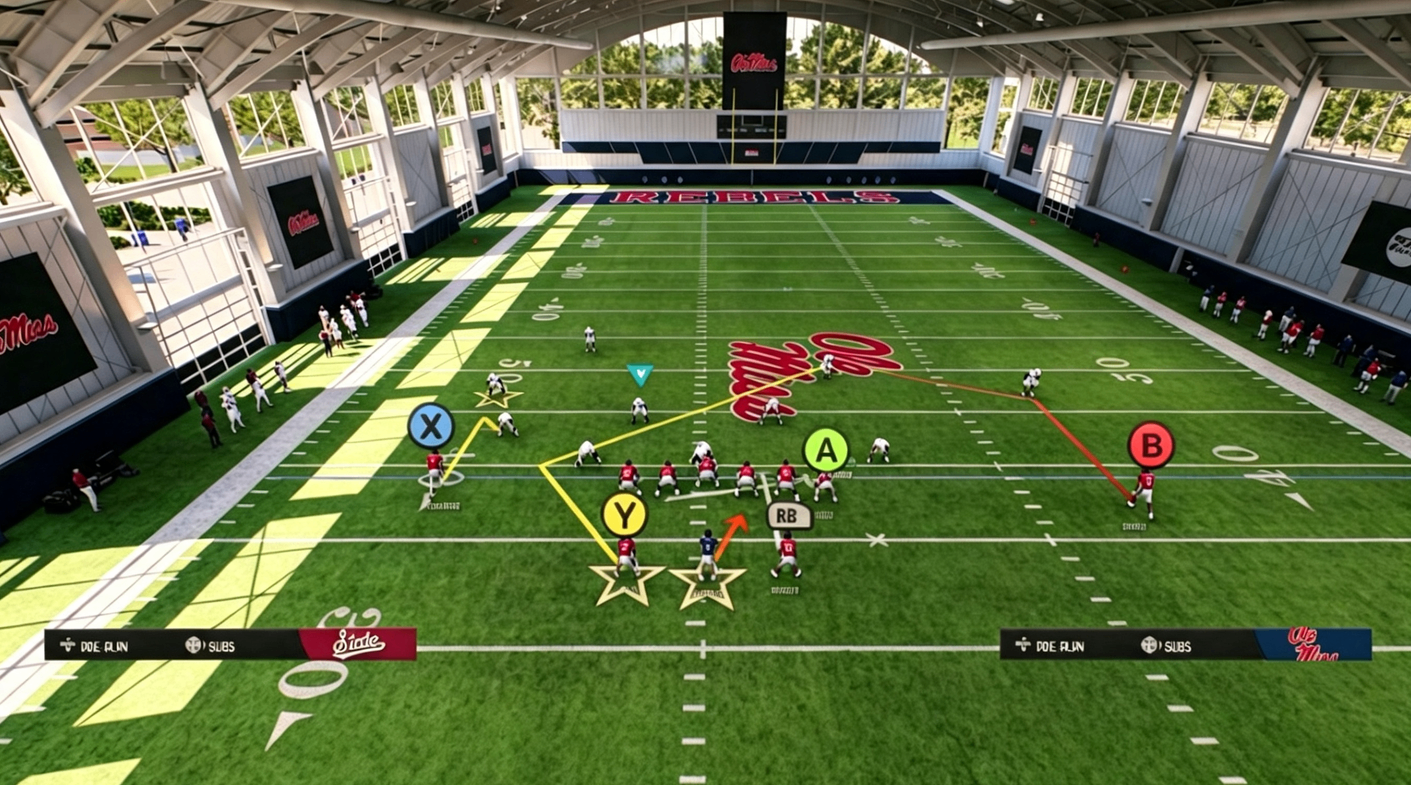
This formation is home to the Quarterback Power RPO. It's a favorite among players who spam QB runs because it gives them multiple options:
Hand off to the running back
Keep it with the QB up the middle
Bounce it outside
Gun Split – Motion QB Power RPO
Also found in the Central Michigan playbook, this formation features an automatic motion that signals the QB run. Savvy players will actually cancel the motion, change the running back's route, and snap the ball quickly to catch you off guard.
Bonus threat: Some variants include a bubble screen to the opposite side, forcing you to defend both the run and the pass simultaneously.
The Solution: Spy the Quarterback
The most effective and reliable adjustment is simple: put a spy on the quarterback. It doesn't matter if you're playing man or zone—you need a dedicated player whose only job is to mirror the QB and prevent big runs.
Why a Spy Works
The spy stays disciplined and doesn't get sucked in by play-action or RPO fakes
The spy can react to the QB's keep decision in real time
The spy eliminates the "human joystick" effect that makes QBs feel unstoppable
Spy Positioning: The Key to Success
Off the Ball = Better Pursuit
One of the most common mistakes is leaving your spy too close to the line of scrimmage. When he's too close, offensive linemen can chip him or engage him in blocks, taking him out of the play entirely.
Solution: Manually back your spy off the line by a few yards. This gives him a better angle to pursue and allows him to avoid the "wash" of blockers.
Strong Side Alignment
Position your spy on the strong side—the side the offense tends to run toward. This gives him a shorter path to the QB and keeps him out of traffic.
Speed Matters
Your spy needs to be fast—ideally close to 90 speed or higher. If your middle linebacker is too slow (e.g., 83 speed), sub in a faster player. Many rosters have a designated speed rusher or athletic linebacker who can fill this role perfectly.
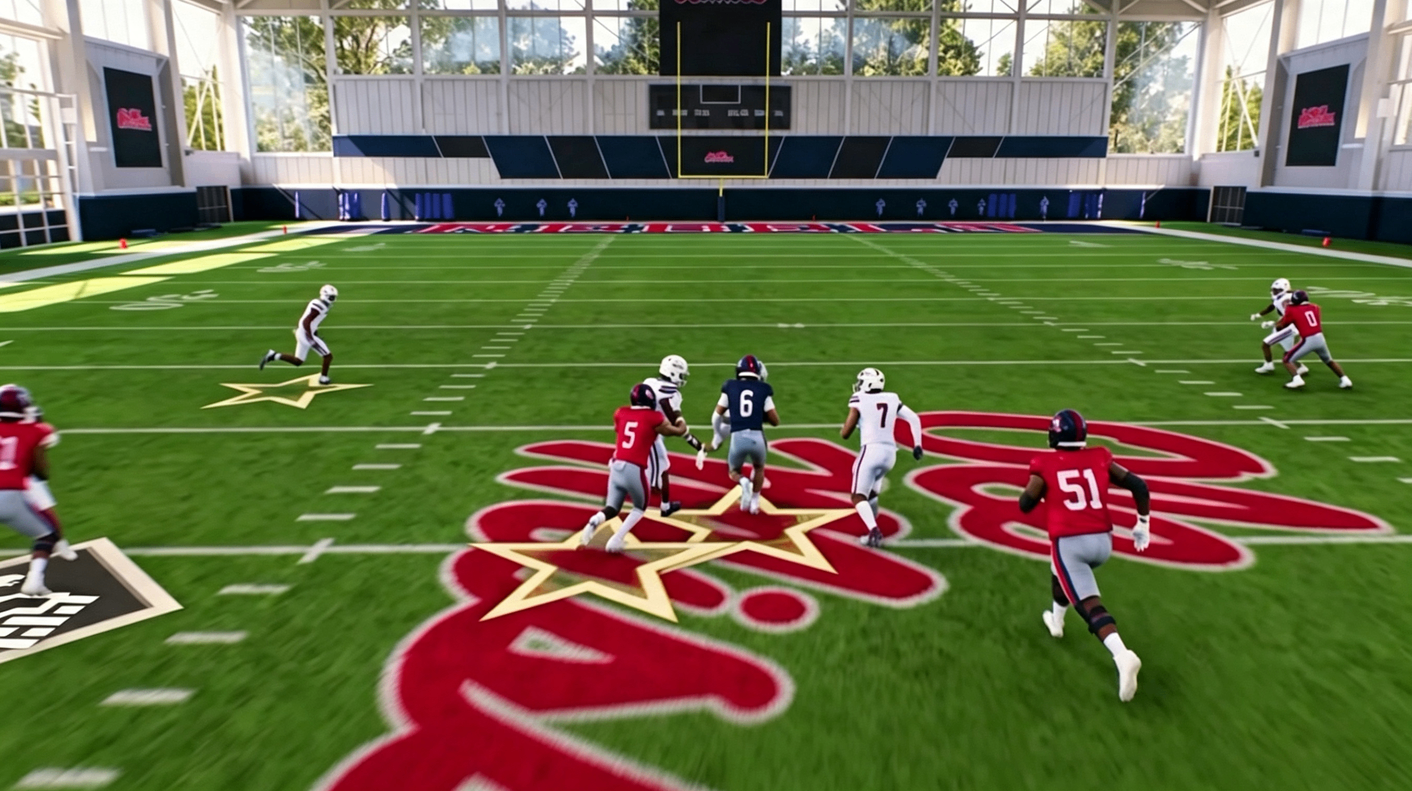
Spy Out of Zone vs. Man Coverage
Zone Coverage (Recommended)
Spying out of zone is generally more effective because:
Zone defenders have their eyes on the QB
The spy has more space to operate
Multiple defenders can rally to the ball
Important note: In zone, if an offensive lineman travels too far downfield (illegal man downfield), the game will trigger a "run commit" animation where all defenders pursue the QB. If the offense tries to throw a late pass, it will be flagged as a penalty. This actually works in your favor.
Man Coverage (Situational)
Sometimes you need to call man coverage—for example, when facing RPOs with bubble screens or orbit screens to the backside. In these cases:
Your spy becomes even more critical
If the spy gets blocked or misses, there's no safety net
Consider using multiple spies to cover both inside and outside cutback lanes
Caution: If your spy is a low-overall player with high speed, a single juke or spin move could result in a touchdown. Zone provides more margin for error.
Advanced Adjustments
Multiple Spies
For players who spam QB runs relentlessly, consider putting two spies on the field:
One to take away the inside cutback
One to take away the outside
If one spy gets picked up by a blocker, the other is there to make the play. This is especially effective against offenses that can't pass effectively.
Five-Down Surfaces
Out of formations like Cub or spread looks, you can create a five-down defensive front. Spread your linebackers and have one play over the top as a spy. This gives you both pressure and containment.
Substitution Strategy
Don't be afraid to sub in faster players specifically for spy duty. Your starting MLB might not be your best spy. Look for:
Athletic outside linebackers
Speed rushers with good pursuit
Safeties with high speed (in certain packages)
Common Mistakes to Avoid
Mistake | Why It Hurts |
Relying on your D-line to stop everything | They'll get blocked or outrun |
Leaving your spy too close to the line | He gets caught in the wash |
Using a slow spy | He can't keep up with the QB |
Not adjusting spy positioning | He takes poor angles |
Spamming blitzes | Blitzes get picked up, leaving open lanes |
Step-by-Step: How to Set Up Your Spy
Call a zone defense (Cover 2, Cover 3, or Cover 4)
Select your spy – usually the MLB or a fast OLB
Back him off the line – manually adjust his position 3-5 yards deeper
Align him to the strong side – the side the offense typically runs toward
Sub in a faster player if your current spy lacks speed
Optionally, add a second spy for cutback protection
User the spy (optional but helpful) to mirror the QB's movement
Sample Defensive Call
Playbook: Any 4-3 or 3-4 base
Formation: 4-3 Over
Coverage: Cover 3 Zone
Adjustment: Spy the MLB, back him off 4 yards, align to strong side
Substitution: Bring in a fast OLB or safety as the spy
Final Thoughts
Stopping quarterback run RPOs isn't about guessing or hoping your D-line makes a play. It's about discipline, speed, and positioning. The spy adjustment is simple, effective, and—surprisingly—underused by many players.
Key takeaways:
Spy the QB on every play against RPO-heavy offenses
Position your spy off the ball and to the strong side
Use zone coverage for better spy support
Sub in faster players for spy duty
Consider multiple spies against dedicated QB runners
With these adjustments, you'll turn those frustrating 20-yard QB scrambles into 2-yard gains or tackles for loss. Get in the lab, practice your spy adjustments, and watch your run defense improve dramatically. If you're looking to build a stronger roster to complement your defensive skills, many players turn to MMOEXP to buy College Football 27 Coins and quickly upgrade their teams. Whether you're grinding for better players or just want to save time, MMOEXP is a solid option worth considering.