Weekend Drop -














Summary
College football loves to expand its playoff format. So instead of waiting for the committee to do it again, why not take matters into your own hands? In this guide, we'll break down how to simulate a massive 138-team tournament in College Football 27 —from setting up the bracket to understanding the chaos that unfolds when every FBS team competes for a national championship. And if you're looking to fast-track your Ultimate Team experience alongside your tournament runs, you might want to check out CUT 27 Coins for sale to strengthen your squad without the endless grind—giving you more time to focus on the chaos of the bracket and less on building from scratch.
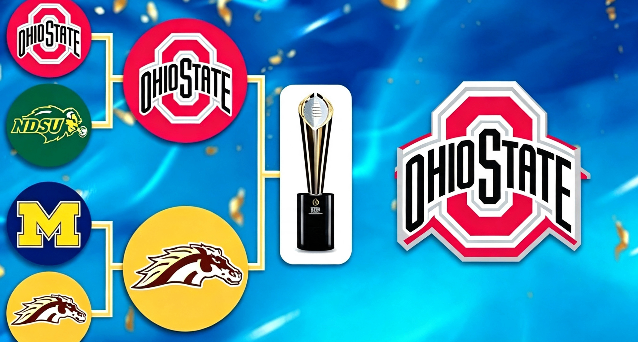
Why Simulate a 138-Team Tournament?
College Football 27’s Dynasty Blueprint system gives you unprecedented control over program building , but the game's simulation engine can also produce exciting, unpredictable results when you pit all 138 teams against each other.
What Makes This Approach Compelling
Element | What to Expect |
Upset Potential | Lower-seeded teams (like 15-seed FIU taking down Baylor) can pull off stunning victories |
Chaos Factor | The simulation engine produces outcomes you wouldn't see in standard gameplay |
Season-Long Drama | From the Round of 128 to the National Championship, every game carries weight |
Setting Up Your Tournament
Step 1: Seeding the Teams
Use a ranking system based on realistic expectations (like CBS Sports' 1-138 rankings). The top seeds get byes while lower seeds battle in the opening round.
Step 2: The Bracket Structure
Round | Teams Remaining | Notes |
Round of 128 | 138 → 64 | Lower seeds compete for the right to face top seeds |
Round of 64 | 64 | Traditional March Madness-style bracket begins |
Sweet 16 | 16 | Elite programs begin to separate |
Elite 8 | 8 | Quarterfinal matchups |
Final Four | 4 | Semifinals |
National Championship | 2 | Winner takes all |
Step 3: Simulating Games
In Dynasty mode, you can simulate games while watching key moments unfold. The game's dynamic weather system—from first-quarter flurries to fourth-quarter snow—adds authentic drama to each matchup .
Key Tournament Trends to Expect
Chalk Results Are Common
Top seeds often dominate early rounds. In a typical simulation, Ohio State, Texas, Oregon, and Indiana all advance deep—teams that are expected to win usually handle business against weaker opponents.
Upsets Do Happen
Some of the most memorable results from tournament simulations include:
Upset | Round | Significance |
Kennesaw State (14-seed) over Utah (3-seed) | Round of 128 | First major shocker |
Georgia Southern over Clemson | Round of 64 | ACC power falls early |
SMU over Alabama | Round of 32 | Crimson Tide stunned at home |
FIU (15-seed) over Baylor | Round of 64 | Deep run for the Panthers |
Home-Field Advantage Matters
Teams that rely on home stadiums sometimes struggle when tournament games move to neutral sites. Ohio State, for example, looked dominant at home but fell to Oklahoma in the Sweet 16 at a neutral location .
Optimizing Your Dynasty for Tournament Success
If you're running this tournament within a Dynasty save, you'll want to build your program efficiently. Here's how the top players approach it.
Facility Upgrades for Player Development
Facilities provide direct boosts to player progression :
Facility Tier | Progression Boost |
Basic | 0% |
Competitive | 0% |
Premier | 4% |
Elite | 10% |
National Powerhouse | 20% (with max facility grade A+) |
Strategy: For smaller schools, don't rush facility upgrades immediately—the cost is prohibitive. Focus on reaching a three-star program tier first, then prioritize upgrading to Premier or higher.
Support Staff: The Offseason Progression Boost
The Offseason Progression Increase ability is essential for this build :
Tier | Boost | Cost-Effectiveness |
Bronze | 5% | Great for small schools—minimal cost |
Silver | 10% | Solid value |
Gold | 15% | Recommended for most programs |
Platinum | 20% | Best for powerhouses |
Important: Support Staff Discount should be purchased before other abilities. Platinum Support Staff Discount (50% off) makes subsequent ability purchases significantly cheaper .
Full Practice Plans for Weekly XP
Running Full Practice provides significant XP gains—roughly 500–1,000 XP per practice session .
The Trade-Off:
Full Practice = Maximum XP but increases wear and tear
Limited Practice = Moderate XP with reduced injury risk
No Practice = Zero XP, but players may start games cold
Mitigation: If running full practice weekly, invest in Platinum injury reduction facilities (40-50% reduction) to offset the wear and tear costs .
Coach Abilities That Win Tournaments
Visionary Tree
Practice Makes Perfect increases player progression from practice. This compounds with your full practice plan, making every practice session significantly more valuable .
Pro Pipeline (Tier 1) increases players' draft stock. Testing shows this is remarkably effective—it ensures more of your players go in the first and second rounds of the NFL Draft .
Talent Developer Tree
Talent Developer abilities are position-specific and provide massive progression boosts :
Tier | Ability | Effect |
Tier 1 | Field Study | Players earn additional XP for in-game goals |
Tier 2 | Whisperer | Freshmen and Sophomores progress significantly faster |
Tier 4 | Pay It Forward | Bonus XP when a player at their position is drafted |
Apply Talent Developer upgrades to the position groups most important to your scheme. For example, if you run a spread offense, prioritize Quarterback and Wide Receiver first .
Motivator Tree
Master Motivator (Tier 3) provides extra offseason training boost.
Everybody Eats (Tier 4) increases all XP gains across the entire roster. This is the capstone ability .
How the Progression Build Stacks Together
Here is the full progression bonus chain when optimized :
Component | Bonus |
Facility National Powerhouse | 20% progression boost |
Support Staff Platinum | 20% offseason progression boost |
Practice Makes Perfect | XP gains from practice sessions multiplied |
Talent Developer Whisperer | Freshmen/Sophomores progress faster |
Master Motivator | Extra offseason training boost |
Everybody Eats | All XP gains increased across roster |
Dynasty Points: Funding Your Tournament Program
Understanding the Starting Budget
When evaluating schools, pay attention to the available budget rather than the total budget. The number on the left is the usable amount in season one. The remaining amount is already allocated toward coordinators, existing staff, facilities, and NIL on the current roster .
For example, Michigan shows a total budget of 11,630, but only 6,540 is available. Oregon, despite having an elite roster, starts with only 2,900 available—one of the lowest in the game .
What Affects the Recruiting Budget
The recruiting budget displayed on the recruiting screen is significantly higher than the available dynasty points. For Oregon, the recruiting screen shows approximately 5,300 points versus 2,700 available. This difference comes from :
Graduating seniors: Their NIL commitments free up when they leave
Expiring coordinators: Their salaries return to the pool when contracts end
Important: The larger recruiting budget can only be spent on recruits, the transfer portal, and coordinators. It cannot be used for support staff or equipment upgrades .
Conference Prestige Matters
Conference prestige is one of the most controllable factors affecting dynasty points :
Conference Grade | Dynasty Point Bonus |
A+ (SEC/Big Ten) | Up to 2,000 points |
B+ | Acceptable but not optimal |
C-Tier | Significantly limited |
Moving a program to a better conference provides an immediate boost. The trade-off is more difficult competition, but the extra dynasty points allow for better staff, improved recruiting, and faster facility upgrades .
Small School Strategy: Recruiting on a Budget
If you're rebuilding a smaller program, here's how to compete without breaking the bank .
Preseason: Establish the Foundation
All dynasty points in the first season should be allocated toward recruiting and retention. Defer facility upgrades, equipment slots, and support staff entirely.
Positional Focus for Scouting:
Offensive line
All defensive positions
Positions to Exclude:
Quarterback
Running back
Wide receiver
These excluded positions are readily available later in the season and through the transfer portal.
Week Zero: Extend Offers to Gems
The gem tag appears on approximately 10 to 15 percent of fully scouted prospects. At a one-star school, one or two gems is a realistic expectation .
For each identified three-star gem, double the expected NIL amount rather than matching it. This accelerates the commitment timeline significantly.
Identify "Quiet Commits"
Four-star prospects who have received no scholarship offers are your biggest opportunity. These recruits carry zero NIL cost during their freshman season .
Key Principle: Allocate maximum hours to no-offer four-star prospects using the "send the house" approach. If a competing school enters the race, redirect hours to the next available no-offer four-star.
Final Results: What a Full Tournament Looks Like
In a complete 138-team simulation, the final four often comes down to a mix of established powers and surprising contenders:
National Championship Matchup: Oklahoma vs. Indiana
The Sooners took down Texas in the semifinals, while Indiana handled Oregon on the other side of the bracket. Oklahoma ultimately won the tournament—proving that even in a 138-team field, the best programs find a way to rise to the top. Whether you're building your ultimate roster through the bracket or grinding in Ultimate Team, having the right resources makes all the difference—and if you're looking to save time, you can buy CUT 27 Coins from MMOEXP for reliable and affordable service, so you can focus on competing at the highest level instead of grinding endlessly for coins.
Notable runs included:
FIU (15-seed) reaching the Sweet 16
Georgia Southern knocking out Clemson
SMU stunning Alabama at Bryant-Denny Stadium